US intelligence assessments reportedly found no evidence that Alice Huang’s relationship with the Nvidia chief executive was initiated by Beijing, although questions surrounding semiconductor exports and national security remain under investigation.
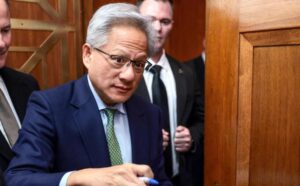
Washington: A reported assessment by United States intelligence officials has introduced a new dimension to the controversy surrounding Nvidia Chief Executive Jensen Huang and his alleged relationship with businesswoman Alice Huang.
According to reporting by The Wall Street Journal, US officials informed congressional staff that available intelligence did not establish that Chinese authorities had orchestrated the relationship to obtain sensitive information from the semiconductor giant.
The reported findings suggest that the relationship may have developed for personal reasons rather than as part of a coordinated intelligence operation.
See more of our coverage in your search results.
Add INDYASTORY on GoogleHowever, the absence of evidence supporting an organised espionage campaign does not necessarily resolve wider questions surrounding contacts with Chinese intelligence agencies, semiconductor export restrictions and Nvidia’s international business relationships.
US Intelligence Finds No Evidence of a Coordinated Espionage Operation
The reported congressional briefing examined whether Alice Huang’s relationship with the Nvidia chief executive had been deliberately arranged by China’s Ministry of State Security (MSS).
According to individuals familiar with the briefing cited in the original reporting, US intelligence officials had not established evidence that the Chinese intelligence agency directed the relationship.
Officials reportedly indicated that Alice Huang had been approached by Chinese intelligence authorities seeking information during the period of the alleged affair.
However, the available intelligence reportedly did not establish that she had provided information of significant intelligence value.
See more of our coverage in your search results.
Add INDYASTORY on GoogleThe distinction is important because contact with an intelligence agency does not, by itself, demonstrate participation in an organised espionage operation.
The reported assessment should also not be interpreted as a definitive conclusion about every aspect of the ongoing investigations.
Questions Surrounding Alice Huang’s Reported Intelligence Contacts
The congressional briefing reportedly included discussions about Kang Wei, identified in the supplied reporting as Alice Huang’s husband.
See more of our coverage in your search results.
Add INDYASTORY on GoogleAccording to the original report, US officials discussed allegations concerning Wei’s relationship with China’s intelligence apparatus.
Those allegations remain sensitive and have not been independently verified by IndyaStory.
The wider debate concerns how authorities distinguish between voluntary intelligence cooperation, legally compelled assistance and deliberate espionage activities.
China’s national intelligence legislation, introduced in 2017, establishes obligations for organisations and citizens to support and cooperate with national intelligence work in accordance with the law.
However, the existence of such legislation does not establish that a particular individual has engaged in espionage.
Any assessment of individual conduct requires specific evidence concerning the nature, purpose and consequences of the alleged activities.
Nvidia Chip Export Investigation Remains a Separate Issue
Beyond the reported personal relationship, US authorities are examining allegations involving the movement of advanced semiconductor technology into China.
American export restrictions have limited Chinese access to certain high-performance processors used in artificial intelligence development, advanced computing and large-scale data centres.
These controls are intended to address US national security concerns associated with advanced computing capabilities.
The supplied reporting identifies Singapore-based Megaspeed as a company facing scrutiny over its alleged role in the semiconductor supply chain.
Alice Huang reportedly previously controlled the company, which was described as a significant overseas purchaser of Nvidia processors.
Megaspeed has denied wrongdoing and reportedly stated that Alice Huang departed the business in August 2025.
The existence of commercial relationships involving Nvidia hardware does not establish that either the company or its executives knowingly participated in unlawful exports.
Investigators would need to determine the specific hardware involved, its destination, the applicable export restrictions and the parties responsible for any transactions.
Financial Records Reveal Scale of China’s AI Infrastructure Investments
Separate reporting by Reuters, based on an examination of Chinese financing records, identified substantial investments involving businesses reportedly connected to Alice Huang’s family and associates.
The documents reportedly described as many as 764 artificial intelligence servers and modules valued at approximately $270 million, alongside an additional $31 million in networking equipment.
Some of the infrastructure was reportedly associated with a data centre in Shanghai.
The financial arrangements highlight the growing importance of asset-backed financing within the artificial intelligence industry.
High-performance AI infrastructure requires substantial upfront investment, particularly when large numbers of advanced processors must operate together within specialised computing environments.
Businesses can use computing equipment as collateral to secure funding, allowing them to expand infrastructure without financing the entire investment through available cash.
However, the reported financial documents do not establish whether the equipment contained processors prohibited from export to China.
They also do not independently demonstrate when or through which distribution channels the equipment entered the country.
These limitations are significant when assessing whether specific transactions violated American semiconductor export regulations.
Megaspeed Reportedly Added to US Trade Blacklist
According to the supplied report, the US Commerce Department added Megaspeed to a trade blacklist on Monday, November 23, 2026.
The reported regulatory action would represent a separate development from the intelligence assessment concerning Jensen Huang’s personal relationship.
The US Commerce Department maintains export control mechanisms intended to restrict access to sensitive American-origin technology when national security or foreign policy concerns arise.
Depending on the applicable restrictions, designated companies may face additional licensing requirements when acquiring certain products, software or technology subject to US export regulations.
A trade restriction is not equivalent to a criminal conviction, and the precise legal implications depend on the terms of the relevant regulatory designation.
Megaspeed’s reported inclusion on the list, together with the applicable restrictions, requires confirmation through official Commerce Department records.
Donald Trump’s Reported Role in Jensen Huang’s Return
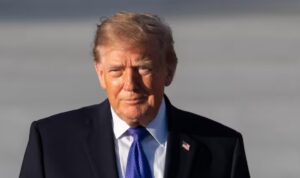
The controversy has also drawn attention to the reported involvement of US President Donald Trump in Nvidia’s leadership decisions.
According to the supplied reporting, Trump publicly acknowledged communicating with members of Nvidia’s board regarding Huang’s reinstatement as chief executive.
The administration reportedly assured company officials that Huang did not present a national security risk.
Separate reporting by The Washington Post suggested that Pentagon officials had considered whether the Defense Production Act could be used to influence the company’s leadership arrangements.
There is a substantial distinction between discussing a possible government intervention and formally exercising statutory authority.
The Defense Production Act, enacted in 1950, provides the US government with certain powers to prioritise contracts and strengthen industrial capabilities considered important to national defence.
The law has previously been used to support emergency industrial production, including during the COVID-19 pandemic.
Whether it could lawfully be applied to influence a private company’s executive appointments would raise significant legal and corporate governance questions.
The supplied material does not establish that the law was formally invoked to reinstate Huang.
Why Nvidia Is Strategically Important to the United States
Nvidia occupies a central position in the global artificial intelligence supply chain.
Its advanced graphics processors, accelerated computing platforms, networking products and software ecosystem support major technology companies, research institutions and cloud computing providers.
The company’s technology is used across several strategically important sectors, including artificial intelligence, scientific research, autonomous systems, industrial automation and advanced computing.
This technological significance helps explain why developments involving Nvidia’s leadership, international distribution networks and regulatory compliance attract considerable attention from policymakers.
However, corporate strategic importance does not eliminate the need for independent oversight, effective compliance procedures or transparent governance.
For investors, maintaining confidence requires both technological competitiveness and credible management of legal and regulatory risks.
US-China Semiconductor Competition Enters a Sensitive Phase
Advanced semiconductors have become an important component of technological competition between Washington and Beijing.
Access to powerful computing hardware can influence a country’s ability to develop artificial intelligence systems, operate advanced research infrastructure and build competitive technology businesses.
The United States has introduced restrictions on exports of certain advanced processors and related semiconductor technologies to China.
Chinese companies, meanwhile, have pursued domestic semiconductor development and alternative computing infrastructure to reduce their dependence on foreign suppliers.
The effectiveness of export restrictions depends partly on international cooperation, supply-chain transparency and the ability of regulators to identify potential diversion through intermediaries.
The reported investigations involving Megaspeed demonstrate the complexity of monitoring advanced technology transactions across multiple jurisdictions, although the specific allegations remain subject to verification and investigation.
What the Developments Could Mean for India’s AI Industry
The controversy also has broader implications for India’s developing artificial intelligence and semiconductor ecosystem.
Indian technology companies, cloud infrastructure providers and research organisations rely on access to advanced computing hardware to support AI development.
Changes in international semiconductor export policies could influence global supply chains, processor availability and infrastructure costs.
India’s efforts to expand semiconductor manufacturing and domestic computing capabilities reflect a wider interest in building more resilient technology supply chains.
Developments involving Nvidia are therefore relevant to Indian businesses seeking reliable access to AI infrastructure.
Nevertheless, the reported investigations do not establish that India’s access to Nvidia technology will be affected.
Any implications for Indian companies would depend on future regulatory decisions, commercial arrangements and international supply conditions.
What Happens Next?
Attention is expected to remain focused on the reported US intelligence investigation, Nvidia’s internal review and any official findings concerning semiconductor export compliance.
Investors and policymakers may also seek greater clarity regarding the circumstances of Huang’s reported reinstatement and the extent of government involvement in the company’s leadership decisions.
The available reporting suggests that US officials had not established evidence of a Chinese-directed operation behind the alleged personal relationship.
That reported assessment, however, does not resolve separate questions concerning international semiconductor transactions or corporate governance.
Until authoritative findings are publicly available, allegations, intelligence assessments and confirmed regulatory actions should be treated as distinct matters rather than combined into a single conclusion.
For Nvidia, transparent communication and effective oversight will remain important as the company navigates an increasingly complex relationship between artificial intelligence innovation, international commerce and national security.