Samsung Electronics and SK hynix are expected to maintain their strategic relationships with Nvidia while diversifying their customer portfolios amid growing demand for custom artificial intelligence chips and high-bandwidth memory.
Seoul: Nvidia’s reported reinstatement of Jensen Huang as chief executive has eased concerns surrounding the American semiconductor giant’s partnerships with South Korean memory chip manufacturers, particularly Samsung Electronics and SK hynix.
The leadership development comes at a critical period for the global semiconductor industry, as technology companies accelerate investments in artificial intelligence infrastructure and compete to secure advanced memory components.
According to The Korea Herald, uncertainty surrounding Nvidia’s leadership had raised concerns among industry participants about potential changes to the company’s product development roadmap, procurement policies and long-term supplier relationships.
See more of our coverage in your search results.
Add INDYASTORY on GoogleHuang’s reported return is expected to provide greater continuity for existing partnerships. However, South Korean semiconductor manufacturers are also seeking to expand their customer networks to reduce dependence on individual technology companies.
Jensen Huang’s Return Eases Semiconductor Supply-Chain Concerns
Nvidia’s board reportedly approved Huang’s reinstatement as president, chief executive and board member on Monday, November 23, 2026, just 11 days after his reported departure.
The temporary leadership uncertainty had prompted questions about whether Nvidia might reconsider its semiconductor development plans, memory procurement commitments or commercial arrangements with strategic suppliers.
For memory chip manufacturers, changes to Nvidia’s product roadmap could have significant consequences because advanced AI processors require specialised memory technologies developed and manufactured through lengthy production cycles.
According to industry sources cited in the original reporting, Huang’s return is expected to support continuity in Nvidia’s relationships with South Korean semiconductor companies.
See more of our coverage in your search results.
Add INDYASTORY on GoogleHowever, leadership stability alone does not eliminate wider commercial risks associated with customer concentration, technological competition and fluctuations in artificial intelligence infrastructure spending.
SK hynix Remains a Strategic Nvidia Memory Supplier
South Korea’s SK hynix has established itself as an important participant in the global high-bandwidth memory market.
The company has supplied advanced HBM products to Nvidia since the introduction of HBM3 shipments in 2022, according to the supplied report.
See more of our coverage in your search results.
Add INDYASTORY on GoogleIndustry estimates cited by The Korea Herald suggest that SK hynix generated nearly 35 trillion South Korean won, equivalent to approximately $26.06 billion using the reported conversion, from Nvidia during the first nine months of 2026.
The estimated amount reportedly represented 14.8% of SK hynix’s total revenue during the period.
These figures illustrate the potential commercial significance of Nvidia’s procurement activities for major memory manufacturers, although the customer-specific revenue estimates require independent confirmation.
As artificial intelligence systems become more computationally demanding, the relationship between advanced processors and high-performance memory is becoming increasingly important.
Samsung Electronics Seeks a Larger Role in Nvidia’s AI Ecosystem
Samsung Electronics is reportedly working to strengthen its position within Nvidia’s memory supply chain while pursuing opportunities across future semiconductor technologies.
Discussions between the companies have reportedly involved next-generation high-bandwidth memory products and semiconductor foundry services.
Samsung’s extensive semiconductor operations include memory manufacturing, chip fabrication and advanced packaging capabilities.
This diversified business structure could provide opportunities to support multiple components of the artificial intelligence hardware ecosystem.
However, supplying advanced memory for high-performance AI accelerators requires manufacturers to satisfy demanding requirements concerning speed, power efficiency, thermal performance and reliability.
Product qualification, manufacturing yields and consistent production capacity are therefore essential factors in securing long-term supply agreements.
Samsung’s ability to expand its participation in Nvidia’s ecosystem will depend on these technical and commercial considerations.
Why High-Bandwidth Memory Is Essential for Artificial Intelligence
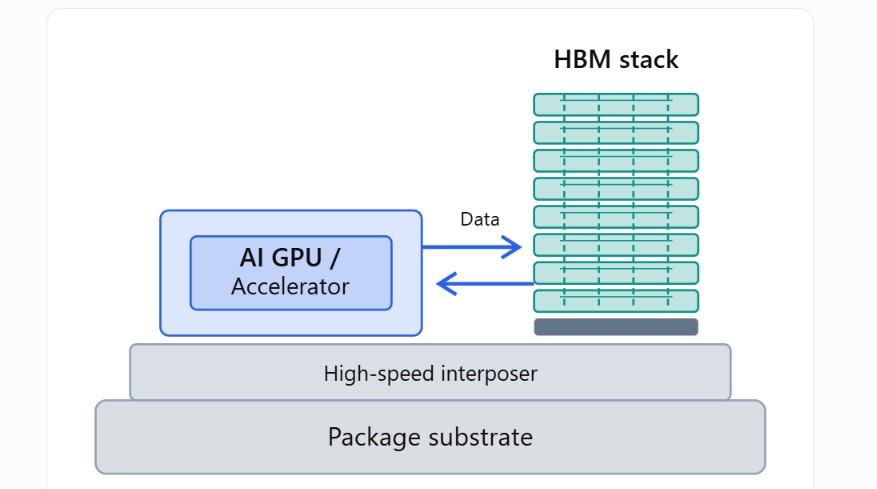
High-bandwidth memory, commonly known as HBM, is a specialised memory technology designed to provide rapid data transfer between computing processors and memory components.
Modern AI accelerators must process enormous volumes of information when training large language models, operating generative AI services and performing complex computational tasks.
Traditional memory architectures can become a performance bottleneck when processors require faster access to large amounts of data.
HBM addresses this challenge by stacking multiple memory dies vertically and connecting them through advanced interconnection technologies.
This architecture allows high-performance processors to access data at greater bandwidth while potentially improving energy efficiency compared with certain conventional memory configurations.
HBM technology supports several important applications, including:
- Generative artificial intelligence.
- Large language model training and inference.
- High-performance computing.
- Cloud-based AI infrastructure.
- Scientific research and advanced simulations.
- Enterprise AI systems.
The growing importance of HBM has transformed memory manufacturing into a strategically significant segment of the global semiconductor industry.
Nvidia’s Reported Supply Commitments Highlight Strong Memory Demand
Nvidia’s reported supply and production capacity commitments increased to $390 billion from $279 billion in the previous quarter, according to the supplied reporting.
Long-term memory procurement arrangements reportedly accounted for a substantial portion of the increase.
The reported figures suggest that securing access to semiconductor manufacturing capacity and advanced memory components remains an important consideration for AI infrastructure companies.
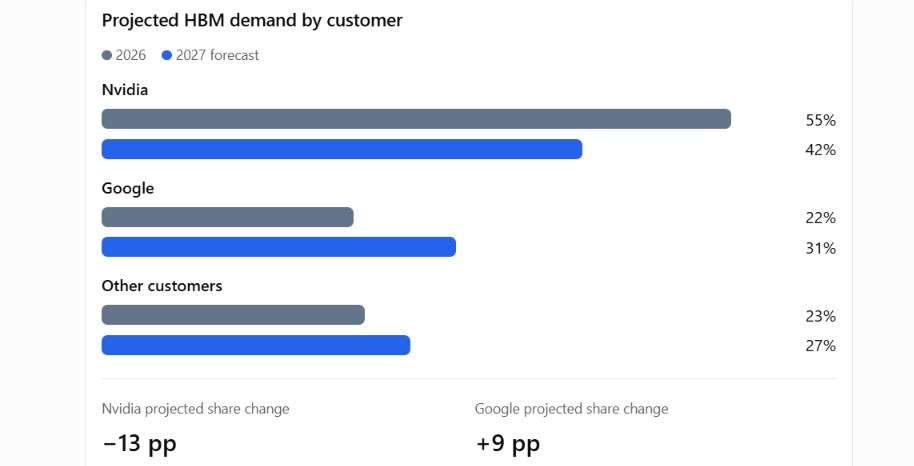
However, supply and capacity commitments should not be confused with completed purchases, recognised revenue or immediate capital expenditure.
Such arrangements may include multiyear obligations, manufacturing reservations and other commercial commitments extending across several reporting periods.
The precise financial classification and value of Nvidia’s reported commitments should be confirmed through its official financial disclosures.
Google’s Custom AI Chips Could Reshape HBM Demand
Although Nvidia remains a major participant in the artificial intelligence accelerator market, growing investment in custom processors is creating additional opportunities for semiconductor suppliers.
Technology companies such as Google have developed specialised AI chips designed to support their own computing platforms and infrastructure requirements.
Google’s Tensor Processing Units, commonly known as TPUs, are designed to accelerate machine learning and artificial intelligence workloads.
Other large technology companies are also investing in application-specific integrated circuits and specialised computing architectures.
For memory manufacturers, the expansion of custom AI processors could create opportunities to supply a broader range of customers beyond traditional graphics processor manufacturers.
This development could reduce dependence on a single buyer while increasing demand for memory products optimised for different computing architectures.
However, the commercial success of custom AI chips will depend on software compatibility, performance, energy efficiency, manufacturing availability and the requirements of individual cloud platforms.
Nvidia’s Share of Global HBM Demand Could Decline in 2027
A forecast attributed to semiconductor market research firm TrendForce indicates that the composition of global HBM demand could change significantly during 2027.
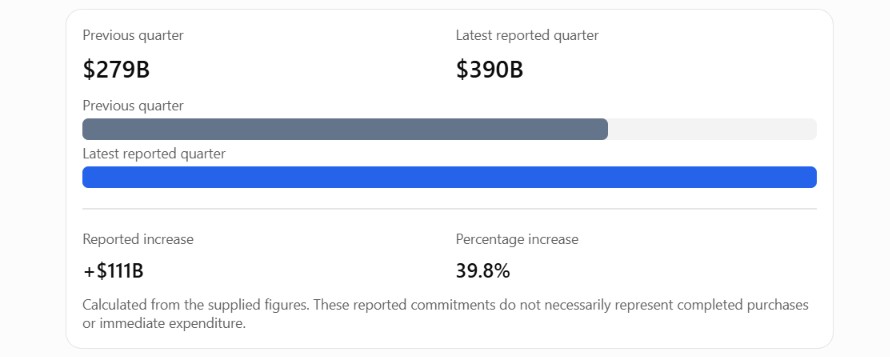
According to the supplied report, Nvidia’s share of global HBM demand is projected to decline from 55% in 2026 to 42% in 2027.
Meanwhile, Google’s share is expected to increase from 22% to 31% over the same period.
These projections suggest that demand for advanced memory could become more diversified as technology companies expand their custom AI computing infrastructure.
A declining percentage share does not necessarily indicate a reduction in Nvidia’s absolute memory purchases.
If the overall HBM market continues to expand, Nvidia could purchase greater quantities of memory even while accounting for a smaller proportion of total industry demand.
The forecasts should therefore be interpreted as projections of market composition rather than definitive predictions of individual company sales.
Samsung and SK hynix Expand Their Customer Portfolios
South Korean memory manufacturers are reportedly pursuing additional long-term supply agreements to strengthen the resilience of their semiconductor businesses.
According to the supplied information, SK hynix has secured long-term supply arrangements with 14 major customers.
Samsung Electronics has reportedly finalised multiyear memory agreements with 10 customers while continuing negotiations with another 10.
A more diversified customer portfolio could help manufacturers manage risks associated with changes in procurement policies, product development schedules and technology investment cycles.
Long-term agreements can also provide greater visibility into future demand, allowing semiconductor manufacturers to plan production capacity and capital expenditure more effectively.
Nevertheless, such arrangements may expose suppliers to other challenges, including fluctuating memory prices, contractual obligations and the need to satisfy different technical requirements across customers.
The strategy reflects the importance of balancing established relationships with new commercial opportunities.
South Korea’s Growing Importance in the Global AI Supply Chain
South Korea occupies a prominent position in the international semiconductor industry through its expertise in memory chips, advanced manufacturing and electronic components.
Samsung Electronics and SK hynix are recognised as major participants in the global memory market, supplying components used in computing systems, mobile devices, data centres and industrial technology.
The expansion of artificial intelligence infrastructure has increased the strategic importance of their advanced memory capabilities.
Unlike many semiconductor components, high-performance HBM products require sophisticated manufacturing processes, advanced packaging and close collaboration with processor designers.
These requirements can make supplier relationships difficult to replace quickly.
As a result, access to reliable memory manufacturing capacity has become an important consideration for technology companies developing next-generation artificial intelligence systems.
What the Developments Could Mean for India’s Semiconductor Industry
The evolving relationship between Nvidia and South Korean memory manufacturers offers important context for India’s emerging semiconductor and artificial intelligence ecosystem.
India has been pursuing opportunities in semiconductor manufacturing, chip design, electronics assembly and advanced packaging as part of its broader industrial development strategy.
Although establishing globally competitive HBM manufacturing capabilities would require substantial investment and specialised expertise, India could explore opportunities across related areas, including:
- Semiconductor design and engineering.
- Advanced chip packaging and testing.
- AI hardware infrastructure.
- Data centre development.
- Electronic component manufacturing.
- Thermal management and power systems.
Indian cloud service providers, AI startups and research organisations could also benefit from greater competition among international computing hardware suppliers if it improves availability or reduces infrastructure costs.
However, the supplied information does not establish that the reported Nvidia partnerships will directly affect semiconductor investment or product availability in India.
Is Customer Diversification Becoming Essential for Memory Chipmakers?
The recent reported leadership uncertainty at Nvidia highlights a broader commercial challenge facing semiconductor manufacturers: dependence on a limited number of major customers.
Large technology companies can generate significant revenue for strategic suppliers, particularly when they commit to multiyear procurement arrangements.
At the same time, substantial customer concentration can increase exposure to changes in product strategy, management decisions and demand forecasts.
Diversifying customer relationships can help manufacturers distribute these risks across multiple commercial partners.
However, the strategy requires substantial engineering resources because different AI processors may have distinct memory performance, packaging and qualification requirements.
For Samsung and SK hynix, maintaining strong relationships with Nvidia while supporting emerging custom AI platforms could become an important element of their long-term business strategies.
What Happens Next for Nvidia and Korean Semiconductor Companies?
The immediate outlook for Nvidia’s South Korean partnerships will depend on confirmed product development schedules, procurement commitments and future semiconductor qualification announcements.
Industry participants are also likely to monitor demand for next-generation HBM products and the pace at which technology companies expand their custom AI accelerator platforms.
Nvidia’s reported leadership continuity could reduce near-term uncertainty surrounding existing supplier relationships.
However, increasing competition within the AI computing market is encouraging memory manufacturers to look beyond any single customer.
The next phase of semiconductor growth may increasingly be shaped by cooperation between processor designers, memory manufacturers, semiconductor foundries and cloud infrastructure providers.
For Samsung Electronics and SK hynix, the challenge will be maintaining their position within Nvidia’s ecosystem while building a more diversified and resilient customer base across the rapidly evolving artificial intelligence industry.