Nvidia faces renewed questions over corporate governance, leadership stability and the sustainability of artificial intelligence investments following Jensen Huang’s reported return as chief executive.
Nvidia’s reported leadership comeback has placed the semiconductor giant at the centre of renewed uncertainty, with investors weighing corporate governance concerns against the long-term prospects of the artificial intelligence industry.
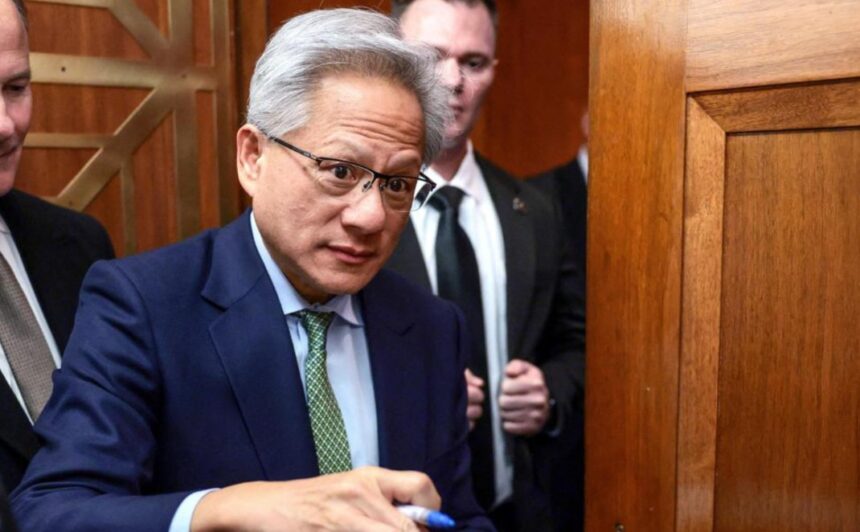
According to the supplied reports, Chief Executive Jensen Huang addressed employees on Tuesday, November 24, 2026, acknowledging personal mistakes and revealing that he was undergoing therapy.
His reported remarks came as Nvidia shares surrendered part of their earlier gains, reflecting continuing concerns about leadership accountability, regulatory scrutiny and the broader technology market.
See more of our coverage in your search results.
Add INDYASTORY on GoogleNvidia Shares Lose Momentum After Comeback Rally
Nvidia shares reportedly declined approximately 6% on Tuesday after surging more than 30% during the previous trading session.
The reversal suggests that initial optimism surrounding Huang’s reported reinstatement may not have resolved the uncertainties facing the company.
While leadership continuity can provide reassurance to investors, questions surrounding board independence, regulatory compliance and corporate governance could continue to influence market sentiment.
The reported decline also comes against a backdrop of growing concerns about the valuations of technology companies benefiting from the global AI investment boom.
Jensen Huang Reportedly Addresses Employees
During a company-wide meeting at Nvidia’s headquarters in Santa Clara, California, Huang reportedly acknowledged shortcomings in his personal conduct and discussed his efforts to address them.
See more of our coverage in your search results.
Add INDYASTORY on GoogleHe was also reported to have rejected suggestions that political intervention was responsible for his return as chief executive.
The circumstances surrounding his reported reinstatement have brought renewed attention to the responsibilities of corporate boards when managing executive conduct and leadership transitions.
For a company operating at the centre of strategically important technology markets, transparency and effective corporate oversight remain particularly significant.
See more of our coverage in your search results.
Add INDYASTORY on GoogleDonald Trump’s Reported Involvement Raises Governance Questions
US President Donald Trump reportedly indicated that he had communicated with Nvidia’s directors regarding Huang’s return.
If independently confirmed, those remarks could intensify discussions about the relationship between political leadership and corporate decision-making in the American technology industry.
Semiconductors have become increasingly important to US economic policy, national security and international competition, particularly as artificial intelligence capabilities expand.
Nvidia’s position as a major supplier of advanced computing technology makes developments involving its leadership relevant beyond Wall Street.
Regulatory Scrutiny Remains a Concern
The supplied reporting describes several potential regulatory and investigative challenges involving Nvidia and companies operating within its international supply network.
These reportedly include questions concerning semiconductor export restrictions, corporate disclosures and internal governance procedures.
The existence, scope and status of these investigations require independent confirmation. An investigation does not establish wrongdoing.
Advanced semiconductor exports have become a sensitive issue as governments seek to balance technological innovation, commercial interests and national security requirements.
Any confirmed changes to export regulations or enforcement practices could have implications for Nvidia’s international operations and future growth opportunities.
Why Nvidia Matters to the Global AI Industry
Nvidia has established itself as one of the most influential companies in artificial intelligence infrastructure.
Its graphics processing units, accelerated computing platforms and CUDA software ecosystem support a wide range of applications, including:
- Training large language models and generative AI systems.
- Operating cloud-based artificial intelligence services.
- Scientific research and high-performance computing.
- Autonomous vehicle development.
- Robotics and industrial automation.
- Enterprise data centre infrastructure.
Major technology companies rely on advanced computing hardware to develop and deploy increasingly sophisticated AI services.
However, the substantial financial commitments required to build AI infrastructure have also raised questions about profitability, sustainable demand and the ability of businesses to generate sufficient returns from their investments.
What Nvidia’s Uncertainty Could Mean for India
Developments at Nvidia could have implications for India’s expanding artificial intelligence and technology ecosystem.
Indian cloud service providers, research institutions, technology companies and AI startups increasingly depend on access to advanced computing infrastructure.
Changes in semiconductor supply, international export policies or AI infrastructure investment could influence the availability and cost of computing resources.
For Indian businesses developing AI-powered products, the broader developments highlight the importance of diversified technology infrastructure, predictable hardware access and sustainable investment strategies.
India’s ambitions in artificial intelligence, semiconductor manufacturing and digital infrastructure also make developments across the global chip industry particularly relevant.
Is the AI Investment Boom Losing Momentum?
The reported volatility in Nvidia shares has renewed a broader debate about the sustainability of artificial intelligence investment.
While demand for AI computing infrastructure has expanded significantly, investors continue to assess whether future revenues will justify the substantial spending commitments made by technology companies.
The long-term performance of the sector will depend on several factors, including commercial adoption, infrastructure costs, competition, energy availability and the ability of AI businesses to deliver measurable economic benefits.
Short-term stock market movements alone do not establish whether the artificial intelligence industry is experiencing a temporary correction or a more fundamental shift.
What Investors Should Watch Next
The immediate outlook for Nvidia will depend on confirmed developments involving corporate leadership, regulatory matters and the company’s financial performance.
Investors are likely to pay particular attention to official company disclosures, board statements, regulatory announcements and future earnings guidance.
The supplied reports also refer to potential congressional hearings in December 2026, although their schedules and participants require independent verification.
For Nvidia, maintaining investor confidence will require more than technological leadership. Transparent communication, effective corporate governance and consistent business performance will remain important as the global artificial intelligence industry evolves.