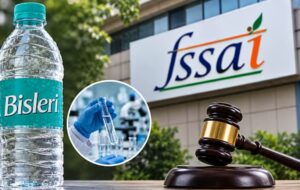
Product recalls play an important role in protecting Indian consumers from potential contamination, manufacturing defects, incorrect labelling and violations of regulatory standards. Even established brands can face regulatory action when their products fail to meet applicable safety requirements.
Millions of consumers across India purchase packaged foods, beverages, medicines, electronic devices and other manufactured products every day. Brand reputation, attractive packaging and widespread availability often influence purchasing decisions.
However, even products manufactured by established companies may become subject to regulatory investigations, safety warnings or market withdrawals.
One of India’s most widely recognised food safety controversies involved Nestlé India’s Maggi instant noodles in 2015. The incident brought nationwide attention to food safety testing, manufacturing accountability and the responsibilities of consumer goods companies.
See more of our coverage in your search results.
Add INDYASTORY on GoogleIt also highlighted the importance of product recalls as a mechanism for protecting public health and maintaining confidence in the marketplace.
Why are companies required to recall products?
A product recall is a process through which potentially unsafe, defective or non-compliant products are removed from distribution channels or returned by consumers.
Recalls may be initiated voluntarily by manufacturers after identifying a problem or directed by regulatory authorities following inspections, laboratory investigations or consumer complaints.
Depending on the product category, common reasons for recalls include:
- Chemical contamination exceeding applicable safety limits.
- Detection of harmful bacteria or microorganisms.
- Undeclared ingredients or allergens.
- Incorrect or misleading product labels.
- Manufacturing and packaging defects.
- Failure to comply with mandatory product standards.
- Electrical, mechanical or operational safety risks.
Not every recall indicates that consumers have suffered harm. Some recalls are precautionary measures designed to prevent potential risks before they result in serious consequences.
See more of our coverage in your search results.
Add INDYASTORY on GoogleThe Maggi noodles controversy of 2015
Company: Nestlé India Limited
Product: Maggi instant noodles
Year: 2015
See more of our coverage in your search results.
Add INDYASTORY on GoogleNature of concern: Lead levels and food labelling compliance.
The Maggi noodles controversy remains one of the most significant examples of food safety enforcement in India’s packaged food industry.
In June 2015, the Food Safety and Standards Authority of India (FSSAI) directed Nestlé India to withdraw nine variants of Maggi instant noodles following concerns raised over laboratory findings and regulatory compliance.
Authorities reported that certain tested samples contained lead above permissible limits. Questions were also raised regarding the product’s monosodium glutamate-related labelling.
Nestlé India disputed the regulatory findings and maintained that its noodles were safe for consumption.
The company challenged the regulatory action before the Bombay High Court.
In August 2015, the court set aside the ban orders and directed fresh testing through specified accredited laboratories.
Following the subsequent testing process, Maggi noodles returned to the Indian market in November 2015.
The episode demonstrated the importance of reliable laboratory testing, transparent regulatory procedures, corporate accountability and access to judicial review.
The historical controversy should not be interpreted as evidence that Maggi noodles currently available in India are unsafe.
What the Maggi recall taught India’s food industry
The controversy had implications extending beyond a single packaged food brand.
It demonstrated how regulatory concerns could disrupt manufacturing operations, retail distribution and consumer confidence, even for a product with an established market presence.
For manufacturers, the incident reinforced the importance of monitoring raw materials, maintaining accurate laboratory records and complying with food labelling requirements.
For regulatory authorities, it highlighted the need for reliable testing methods, consistent enforcement procedures and transparent communication.
Consumers also became more aware of food safety standards and the information available on packaged food labels.
An effective recall framework must balance public health protection with scientifically sound evidence and fair regulatory procedures.
Indian spice recalls raised fresh food safety questions in 2024
India’s packaged spice industry also faced international regulatory scrutiny in April 2024 when selected products associated with MDH and Everest became subject to regulatory action in Hong Kong and Singapore.
The concerns involved ethylene oxide, a chemical used in certain sterilisation and fumigation applications.
Following the overseas regulatory developments, Indian food safety authorities reportedly initiated quality checks to assess compliance with domestic requirements.
These international actions concerned specific products and jurisdictions. They should not be described as a nationwide Indian recall or blanket ban on the two brands.
The incident nevertheless highlighted the importance of chemical residue testing, export compliance and traceability throughout food supply chains.
The difference between a product recall and a regulatory ban
Although recalls and bans are sometimes used interchangeably in public discussions, they represent different regulatory actions.
A recall generally involves removing identified products or batches from the marketplace because of safety or compliance concerns.
A regulatory ban may prohibit the manufacture, distribution, import or sale of specified products under applicable legal provisions.
Authorities may also suspend licences, withdraw product approvals, issue safety warnings or direct manufacturers to implement corrective measures.
The withdrawal of a No Objection Certificate or product approval does not necessarily establish that all previously distributed products were recalled.
Understanding these distinctions is important when interpreting reports about regulatory enforcement.
How FSSAI regulates food product recalls in India
The Food Safety and Standards Authority of India operates under the Food Safety and Standards Act, 2006.
Section 28 of the Act establishes food recall responsibilities for food business operators.
India’s Food Safety and Standards (Food Recall Procedure) Regulations, 2017, provide a regulatory framework for managing food recalls.
Food businesses are responsible for taking appropriate action when they have reason to believe that products placed on the market do not comply with relevant food safety requirements.
An effective recall process may involve identifying affected products, notifying relevant authorities, informing distributors and retailers, withdrawing products and documenting corrective measures.
Depending on the circumstances, manufacturers may also need to investigate the underlying cause of the problem and implement changes to prevent recurrence.
The latest applicable regulations and amendments should be consulted when assessing individual compliance obligations.
How does a product recall work?
A product recall generally begins when a potential safety or regulatory issue is identified.
The concern may originate from laboratory testing, internal quality inspections, consumer complaints, supplier notifications or regulatory surveillance.
Once the affected products have been identified, manufacturers and authorities can determine the scope of the recall and appropriate corrective action.
A typical recall process involves:
- Identifying the affected product and manufacturing batches.
- Assessing the nature and potential severity of the problem.
- Informing relevant regulatory authorities.
- Notifying distributors, retailers and consumers where necessary.
- Removing affected products from distribution.
- Arranging appropriate disposal, correction, replacement or refunds, as applicable.
- Investigating the cause and implementing preventive measures.
The effectiveness of a recall depends on accurate manufacturing records and the ability to trace products throughout the supply chain.
Which authorities oversee product safety in India?
India’s consumer safety framework involves several regulatory organisations, depending on the nature of the product.
FSSAI oversees food products and food business compliance.
The Central Drugs Standard Control Organisation (CDSCO), together with relevant state authorities, regulates medicines and medical devices within its statutory responsibilities.
The Bureau of Indian Standards (BIS) develops national product standards and administers applicable certification programmes.
The Central Consumer Protection Authority (CCPA) has powers under the Consumer Protection Act, 2019, that include ordering the recall of certain unsafe goods.
Automotive manufacturers may also face vehicle recall obligations under applicable motor vehicle legislation and associated rules.
Each regulatory framework has distinct procedures, enforcement mechanisms and responsibilities.
Can a recalled product return to the market?
Yes. A recalled product may return to the marketplace when the relevant safety or regulatory concerns have been satisfactorily addressed and applicable legal requirements are met.
The process can involve additional laboratory testing, manufacturing improvements, revised packaging, corrected labels or regulatory and judicial clearances.
The return of Maggi noodles to the Indian market in November 2015 illustrates how a product can resume commercial distribution after further testing and legal proceedings.
However, the requirements for returning recalled products to the market depend on the circumstances of each case.
Consumers should rely on current official announcements rather than assuming that an old recall remains active indefinitely.
How consumers can identify recalled products
Product recalls frequently apply to specific manufacturing batches, date ranges, product variants or production facilities.
Consumers should examine packaging information carefully before determining whether a product is affected.
Important details include:
- Product name and variant.
- Manufacturer or importer information.
- Batch or lot identification number.
- Manufacturing and expiry date markings.
- Applicable regulatory licence or certification details.
- Instructions contained in the official recall notice.
A product manufactured by the same company may not necessarily be affected if it belongs to a different batch or production period.
Official recall notices provide more reliable guidance than unverified messages circulated through social media.
What should you do if you purchased a recalled product?
Consumers who discover that a product they purchased matches an active recall notice should stop using or consuming it and follow the instructions issued by the manufacturer or relevant authority.
Where possible, retain the original packaging, purchase receipt and batch identification details.
Depending on the recall arrangements, consumers may be entitled to a replacement, refund or other appropriate remedy.
Food products suspected of contamination should not be consumed merely because they appear normal or have no unusual smell.
Chemical contaminants and harmful microorganisms cannot always be detected through ordinary household observation.
Anyone experiencing significant illness after consuming a suspected contaminated food product should seek appropriate medical attention.
How to report unsafe products in India
Consumers can report suspected product safety violations through the relevant regulatory authority or consumer grievance mechanism.
Food safety complaints can be submitted through official FSSAI consumer platforms or state food safety departments.
The National Consumer Helpline provides assistance with consumer grievances through its online portal and telephone number 1915.
Depending on the circumstances, consumers may also approach the appropriate consumer dispute redressal commission.
Providing detailed information about the product, manufacturer, purchase location and nature of the complaint can help authorities investigate the issue.
Consumers should avoid making unsupported public allegations against companies before relevant facts have been established.
Why product recalls matter for businesses
Product recalls can create substantial operational and financial challenges for manufacturers.
Companies may face expenses associated with product transportation, disposal, laboratory testing, production interruptions and corrective measures.
A poorly managed recall can also weaken relationships with distributors, retailers and consumers.
However, a transparent and timely recall can demonstrate that a company takes product safety seriously.
Businesses can reduce recall risks by investing in supplier verification, manufacturing controls, employee training, accredited laboratory testing and effective product traceability.
Regular internal audits and documented complaint-handling procedures can help identify potential problems before they become widespread.
Product safety should therefore be treated as an essential component of sustainable business operations.
Why transparent enforcement is important
Effective consumer protection depends on cooperation between manufacturers, regulators, laboratories and distribution networks.
Regulatory authorities must communicate safety concerns accurately, while manufacturers must provide timely information about affected products and corrective measures.
News organisations also have a responsibility to distinguish confirmed regulatory findings from allegations, preliminary investigations and historical incidents.
The reputation of a company alone does not establish whether its products comply with safety standards. Equally, a historical recall does not prove that its currently available products are unsafe.
Evidence-based reporting allows consumers to make informed decisions while supporting fair and accountable regulatory enforcement.
The bottom line
The 2015 Maggi noodles controversy remains an important example of how food safety concerns can lead to major regulatory action in India.
Subsequent developments involving other food categories have reinforced the importance of consistent testing, transparent manufacturing practices and effective recall procedures.
For consumers, checking product information and following official safety notices remain practical ways to respond to potential risks.
For businesses, maintaining regulatory compliance and investing in quality assurance are essential responsibilities that extend beyond protecting brand reputation.
A well-functioning product recall system ultimately serves a common purpose: protecting consumers while ensuring that products sold in the marketplace meet applicable safety requirements.