Food safety licensing remains an important part of India’s packaged drinking water industry, with regulatory oversight designed to improve manufacturing accountability, product traceability and consumer protection.
Packaged drinking water has become an essential part of everyday life in India. From railway stations and airports to restaurants, offices and neighbourhood shops, millions of consumers depend on commercially packaged water for their daily hydration needs.
However, the safety of bottled water involves more than purification technology and sealed packaging. Manufacturers must also comply with applicable food safety regulations, maintain hygienic production facilities and obtain the necessary operating approvals.
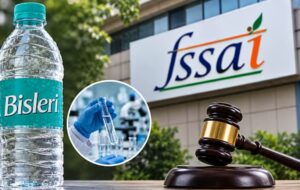
Historical enforcement concerns raised by the Food Safety and Standards Authority of India (FSSAI) highlighted significant gaps in licensing compliance across the country’s water packaging industry.
See more of our coverage in your search results.
Add INDYASTORY on GoogleThe issue brought attention to an important distinction between product quality certification and legal authorisation to operate a food business.
Why FSSAI licensing matters for bottled water manufacturers
The Food Safety and Standards Authority of India is responsible for regulating food safety across the country under the Food Safety and Standards Act, 2006.
Packaged drinking water falls within India’s food safety regulatory framework, meaning businesses involved in its manufacturing and distribution must comply with relevant statutory requirements.
FSSAI licensing helps authorities establish accountability by maintaining information about food business operators, manufacturing locations and the nature of their activities.
The licensing framework also supports regulatory inspections, product traceability, complaint investigations and enforcement actions where violations are identified.
See more of our coverage in your search results.
Add INDYASTORY on GoogleFor water packaging businesses, obtaining the appropriate licence is not merely an administrative formality. It forms part of the legal framework governing commercial food production.
Manufacturers must also maintain compliance with applicable product standards, hygiene requirements and laboratory testing obligations.
Historical data revealed significant licensing gaps
An earlier regulatory assessment covering 5,842 registered water packaging units highlighted a considerable difference between the number of facilities holding Bureau of Indian Standards certification and those possessing FSSAI licences.
See more of our coverage in your search results.
Add INDYASTORY on GoogleAccording to the historical figures, 1,495 units held both approvals, while 4,347 reportedly had BIS certification without an FSSAI licence.
The findings prompted the food regulator to seek intervention from state-level food safety authorities to improve licensing compliance.
These figures relate to an earlier regulatory period and should not be interpreted as representing the current number of licensed or unlicensed water packaging facilities in India.
The historical assessment nevertheless illustrates why regulatory coordination and accurate business registration are important in industries involving products intended for direct human consumption.
What is the difference between FSSAI and BIS?
The Food Safety and Standards Authority of India and the Bureau of Indian Standards perform different regulatory and standardisation functions.
FSSAI oversees food safety requirements and the licensing or registration of food businesses. Its responsibilities include establishing food standards, monitoring compliance and supporting enforcement under India’s food safety legislation.
The Bureau of Indian Standards develops national standards and operates certification programmes covering a wide range of products, including drinking water.
BIS certification assesses conformity with specified product standards under the applicable certification framework.
Historically, packaged drinking water manufacturers were subject to requirements involving both organisations. However, regulatory requirements can change through amendments, official notifications and revised testing frameworks.
Businesses entering the packaged water industry should therefore consult the latest official FSSAI and BIS documents instead of relying exclusively on older licensing guidance.
Does the absence of an FSSAI licence mean bottled water is unsafe?
A licensing violation and a confirmed product safety failure are not necessarily the same thing.
A manufacturing facility may fail to obtain or renew a required licence even if its products meet certain laboratory quality parameters.
Conversely, holding a valid licence does not guarantee that every production batch will remain free from contamination.
During the historical licensing controversy, food safety authorities distinguished between concerns about regulatory compliance and evidence of poor water quality.
The regulator indicated at the time that BIS-certified packaged water was subject to an established quality assessment framework.
However, manufacturers remain responsible for meeting all applicable legal and safety requirements.
Consumers should avoid interpreting licensing discrepancies as definitive proof of contamination unless supported by inspection findings, laboratory results or official enforcement notices.
Why individual manufacturing facilities require attention
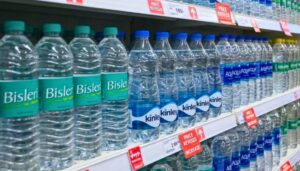
Many established bottled water brands operate through multiple manufacturing plants, franchise arrangements, authorised bottlers or third-party production facilities.
As a result, the regulatory status of one manufacturing unit may differ from that of another facility operating under the same brand.
A company may possess valid licences for certain manufacturing locations while another facility requires separate regulatory approval.
This distinction is particularly important when interpreting enforcement reports involving large consumer brands.
Allegations concerning individual packaging units should not automatically be extended to an entire company’s product portfolio.
Historical regulatory reports raised questions about facilities associated with several major bottled water businesses. Some of the companies disputed the concerns and maintained that their manufacturing operations held the required approvals.
Those historical statements do not establish the current compliance status of any brand or manufacturing facility.
Consumers seeking updated information should rely on official licence records, current enforcement notices and independently verified regulatory findings.
How packaged drinking water is tested for quality
Water intended for commercial packaging must satisfy applicable safety and quality requirements before being made available to consumers.
Depending on the product category and governing standards, testing may examine several physical, chemical and microbiological characteristics.
These can include:
- Acidity and alkalinity levels.
- Total dissolved solids.
- Turbidity and visible impurities.
- Microbiological contamination.
- Heavy metals and other chemical contaminants.
- Disinfection-related by-products.
- Compliance with applicable packaging and hygiene requirements.
Manufacturers must also ensure that water treatment equipment, storage tanks, filling machines and packaging materials do not introduce contamination during production.
Regular laboratory testing and effective manufacturing controls are necessary because water quality can change over time.
Testing requirements may differ between packaged drinking water and packaged natural mineral water, which are recognised as distinct product categories.
Packaged drinking water and natural mineral water are not the same
Although consumers frequently use the term mineral water to describe bottled water, packaged drinking water and natural mineral water have different characteristics.
Packaged drinking water may originate from an approved water source and undergo treatment processes intended to achieve the required quality standards.
These processes may include filtration, reverse osmosis, ultraviolet treatment and other permitted purification techniques.
Packaged natural mineral water generally originates from a protected underground source and is subject to distinct requirements concerning its composition, source characteristics and permitted treatment.
Consumers should examine product labels rather than assuming that every commercially packaged water product is natural mineral water.
The distinction also matters for manufacturers because product classification can affect licensing, testing and labelling obligations.
How to check whether a bottled water manufacturer is licensed
Consumers can take several practical steps before purchasing packaged drinking water.
The product label should contain the applicable statutory information, including details that help identify the food business responsible for manufacturing or marketing the product.
Consumers should check:
- The FSSAI logo and applicable licence number.
- Manufacturer or packer name and address.
- Batch or lot identification number.
- Packaging date and applicable date markings.
- Net quantity and retail price.
- Product classification.
- The condition of the bottle and tamper-evident seal.
FSSAI licences generally carry a 14-digit identification number. Consumers can use official food safety platforms to search available food business licensing information.
A printed licence number alone should not be treated as proof of authenticity. Verification through the appropriate official system provides greater assurance.
Consumers should also avoid purchasing bottles with broken seals, damaged packaging, visible impurities or suspicious labelling.
What water packaging businesses should do before starting operations
Entrepreneurs planning to establish a packaged drinking water business must evaluate regulatory requirements before purchasing machinery or beginning commercial production.
The required approvals can depend on the manufacturing location, production capacity, source of water, product category and applicable environmental regulations.
A prospective manufacturer should assess the need for:
- Appropriate FSSAI licensing.
- Applicable product certification and testing requirements.
- Permissions relating to water extraction or groundwater use.
- Local business and manufacturing approvals.
- Pollution control and environmental permissions, where applicable.
- Hygienic manufacturing infrastructure.
- Laboratory testing and quality control arrangements.
- Compliant packaging and labelling.
- Product traceability and recall procedures.
- Applicable plastic packaging and extended producer responsibility obligations.
Requirements should be confirmed through the relevant regulatory authorities before commencing operations.
Businesses should also maintain accurate documentation and ensure that licences and permissions remain valid throughout their operations.
Why stronger enforcement benefits consumers and businesses
Effective food safety enforcement can help protect consumers while supporting fair competition among manufacturers.
Companies that invest in proper treatment systems, laboratory testing, hygienic facilities and regulatory compliance incur operational costs associated with these responsibilities.
Businesses that avoid mandatory requirements may obtain an unfair commercial advantage over compliant manufacturers.
Consistent enforcement can help reduce such disparities while encouraging better quality management throughout the industry.
Transparent licensing records and accessible complaint mechanisms can also strengthen public confidence in packaged drinking water.
However, regulatory action should be based on documented findings and proportionate enforcement measures rather than unsupported assumptions about individual companies.
What consumers should do if they suspect unsafe bottled water
Consumers who encounter suspicious packaging, unusual odours, visible contamination or potentially misleading licence information should avoid consuming the product.
Where possible, retain the bottle, packaging information, batch number and purchase receipt.
Complaints can be submitted through official FSSAI consumer grievance mechanisms or the relevant state food safety department.
Providing accurate product identification helps authorities trace the manufacturing facility and investigate the complaint.
Anyone experiencing significant illness after consuming suspected contaminated water should seek appropriate medical attention.
The future of packaged drinking water regulation in India
India’s packaged drinking water industry faces the continuing challenge of balancing growing consumer demand with responsible water use, manufacturing hygiene and effective food safety oversight.
Advances in laboratory testing, digital licensing systems and production monitoring can improve the ability of regulators and manufacturers to identify potential problems.
For businesses, maintaining compliance should be treated as a continuous operational responsibility rather than a one-time licensing exercise.
For consumers, understanding product labels and purchasing water from reliable sources can support more informed decisions.
Ultimately, the safety of packaged drinking water depends on responsible sourcing, effective purification, hygienic packaging, regular testing and compliance with current regulatory requirements.
A strong licensing framework provides an important foundation for accountability, but sustained manufacturing quality remains essential to protecting public health.
Disclaimer: This article is intended for general information. Manufacturers should consult the latest official regulatory notifications and obtain professional compliance guidance where necessary.