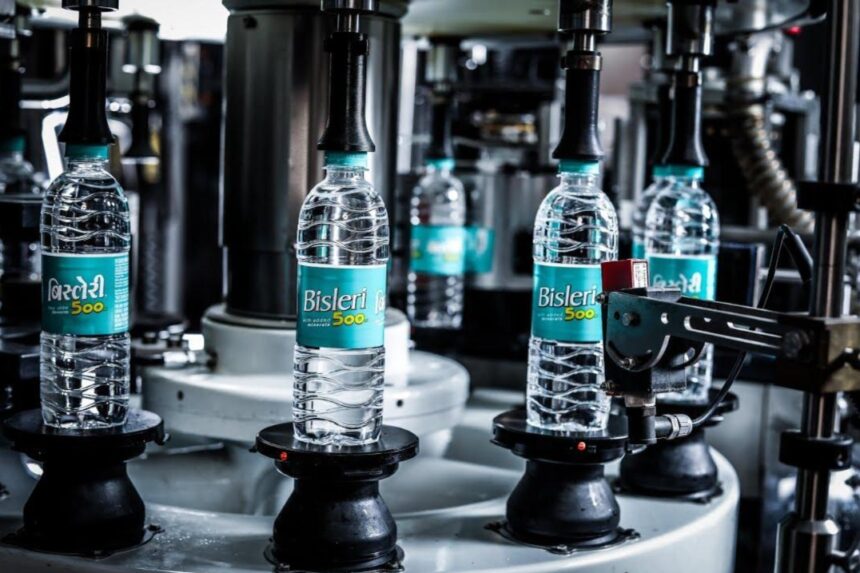
The FSSAI’s regulatory action involving a Bisleri water sample has raised questions about chemical contamination, long-term health risks and the difference between natural mineral water and packaged drinking water.
Buying a sealed bottle of drinking water is an everyday decision for millions of Indians. Whether travelling, dining out or attending an event, consumers often associate bottled water with purity and safety.
However, recent regulatory proceedings involving Bisleri International have brought renewed attention to how packaged drinking water is treated, tested and monitored before reaching consumers.
The Food Safety and Standards Authority of India (FSSAI) reportedly sanctioned prosecution proceedings against the company following disputed laboratory findings involving bromate and polycyclic aromatic hydrocarbons (PAHs) in a water sample.
See more of our coverage in your search results.
Add INDYASTORY on GoogleBisleri has challenged aspects of the findings and maintained that its packaged drinking water meets applicable safety requirements.
The case raises an important public health question: can drinking water that appears clean and transparent contain potentially harmful chemicals?
The answer is yes. Certain chemical contaminants cannot be identified through appearance, smell or taste alone. Their presence and concentration can only be reliably determined through appropriate laboratory testing.
What Happened in the Bisleri Water Safety Case?
The regulatory dispute concerns packaged drinking water manufactured at Bisleri’s Goa facility in September 2025.
According to the company’s account, five of six samples met applicable safety standards. One sample initially recorded a bromate concentration of 12 micrograms per litre, compared with a reported permissible limit of 10 micrograms per litre.
See more of our coverage in your search results.
Add INDYASTORY on GoogleFollowing an appeal by Bisleri, the sample underwent further examination at a referral laboratory.
The subsequent test reportedly found bromate within the prescribed limit but identified concerns involving polycyclic aromatic hydrocarbons.
The differing laboratory results became a central issue in the regulatory dispute.
See more of our coverage in your search results.
Add INDYASTORY on GoogleIn its November 24, 2026, clarification, Bisleri stated that the sale restriction applied only to Batch GO 270, manufactured on September 27, 2025, at its Goa facility.
The company also maintained that no stock from the identified batch remained available in the market and that all 143 manufacturing plants across India continued to operate.
The regulatory proceedings do not establish that every Bisleri product is contaminated or that the company has been found guilty of violating food safety laws.
How Can Chemicals Enter Packaged Drinking Water?
Water quality depends on several factors, including the original water source, environmental conditions, purification technology, manufacturing practices and storage.
Chemical substances may enter water through environmental pollution, industrial activities or naturally occurring geological processes. Certain compounds can also form as unintended by-products during water treatment.
Modern purification systems are designed to remove or reduce contaminants. However, these systems require regular maintenance, operational monitoring and laboratory testing to ensure consistent performance.
The presence of a chemical does not automatically make drinking water unsafe. Many naturally occurring minerals are chemical compounds that are considered normal constituents of drinking water.
The relevant safety considerations are the type of substance, its concentration and whether it exceeds applicable health-based standards.
What Is Bromate and Why Is It Monitored?
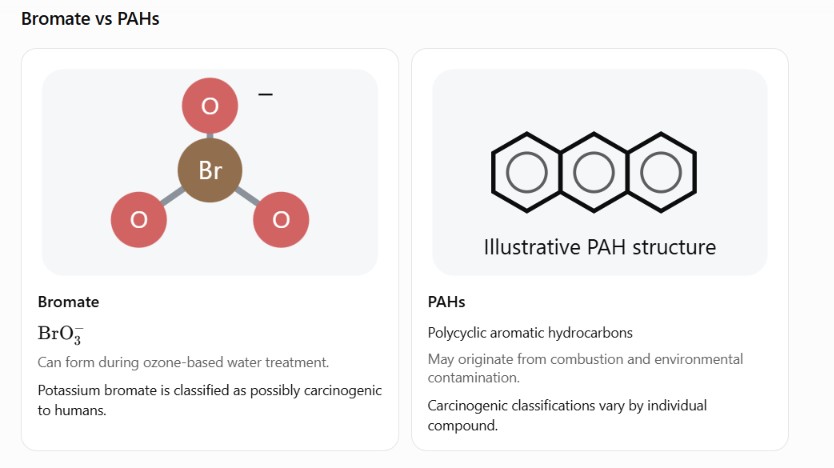
Bromate is a chemical compound that can form when ozone reacts with naturally occurring bromide in water.
Ozone is used in water treatment because it is effective at controlling microorganisms. However, under certain conditions, the treatment process can produce unwanted chemical by-products, including bromate.
Manufacturers must therefore manage treatment conditions carefully and monitor the finished product.
Potassium bromate has been classified by the International Agency for Research on Cancer (IARC) as possibly carcinogenic to humans, under Group 2B.
This classification identifies a potential carcinogenic hazard. It does not mean that every exposure will cause cancer or that bromate is a confirmed human carcinogen.
The potential health risk depends on the concentration, frequency and duration of exposure.
What Are PAHs in Drinking Water?
Polycyclic aromatic hydrocarbons, commonly called PAHs, are a group of chemical compounds that can form when organic materials burn incompletely.
Potential environmental sources include:
- Vehicle emissions and fossil fuel combustion.
- Industrial activities.
- Burning of wood, coal and other organic materials.
- Petroleum-related contamination.
- Polluted soil and water sources.
Certain PAHs, such as benzo[a]pyrene, have been classified as carcinogenic to humans. Other compounds within the same chemical group have different hazard classifications.
Consequently, a reported PAH concentration must be evaluated alongside the specific compounds detected, applicable regulatory limits and laboratory testing methods.
Detecting PAHs in a water sample does not, by itself, establish the cancer risk faced by an individual consumer.
Can Drinking One Bottle of Contaminated Water Cause Cancer?
A single exposure to a potentially carcinogenic substance does not automatically result in cancer.
Cancer development is influenced by multiple biological and environmental factors. Chemical-related risks depend on the substance involved, the amount consumed, the frequency of exposure and individual susceptibility.
For many chemical contaminants in drinking water, prolonged or repeated exposure is an important public health consideration.
The reported findings involving a particular Bisleri sample do not provide sufficient information to calculate an individual’s cancer risk.
Consumers should avoid drawing conclusions about their personal health based solely on a regulatory headline.
Anyone concerned about a confirmed chemical exposure or experiencing symptoms after consuming potentially contaminated water should seek advice from a qualified healthcare professional.
Natural Mineral Water vs Packaged Drinking Water: What Is the Difference?
Although the terms are frequently used interchangeably, natural mineral water and packaged drinking water are distinct product categories.
Natural mineral water generally comes from protected underground sources and has a characteristic composition of naturally occurring minerals. It is subject to restrictions on the treatment processes that may alter its essential characteristics.
Packaged drinking water may originate from underground sources, surface water or municipal supplies.
Depending on the source and manufacturing process, it may undergo filtration, reverse osmosis, disinfection, demineralisation and remineralisation before packaging.
Importantly, the regulatory matter involving Bisleri concerns packaged drinking water rather than natural mineral water.
Consumers should check the product category printed on the bottle instead of assuming that every commercially packaged water product is mineral water.
Does Mineral-Rich Water Offer Better Health Benefits?
Drinking water can contribute to daily mineral intake, particularly when it contains calcium and magnesium.
However, water should generally complement a balanced diet rather than be treated as the primary source of essential nutrients.
Calcium supports bone health and normal muscle function. Magnesium contributes to nerve function, muscle activity and several metabolic processes. Sodium helps regulate fluid balance, although excessive intake may be unsuitable for some individuals.
The mineral composition of bottled water can vary depending on its source and purification process.
A higher mineral content does not automatically make water healthier or safer.
Consumers with medical conditions requiring dietary mineral restrictions should follow personalised advice from their healthcare professionals.
Can TDS Tell You Whether Drinking Water Is Safe?
Total Dissolved Solids, or TDS, refers to the combined concentration of dissolved substances in water, including minerals and salts.
Although TDS measurements provide useful information about dissolved substances, they cannot independently determine whether water is safe for consumption.
A low TDS reading does not guarantee that water is free from harmful chemicals, bacteria or other contaminants.
Similarly, a higher TDS reading does not automatically indicate unsafe water because naturally occurring minerals can contribute to the measurement.
Home TDS meters cannot replace comprehensive chemical and microbiological laboratory testing.
Consumers should therefore avoid relying exclusively on TDS values when assessing drinking water quality.
Can Sunlight and Heat Affect Bottled Water Quality?
Storage conditions are another important consideration for packaged drinking water.
Prolonged exposure to excessive heat and direct sunlight can influence the stability of certain packaging materials and may increase the migration of some substances from packaging into water, depending on the material and exposure conditions.
This does not mean that every bottle exposed to sunlight becomes unsafe.
Consumers should follow the storage instructions provided by manufacturers and avoid purchasing bottles that appear damaged, deformed or improperly stored.
There is no established connection in the available information between sunlight exposure and the specific laboratory findings in the Bisleri case.
Five Things to Check Before Buying Bottled Water
Consumers cannot identify most chemical contaminants without scientific testing. However, several practical precautions can help reduce avoidable risks.
1. Examine the Product Label
Check the manufacturer’s name, FSSAI licence number, batch identification, packaging date and best-before information.
Confirm whether the product is labelled as packaged drinking water or natural mineral water.
2. Inspect the Bottle Seal
Make sure the cap and tamper-evident seal are intact.
Avoid bottles that are leaking, damaged or show signs of being opened or refilled.
3. Check Storage Conditions
Choose products stored according to the manufacturer’s recommendations.
Avoid bottles that have been exposed to excessive heat or direct sunlight for prolonged periods.
4. Read the Mineral Information
If mineral content is an important consideration, examine the available calcium, magnesium, sodium and TDS information.
Marketing descriptions should not replace verified product information.
5. Buy From Reliable Retailers
Purchase packaged drinking water through established retailers and trusted distribution channels.
Follow official food safety advisories, particularly when a regulator announces a batch-specific restriction or product recall.
How Can Consumers Report a Water Quality Concern?
Consumers who suspect a food safety violation can approach the FSSAI through its official consumer grievance channels, including the Food Safety Connect platform.
When submitting a complaint, it may be useful to retain the purchase receipt, product packaging, batch number, photographs and retailer information.
Such details can help authorities identify the product and investigate the complaint.
Consumers should avoid consuming water from bottles that show visible contamination, damaged seals or other signs of compromised packaging.
The Bottom Line
The Bisleri regulatory dispute highlights the importance of consistent quality control across India’s packaged drinking water industry.
A familiar brand, clear appearance or premium packaging cannot independently establish that drinking water is free from harmful contaminants.
At the same time, disputed laboratory findings involving a particular sample should not be generalised to every product manufactured by a company.
For consumers, the priority should remain access to drinking water that complies with applicable chemical and microbiological safety standards, supported by reliable testing and effective regulatory oversight.