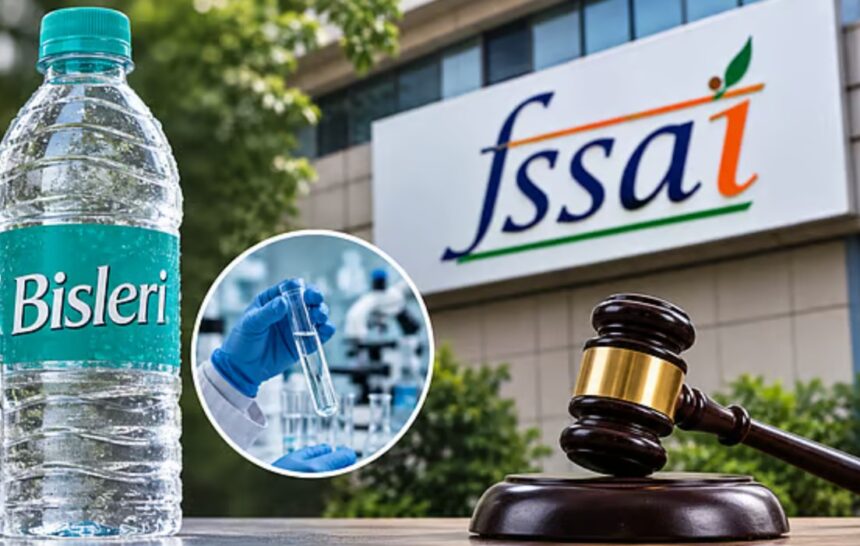
Bisleri International maintains that the disputed batch is no longer available in the market and that all 143 manufacturing plants remain operational. The FSSAI has reportedly directed the company to investigate the cause of the non-compliance.
November 25, 2026: Packaged drinking water manufacturer Bisleri International has clarified that recent regulatory action by the Food Safety and Standards Authority of India (FSSAI) concerns a single production batch manufactured at its Goa facility in September 2025.
The company said the identified batch is no longer available in the market and that subsequent laboratory testing found bromate concentrations within permissible limits.
However, separate findings involving polycyclic aromatic hydrocarbons (PAHs) remain part of the regulatory dispute, with the food safety authority reportedly directing Bisleri to conduct a root cause analysis.
See more of our coverage in your search results.
Add INDYASTORY on GoogleThe development has brought renewed attention to batch-level quality monitoring, laboratory testing and regulatory compliance across India’s packaged drinking water industry.
FSSAI Sale Prohibition Applies Only to Batch GO 270
Bisleri said the sale prohibition issued by the food safety regulator applies specifically to Batch GO 270, manufactured at its Goa facility on September 27, 2025.
According to the company, no stock from the identified batch remains available in the market.
Bisleri, which says it manufactures more than 50,000 batches annually, maintained that the regulatory action should not be interpreted as a restriction on its entire product portfolio or manufacturing network.
The company also clarified that its Goa facility continues to operate and has not received any direction from the regulator to suspend production.
See more of our coverage in your search results.
Add INDYASTORY on GoogleBromate Retest Found Levels Within Permissible Limits
Addressing concerns over chemical contamination, Bisleri said the FSSAI had clarified on November 23, 2026, that bromate levels in the disputed sample were below the prescribed permissible limit upon retesting.
The initial laboratory examination had reportedly identified bromate concentrations exceeding applicable safety requirements.
Bromate can form as an unintended by-product during ozone-based water treatment when ozone reacts with naturally occurring bromide.
See more of our coverage in your search results.
Add INDYASTORY on GoogleIts concentration is subject to regulatory limits because prolonged exposure to elevated levels may pose potential health risks.
While the subsequent bromate result supports Bisleri’s position on that particular parameter, it does not independently resolve the separate PAH findings.
Bisleri Questions Differences in PAH Test Results
Bisleri acknowledged that one of six samples examined during subsequent testing reportedly contained PAHs at a concentration of 0.144 micrograms per litre.
The company maintained that another sample associated with the same production batch met all applicable testing parameters.
Citing inconsistencies between laboratory findings, Bisleri said it had requested further PAH testing in February 2026.
The company also stated that no subsequent samples tested by the FSSAI across its manufacturing facilities had reported adverse PAH findings since then.
Polycyclic aromatic hydrocarbons are a group of chemical compounds that can originate from environmental pollution, industrial processes and incomplete combustion.
Their potential health implications depend on the individual compounds detected, concentration and frequency of exposure.
The findings involving Batch GO 270 remain subject to the applicable regulatory and legal process.
FSSAI Directs Bisleri to Conduct Root Cause Analysis
An important development in the dispute is the regulator’s reported direction requiring Bisleri to investigate the underlying cause of the batch’s non-compliance.
In its November 23 clarification, the FSSAI reportedly confirmed that only one batch had been found non-compliant and that the sale prohibition applied specifically to Batch GO 270.
The regulator also stated that, under the applicable legal framework, the referral laboratory’s report is final in cases where a food business operator appeals an initial laboratory result.
Root cause analysis is intended to identify the underlying circumstances that may have contributed to a product failing prescribed standards.
For packaged drinking water manufacturers, such an investigation may involve examining source water quality, treatment conditions, manufacturing records, equipment maintenance, sampling procedures and laboratory findings.
The specific cause of the reported non-compliance in Bisleri’s case has not been established in the available information.
Why Did FSSAI Sanction Prosecution Against Bisleri?
The regulatory dispute escalated after the FSSAI reportedly sanctioned prosecution proceedings against Bisleri International on November 22, 2026.
The action followed an initial laboratory finding involving bromate levels exceeding prescribed limits and a subsequent referral laboratory finding involving PAHs.
Bisleri challenged aspects of the test results, citing differences between the initial and subsequent examinations.
The company had also stated that it had not received a formal notice concerning the reported prosecution action at the time of its earlier response.
The sanction for prosecution permits legal proceedings to move forward under the Food Safety and Standards Act, 2006. It does not constitute a conviction or establish wrongdoing by the company.
All 143 Bisleri Plants Remain Operational, Company Says
Seeking to distinguish the disputed batch from its broader manufacturing operations, Bisleri maintained that all 143 plants across its network remain operational and comply with applicable FSSAI regulations.
The company said samples collected from subsequent production at its Goa facility had met prescribed food safety requirements.
According to Bisleri’s corporate information, its manufacturing and distribution network includes more than 6,000 distributors and approximately 7,500 distribution trucks across India and the United Arab Emirates.
The company also reports producing more than 50,000 batches annually.
These operational figures and compliance statements represent the company’s position and have not been independently verified for this report.
What Does a Batch-Specific Sale Prohibition Mean?
A batch-specific sale prohibition restricts the sale of products associated with an identified production batch.
It is different from a nationwide product ban or an order suspending manufacturing operations at a particular facility.
Batch identification allows regulators and manufacturers to trace products associated with specific manufacturing dates and production records.
In the Bisleri case, the identified batch is GO 270, manufactured on September 27, 2025.
Although Bisleri says no inventory from this batch remains in circulation, consumers should continue to follow official regulatory advisories and product safety instructions.
A finding involving one batch does not automatically establish the safety status of every other product manufactured by the company.
What Consumers Should Know About Bottled Water Safety
Consumers cannot reliably identify most chemical contaminants through the appearance, smell or taste of drinking water.
Laboratory testing and effective manufacturing controls remain essential for assessing compliance with chemical and microbiological safety standards.
When purchasing packaged drinking water, consumers should:
- Check the batch number, manufacturing date and best-before information.
- Verify that the manufacturer’s FSSAI licence details are displayed.
- Ensure the bottle cap and tamper-evident seal are intact.
- Avoid damaged, leaking or improperly stored bottles.
- Follow official product withdrawal notices and food safety advisories.
Consumers who suspect a food safety violation can report their concerns through the FSSAI’s official consumer grievance channels.
Bisleri Pledges Continued Cooperation With FSSAI
Bisleri has welcomed the regulator’s reported clarification and said it would continue cooperating with authorities while defending its position in any applicable proceedings.
The company has also urged consumers to rely on verified information and indicated that it may pursue legal remedies against claims it considers false or misleading.
The outcome of the dispute will depend on verified laboratory evidence, the root cause analysis and any further regulatory or legal developments.
For India’s packaged drinking water industry, the case highlights the importance of consistent quality testing, transparent communication and effective product traceability.