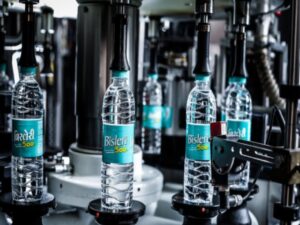
Bottled drinking water is widely regarded as a convenient and hygienic alternative to ordinary drinking water. However, potentially harmful chemical by-products formed during purification raise important questions about water quality, manufacturing practices and consumer safety.
Millions of Indians rely on packaged drinking water while travelling, working, dining out or attending public events. A sealed bottle often provides reassurance that the water inside has undergone purification and quality testing.
However, clear appearance, pleasant taste and attractive packaging do not necessarily reveal everything about the quality of drinking water.
One chemical that has attracted attention from food safety authorities and public health researchers worldwide is bromate, a substance that can form during certain water disinfection processes.
See more of our coverage in your search results.
Add INDYASTORY on GoogleAlthough treatment technologies are designed to eliminate harmful microorganisms, improper control of these processes can result in the formation of unwanted chemical by-products.
What is bromate, and how does it enter bottled water?
Bromate is an inorganic chemical compound that can form when water containing naturally occurring bromide is treated with ozone.
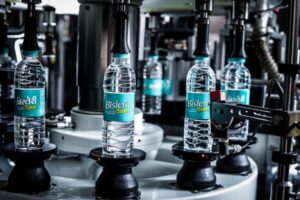
Ozonation is a widely used disinfection technique that helps eliminate bacteria, viruses and other microorganisms. It is used in some packaged drinking water manufacturing facilities because of its effectiveness in treating water.
However, when ozone reacts with bromide naturally present in the source water, bromate may be produced.
The amount formed depends on several factors, including:
See more of our coverage in your search results.
Add INDYASTORY on Google- Bromide concentration in the original water source.
- Ozone dosage during treatment.
- Water temperature and chemical composition.
- Acidity or alkalinity of the water.
- Duration and control of the disinfection process.
The presence of bromate does not necessarily mean that a manufacturer intentionally added a harmful substance. It can arise as an unintended consequence of water treatment.
Effective process monitoring and appropriate treatment design are therefore essential to minimise its formation.
Why is bromate considered a health concern?
Bromate has been investigated internationally because of its potential effects on human health following prolonged exposure.
See more of our coverage in your search results.
Add INDYASTORY on GoogleThe International Agency for Research on Cancer (IARC) has classified potassium bromate as possibly carcinogenic to humans, placing it in Group 2B.
This classification is supported primarily by evidence from animal studies. It does not establish that drinking bottled water containing trace amounts of bromate will necessarily cause cancer in humans.
The potential health risk depends on the concentration of the contaminant, the amount of water consumed and the duration of exposure.
Regulatory authorities generally focus on limiting long-term exposure while ensuring that water remains adequately disinfected against disease-causing microorganisms.
Consumers should understand that the detection of a chemical at a very low concentration is not automatically evidence that a product presents an immediate health threat.
What has FSSAI said about bromate in drinking water?
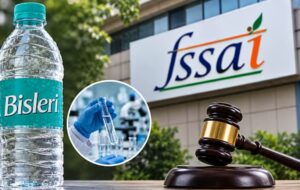
The Food Safety and Standards Authority of India (FSSAI) is responsible for establishing food safety requirements for products sold across the country, including packaged drinking water.
India’s historical food safety standards included a prohibition on bromate in packaged drinking water. A subsequent regulatory proposal considered permitting concentrations of up to 10 micrograms per litre.
The proposal highlighted a broader scientific and regulatory challenge: determining how to establish enforceable limits for contaminants that modern laboratory equipment can detect at increasingly small concentrations.
An absolute prohibition can be difficult to enforce if testing laboratories have different detection capabilities.
At the same time, advances in analytical technology make it possible to identify contaminants at concentrations that were previously difficult to measure.
The historical proposal should not be confused with the latest legally applicable standard. Manufacturers and consumers seeking current regulatory requirements should refer to the most recent FSSAI notifications and applicable product standards.
What do international drinking water standards recommend?
The World Health Organization (WHO) has established a provisional guideline value of 10 micrograms of bromate per litre of drinking water.
The United States Environmental Protection Agency has also established a maximum contaminant level of 10 micrograms per litre for bromate under its drinking water regulations.
European drinking water standards have similarly used a limit of 10 micrograms per litre.
These limits are intended to manage potential health risks while recognising practical challenges associated with water treatment and contaminant detection.
International food safety guidance also emphasises preventing the unnecessary formation of harmful by-products during the processing of water intended for bottling.
A regulatory maximum should not be interpreted as a recommended concentration. Where technically feasible, manufacturers should minimise the formation of unwanted chemical contaminants without compromising microbiological safety.
Can modern purification technology reduce bromate?
Water treatment technology has advanced considerably over the years, allowing manufacturers to exercise greater control over water quality.
Facilities can reduce the risk of bromate formation by assessing source water characteristics, monitoring ozone treatment and selecting purification systems appropriate to the chemical composition of the water.
Modern laboratory techniques, including ion chromatography, can help detect bromate at very low concentrations.
However, the availability of advanced technology alone does not guarantee product safety. Regular testing, calibrated equipment, trained personnel and documented manufacturing procedures remain important.
Manufacturers must also ensure that reducing chemical by-products does not weaken protection against harmful microorganisms.
A reliable water treatment system needs to address both microbiological and chemical safety.
Is bottled drinking water safer than tap water?
Bottled water is not automatically safer than tap water simply because it is packaged and sold commercially.
Water safety depends on the quality of the original source, the treatment process, storage conditions and compliance with relevant safety standards.
Properly treated and monitored municipal drinking water can be safe for consumption. Conversely, packaged water produced under inadequate manufacturing or storage conditions may present health risks.
In areas where the safety of municipal water cannot be established, appropriately treated drinking water from a reliable source can provide an important alternative.
Consumers should also recognise the difference between packaged drinking water and packaged natural mineral water. These are distinct product categories with different characteristics and regulatory requirements.
How to check whether packaged drinking water is reliable
While consumers cannot detect bromate or many other dissolved contaminants through taste, smell or appearance, several basic precautions can help reduce the risk of purchasing improperly manufactured products.
Before buying bottled drinking water, check the following:
- Ensure that the bottle has an intact, tamper-evident seal.
- Check the manufacturer’s name and contact information.
- Look for a valid FSSAI licence number.
- Check the batch number, packaging date and applicable date markings.
- Avoid bottles with damaged packaging, unusual odours or visible particles.
- Purchase water from established retailers and reliable suppliers.
- Avoid bottles that have been stored for prolonged periods in excessive heat or direct sunlight.
Consumers can use the official FSSAI Food Safety Connect platform to access food business information and raise food safety concerns.
These precautions cannot confirm that a bottle is free from bromate. Chemical safety can only be reliably assessed through appropriate laboratory testing.
Does boiling water remove bromate?
Boiling is commonly used to reduce the risk associated with harmful microorganisms in drinking water.
However, boiling is not a reliable method for removing dissolved bromate or many other chemical contaminants.
As water evaporates, the concentration of some dissolved substances may even increase.
Household filtration systems also differ significantly in their capabilities. Consumers concerned about a particular chemical contaminant should select a treatment system independently tested for its ability to reduce that substance.
A filter marketed as a general water purifier should not automatically be assumed to remove every chemical contaminant.
Should consumers stop drinking bottled water?
There is no scientific basis for concluding that all packaged drinking water is unsafe because bromate can form during certain purification processes.
Properly manufactured water that complies with applicable safety standards remains an important source of hydration, particularly when safe alternatives are unavailable.
The more significant concern is whether manufacturers maintain appropriate treatment controls, conduct regular laboratory testing and comply with regulatory requirements.
Consumers should make informed decisions rather than relying on alarming claims that associate every bottle of water with serious illness.
Why stronger monitoring and transparency matter
As India’s packaged drinking water market continues to develop, effective regulatory oversight remains important for protecting public health and maintaining consumer confidence.
Regular independent testing, transparent enforcement and improvements in manufacturing practices can help identify safety issues before they become widespread.
Greater transparency regarding water quality testing could also help consumers make better-informed purchasing decisions.
Scientific advances should support improvements in both contaminant detection and the prevention of avoidable chemical contamination.
Ultimately, the safety of bottled drinking water depends not on its price, packaging or brand popularity, but on the quality of its source water, treatment controls, laboratory testing and regulatory compliance.
The bottom line: Bottled drinking water can be a safe and convenient choice when it is manufactured responsibly. Consumers should purchase products from reliable sources, check packaging information and remain informed about food safety requirements without becoming unnecessarily alarmed by the potential presence of trace contaminants.
Disclaimer: This article is intended for general information and is not a substitute for professional medical advice or official food safety guidance.