A shift in the balance of power in the United States Congress could have significant implications for India’s strategic interests, particularly in international trade, immigration, energy security and diplomatic relations across West Asia.
American midterm elections frequently influence the direction of domestic policymaking and the political environment in which a president operates.
For India, however, the importance of these elections extends well beyond Washington’s internal political dynamics. Decisions made by the United States can affect Indian businesses, technology professionals, energy supplies, defence cooperation and regional security.
A Democratic majority in Congress during Donald Trump’s presidency could introduce additional political constraints on the administration. However, it would not necessarily result in an immediate reversal of American foreign policy or economic protectionism.
See more of our coverage in your search results.
Add INDYASTORY on GoogleNew Delhi would need to assess these developments through the broader framework of its economic interests, strategic autonomy and international partnerships.
Why the US midterm elections matter to India
The United States is one of India’s most important economic and strategic partners.
The relationship encompasses bilateral trade, defence cooperation, technology development, higher education, investment and collaboration across the Indo-Pacific.
Changes in congressional leadership can influence legislation, federal spending, international assistance, immigration rules and oversight of presidential decisions.
Nevertheless, American presidents retain considerable authority over foreign policy, diplomatic negotiations and national security.
See more of our coverage in your search results.
Add INDYASTORY on GoogleA change in congressional control, therefore, does not automatically translate into a fundamental change in America’s relationship with India.
The most significant implications may emerge gradually through legislative negotiations, congressional investigations, budget decisions and competing political priorities.
Domestic economic concerns could influence US foreign policy
Economic conditions frequently shape American electoral behaviour.
See more of our coverage in your search results.
Add INDYASTORY on GoogleInflation, housing affordability, healthcare costs, employment security and household purchasing power remain important considerations for voters.
International military commitments can also become politically sensitive when their financial costs coincide with domestic economic pressures.
If congressional leaders prioritise domestic spending and question overseas military commitments, the administration could encounter greater scrutiny over its international security policies.
For India, such developments would be particularly relevant in West Asia, where regional instability can directly affect energy prices, maritime transportation and the safety of Indian citizens.
However, congressional pressure does not necessarily determine the outcome of individual diplomatic or military decisions.
Why India is closely monitoring developments involving Iran
Iran occupies an important geographical position in India’s extended strategic neighbourhood.
Its location near the Strait of Hormuz, its access to Central Asia and its proximity to major maritime trade routes make it relevant to India’s long-term economic and security interests.
A serious escalation involving Iran could disrupt international energy markets and increase shipping and insurance costs.
India imports a substantial proportion of its crude oil requirements, making the country sensitive to changes in international petroleum prices.
Higher energy prices can increase transportation expenses, manufacturing costs and inflationary pressures across the Indian economy.
They can also affect India’s trade balance and broader fiscal conditions.
Consequently, diplomatic efforts that reduce tensions in West Asia are relevant not only to India’s foreign policy but also to domestic economic stability.
Energy security and the importance of the Strait of Hormuz
The Strait of Hormuz is among the world’s most strategically significant maritime energy routes.
A substantial volume of internationally traded oil and liquefied natural gas passes through this narrow waterway, connecting major Gulf energy producers with global markets.
Any prolonged disruption could have consequences for Asian energy-importing economies, including India.
Indian policymakers must therefore consider several interconnected priorities:
- Maintaining reliable and diversified energy supplies.
- Protecting commercial maritime transportation.
- Preserving relationships with major Gulf energy producers.
- Monitoring geopolitical risks affecting shipping routes.
- Strengthening contingency arrangements for potential supply disruptions.
India’s energy strategy involves balancing immediate commercial requirements with longer-term investments in domestic energy production, renewable technologies and diversified international sourcing.
India’s relationship with Israel and Iran
India maintains important relationships with both Israel and Iran, although the nature of these partnerships differs considerably.
Israel has become a significant partner in defence technology, agriculture, cybersecurity and industrial innovation.
Iran, meanwhile, offers geographical connectivity opportunities and potential access to markets in Central Asia and beyond.
India’s involvement in the development of Iran’s Chabahar Port reflects the strategic importance of establishing alternative regional trade and transportation routes.
A changing American approach towards West Asia could influence the diplomatic environment in which India manages these relationships.
However, stronger engagement with one country does not necessarily require abandoning cooperation with another.
India’s approach has traditionally emphasised strategic autonomy, allowing New Delhi to maintain partnerships with countries that have differing geopolitical interests.
Preserving this flexibility could remain important as regional political and security conditions evolve.
The Indian diaspora remains a major strategic consideration
Millions of Indian citizens live and work across Gulf countries, contributing to both regional economies and India’s domestic economy through remittances.
Countries including the United Arab Emirates, Saudi Arabia, Qatar, Kuwait, Oman and Bahrain host significant Indian communities.
Regional instability can create challenges involving employment, transportation, consular assistance and personal safety.
Disruptions to commercial aviation or maritime routes could also complicate evacuation arrangements during emergencies.
For New Delhi, protecting overseas Indian citizens remains a central consideration in its diplomatic engagement with West Asian governments.
Maintaining effective communication with regional authorities and strengthening emergency response capabilities are therefore essential components of India’s international strategy.
Will Democratic control of Congress change US immigration policy?
Immigration remains one of the most politically contested issues in the United States.
For India, American immigration policies are particularly important because of the substantial number of Indian professionals, researchers, entrepreneurs and students who seek employment or educational opportunities in the country.
The H-1B visa programme has historically provided an important route for eligible skilled foreign professionals working in specialised occupations.
Changes to visa fees, eligibility requirements, processing procedures and employment regulations can have significant implications for Indian applicants and technology companies.
A Democratic majority in Congress would not automatically guarantee more favourable immigration rules.
American immigration policy involves competing concerns, including domestic employment, border security, international competitiveness and the demand for specialised skills.
Some reforms require congressional legislation, while others may be introduced through executive or administrative action.
Indian professionals and businesses should therefore monitor actual legislative proposals and regulatory announcements rather than assuming that an electoral outcome will result in immediate policy changes.
Could US protectionism continue under a Democratic Congress?
Trade policy is another area in which a shift in congressional control may not produce a straightforward reversal of existing American priorities.
Economic protectionism, domestic manufacturing incentives and supply chain security have attracted varying degrees of support across both major American political parties.
American policymakers increasingly examine trade relationships through the lens of national security, industrial competitiveness and dependence on overseas production.
These considerations could affect Indian exporters operating in sectors such as:
- Pharmaceuticals and healthcare products.
- Information technology and business services.
- Textiles and apparel.
- Engineering and automotive components.
- Electronics and advanced manufacturing.
- Agricultural products.
India’s ability to maintain competitive access to the American market will depend on diplomatic negotiations, regulatory compliance, product quality and the broader direction of US trade policy.
A diversified export strategy could also help reduce exposure to sudden changes in individual overseas markets.
China and the future of the Indo-Pacific
The United States’ relationship with China remains a defining issue in contemporary international politics.
For India, American engagement in the Indo-Pacific has implications for maritime security, regional stability, defence partnerships and global technology supply chains.
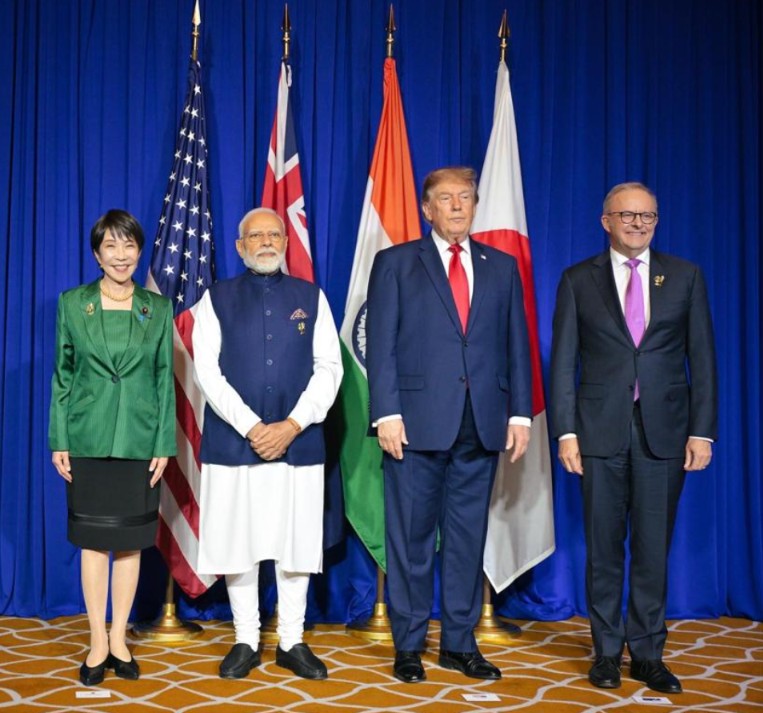
India participates in the Quadrilateral Security Dialogue, commonly known as the Quad, alongside the United States, Japan and Australia.
The grouping provides a platform for cooperation in areas including maritime awareness, infrastructure, emerging technologies and regional resilience.
Political disagreements between the White House and Congress could complicate certain American policy decisions.
Nevertheless, strategic competition with China has received substantial bipartisan attention in Washington.
It would therefore be premature to assume that a Democratic congressional majority would necessarily weaken or abandon American engagement in the Indo-Pacific.
India’s long-term approach will continue to depend on strengthening its own defence capabilities while maintaining constructive relationships with international partners.
How Russia could influence India’s diplomatic calculations
India’s relationship with Russia remains relevant to defence cooperation, energy procurement and broader geopolitical engagement.
At the same time, New Delhi has expanded its partnerships with the United States and European countries across technology, investment, security and manufacturing.
Changes in American policy towards Russia could affect international sanctions, energy markets and financial arrangements involving Indian businesses.
However, India’s strategic interests do not always align completely with the priorities of either Washington or Moscow.
Maintaining diplomatic flexibility allows India to assess international developments according to its own national interests.
The evolution of US-Russia relations will therefore remain an important consideration for Indian policymakers, regardless of which party controls Congress.
Could India face greater scrutiny from US lawmakers?
Congressional leadership can influence the issues examined through hearings, legislative committees and diplomatic oversight.
American lawmakers may raise concerns involving international religious freedom, democratic institutions, civil liberties and human rights.
India has previously faced criticism from some American political figures and organisations on these issues, while Indian authorities have disputed external assessments they consider inaccurate or inappropriate.
Such disagreements do not necessarily prevent cooperation in trade, technology or national security.
However, they can create diplomatic challenges that require engagement through established bilateral channels.
The strength of India-US relations will depend partly on the ability of both countries to manage disagreements while preserving cooperation in areas of shared interest.
What India should watch in the coming months
The practical implications of American electoral developments will become clearer through policy decisions rather than political rhetoric alone.
Several areas deserve particular attention, including congressional action on trade and immigration, the administration’s approach towards Iran, international energy market conditions and Washington’s engagement in the Indo-Pacific.
Changes to defence spending, technology export controls and sanctions policies could also influence India’s economic and security environment.
For Indian businesses, maintaining awareness of American regulatory developments will be essential.
For policymakers, diversification of international partnerships and protection of critical economic interests will remain important.
The road ahead for India-US relations
The relationship between India and the United States has developed across administrations led by both Republicans and Democrats.
Shared economic interests, technological cooperation, defence partnerships and regional security considerations provide important foundations for continued engagement.
Political changes in Washington can nevertheless create periods of uncertainty, particularly when domestic disagreements affect international commitments.
A Democratic congressional majority could increase scrutiny of presidential policies without necessarily producing a complete transformation of American foreign relations.
For India, the most effective assessment will involve examining specific legislative developments, diplomatic decisions and economic measures rather than interpreting the election exclusively as a political victory or defeat.
The broader challenge for New Delhi is to maintain strategic flexibility while protecting energy security, supporting Indian professionals, strengthening domestic industries and preserving productive international partnerships.
Ultimately, India’s interests will be shaped less by the political colour of the United States Congress than by the policies that emerge from Washington and their consequences for the global economy.
Disclosure: This IndyaStory analysis examines potential geopolitical and economic implications of changes in US congressional control. Future policy outcomes remain uncertain and should not be interpreted as established developments.