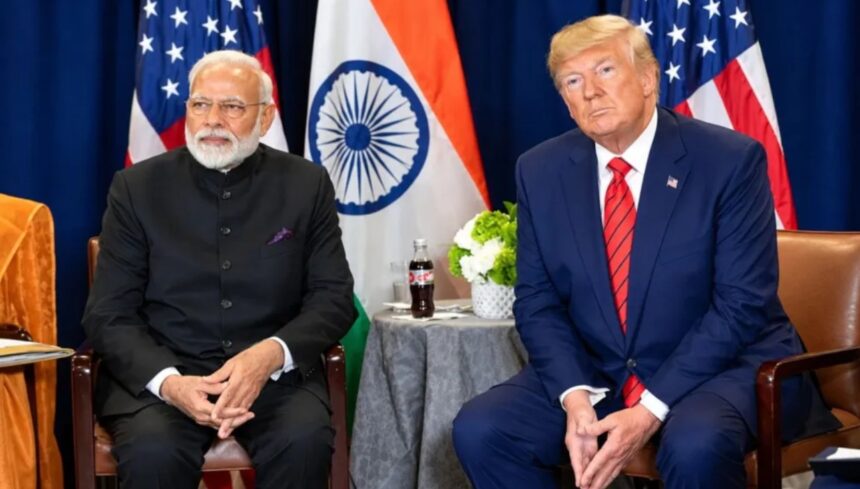
Washington’s proposed tariff framework could give Indian exporters a competitive advantage over several Asian economies if New Delhi and Washington conclude a formal trade agreement. Agricultural market access and manufacturing policies remain important issues in the negotiations.
New Delhi: The United States has reportedly proposed tariffs of up to 25% on imports from India following investigations into manufacturing capacity and goods produced using forced labour, while offering a potentially lower tariff rate of 17% if the two countries conclude a formal trade agreement.
The proposal, attributed to the Office of the United States Trade Representative (USTR), introduces a new dimension to ongoing negotiations between New Delhi and Washington over bilateral trade, market access and economic cooperation.
Under the proposed framework, India could benefit from comparatively lower tariffs than several competing Asian manufacturing economies if an agreement addressing US concerns is successfully concluded.
See more of our coverage in your search results.
Add INDYASTORY on GoogleHowever, without a formal agreement, Indian exporters could face higher duties, potentially affecting their competitiveness in the American market.
The proposal remains subject to regulatory procedures, including public consultations and a hearing.
US Proposes New Tariff Framework Under Section 301
The proposed duties follow US investigations conducted under Section 301 of the Trade Act of 1974, which provides American authorities with mechanisms to respond to foreign trade practices considered discriminatory, unreasonable or restrictive to US commerce.
According to the supplied reporting, the USTR determined that certain Indian manufacturing policies associated with structural excess capacity warranted consideration of additional trade measures.
The proposed tariff framework would allow duties of up to 25% on Indian goods, subject to specified exemptions and adjustments for existing trade measures.
See more of our coverage in your search results.
Add INDYASTORY on GoogleA lower rate of 17% could be considered if India concludes an Agreement on Reciprocal Trade that addresses the findings of the investigation.
The distinction between a proposed tariff and an implemented tariff is important. The final obligations faced by Indian exporters would depend on the outcome of the regulatory process, product-specific exemptions and the terms of any bilateral agreement.
The proposed 17% rate would therefore represent a conditional trade arrangement rather than an automatically applicable reduction.
See more of our coverage in your search results.
Add INDYASTORY on GoogleIndia Could Gain a Competitive Advantage Over Asian Exporters
One of India’s key objectives in its trade negotiations with the United States has been securing favourable market access relative to competing manufacturing economies.
According to an assessment attributed to the Global Trade Research Initiative (GTRI), the proposed 17% tariff could place India in a comparatively advantageous position against several Asian exporters.
The supplied figures indicate potential negotiated tariff rates of 18% for Bangladesh, Cambodia, Indonesia, Malaysia and Thailand, while Vietnam and China could face rates of 20%.
Under this scenario, Indian goods would benefit from a one-percentage-point tariff advantage over countries facing an 18% rate and a three-percentage-point advantage over those facing a 20% rate.
Such differences could influence purchasing decisions by American importers, particularly in industries operating with narrow profit margins.
However, tariff rates represent only one component of international competitiveness.
Manufacturing costs, product quality, logistics infrastructure, delivery schedules, exchange rates and regulatory compliance also influence sourcing decisions.
A favourable tariff arrangement could strengthen India’s position, but its commercial benefits would depend on the country’s ability to deliver competitively priced products at scale.
What Is Structural Excess Capacity?
Structural excess capacity refers to a situation in which industrial production capabilities remain significantly above sustainable market demand, potentially supported by government policies or financial interventions.
In international trade, concerns can arise when businesses maintain or expand production capacity despite insufficient demand, particularly if government support enables goods to be sold internationally under conditions considered distortive by trading partners.
US authorities have increasingly examined industrial subsidies, manufacturing incentives and other policies that could influence global production and pricing patterns.
The reported Section 301 investigation assessed whether certain Indian policies relating to manufacturing capacity burdened or restricted American commerce.
India’s manufacturing strategy, meanwhile, has focused on expanding domestic industrial capabilities, attracting investment and strengthening its position within international supply chains.
The challenge for bilateral negotiations will be addressing trade concerns while preserving sufficient policy flexibility to support India’s industrial development objectives.
The USTR’s reported findings represent the American authorities’ assessment and should not be interpreted as an independent judicial determination of India’s trade practices.
Forced Labour Concerns Form Another Part of Trade Negotiations
The proposed tariff framework also follows a separate US investigation involving imports of goods produced using forced labour.
The International Labour Organization defines forced labour broadly as work or service extracted from a person under the threat of a penalty and for which the individual has not offered themselves voluntarily.
Governments have introduced various regulatory mechanisms to prevent products associated with forced labour from entering international supply chains.
According to the supplied report, India had previously announced restrictions on imports of goods produced using forced labour through its Directorate General of Foreign Trade.
The United States reportedly imposed a 10% tariff in June 2026 following earlier proposals involving a higher rate.
For Indian exporters, compliance with international labour standards, supplier verification and supply-chain traceability could become increasingly important as trade enforcement mechanisms evolve.
Manufacturers serving international markets may need to demonstrate greater transparency concerning the origin of raw materials, employment conditions and production processes.
However, a country-level trade investigation does not establish that every manufacturer or product originating from that country involves forced labour.
Which Indian Industries Could Be Affected?
Changes in American import duties could have different consequences across India’s export-oriented industries.
Textiles and Garments
India competes with Bangladesh, Vietnam and other Asian economies in supplying apparel and textile products to international markets.
A comparatively favourable tariff rate could help Indian manufacturers improve their position when American retailers assess production costs and sourcing alternatives.
However, production efficiency, labour costs and delivery capabilities would remain significant considerations.
Electronics and Smartphone Manufacturing
India has been expanding its electronics manufacturing capabilities as international companies seek to diversify their production networks.
Lower relative tariffs could support exports of eligible electronic products and encourage further investment in manufacturing facilities.
The actual benefits would depend on product-specific tariff classifications, exemptions and domestic value addition.
Engineering and Automotive Components
Indian engineering companies and automotive component manufacturers supply products to international industrial customers.
Higher tariffs could increase the landed cost of their products, while a negotiated reduction could help preserve existing commercial relationships.
Gems and Jewellery
The United States is an important market for India’s gems and jewellery exporters.
Changes in import duties could influence retail pricing, consumer demand and exporter profitability, particularly in segments with limited pricing flexibility.
Pharmaceuticals and Chemicals
India’s pharmaceutical and chemical industries are significant participants in global supply chains.
However, the impact of the proposed measures would depend heavily on whether particular products qualify for exemptions or face separate regulatory arrangements.
Dairy and Genetically Modified Products Remain Sensitive Issues
Agricultural market access continues to represent an important challenge in India-US trade negotiations.
The United States has sought expanded access for agricultural products, including certain genetically modified commodities and dairy products.
India has historically maintained restrictions and regulatory requirements in these areas, reflecting concerns involving food safety, agricultural livelihoods, domestic production and cultural preferences.
Commerce and Industry Minister Piyush Goyal reportedly reiterated on November 3, 2026, that India remained opposed to opening its market to genetically modified products and certain dairy imports.
India’s dairy industry supports a large network of farmers, cooperatives and rural households, making agricultural market access politically and economically sensitive.
American trade authorities have argued that certain Indian dairy certification requirements constitute non-tariff barriers.
India, meanwhile, has emphasised the importance of preserving its domestic agricultural framework and addressing consumer and religious sensitivities.
Finding an acceptable balance between these positions could influence the timing and scope of a comprehensive trade agreement.
How a 17% Tariff Could Affect Indian Export Competitiveness
The difference between a 25% tariff and a 17% tariff could be commercially significant for businesses supplying the American market.
For illustration, an eligible shipment with a customs value of $100,000 would attract a tariff of $25,000 at a 25% rate.
At a 17% rate, the corresponding duty would be $17,000, representing a difference of $8,000 before considering other taxes, fees or applicable trade measures.
This difference could provide American importers and Indian suppliers with greater flexibility when negotiating product prices, managing operating margins or determining sourcing locations.
Import duties are generally paid to US customs authorities by the importer of record, although the economic burden can be shared among importers, exporters and consumers through commercial pricing arrangements.
The actual financial impact would depend on the applicable customs valuation, tariff classification and contract terms.
Could the Trade Agreement Attract More Manufacturing Investment to India?
A favourable tariff arrangement could strengthen India’s position as an alternative manufacturing destination for international companies seeking diversified supply chains.
Businesses evaluating new production locations consider several factors, including access to major consumer markets, infrastructure quality, labour availability and long-term regulatory stability.
A predictable trade framework with the United States could reduce uncertainty for companies considering export-oriented manufacturing investments in India.
Potential opportunities could emerge across electronics, consumer goods, industrial machinery, automotive components and other manufacturing sectors.
Nevertheless, tariff advantages alone would not guarantee an increase in foreign investment.
India’s ability to improve logistics, strengthen supplier ecosystems, reduce operational costs and maintain regulatory consistency would remain essential to attracting sustainable industrial investment.
What the Proposed Tariffs Could Mean for India’s Economy
The economic consequences of the proposed US tariff framework would depend on the final rates, product coverage and timing of implementation.
Higher import duties could reduce the price competitiveness of Indian products in the United States, potentially affecting export orders and business profitability.
Conversely, a negotiated rate below those applicable to competing economies could improve opportunities for selected Indian industries.
Developments in bilateral trade negotiations could also influence corporate investment decisions, employment within export-oriented manufacturing sectors and expectations surrounding foreign currency earnings.
The impact on the Indian rupee, inflation and overall economic growth would depend on a broader range of economic factors.
The tariff proposal should therefore be assessed alongside domestic demand, international market conditions, global commodity prices and the country’s wider trade relationships.
Will Section 301 Replace Earlier Reciprocal Tariffs?
The supplied reporting indicates that the proposed Section 301 measures could replace the earlier reciprocal tariff framework associated with bilateral trade negotiations.
Section 301 provides a specific statutory mechanism through which the United States can investigate and respond to certain foreign trade practices.
However, determining how new duties interact with existing Section 301 measures, Section 232 tariffs and other customs obligations requires examination of the final regulatory text.
Indian exporters should not assume that the proposed 17% or 25% rate will represent the complete duty payable on every shipment.
Existing product-specific tariffs, exemptions, trade remedies and other customs requirements could influence the final amount payable.
Greater clarity is expected once the US authorities complete the relevant consultation process and publish any final implementing measures.
What Happens Next in India-US Trade Negotiations?
The next phase of the proposed tariff framework reportedly includes a public consultation and hearing organised by the USTR.
Businesses, industry associations and other stakeholders may have opportunities to submit their views on the proposed measures and their potential commercial consequences.
Meanwhile, negotiations between New Delhi and Washington are expected to remain focused on tariff commitments, agricultural market access, manufacturing policies and regulatory cooperation.
A formal trade agreement could provide India with greater certainty concerning its access to the American market.
However, the proposed tariff reduction remains conditional, and the supplied information does not establish that a final agreement has been signed.
For Indian exporters, the immediate priority will be monitoring official regulatory developments and preparing for different tariff scenarios.
The outcome of the negotiations could influence India’s position within global manufacturing supply chains and the future direction of economic relations between two of the world’s largest economies.