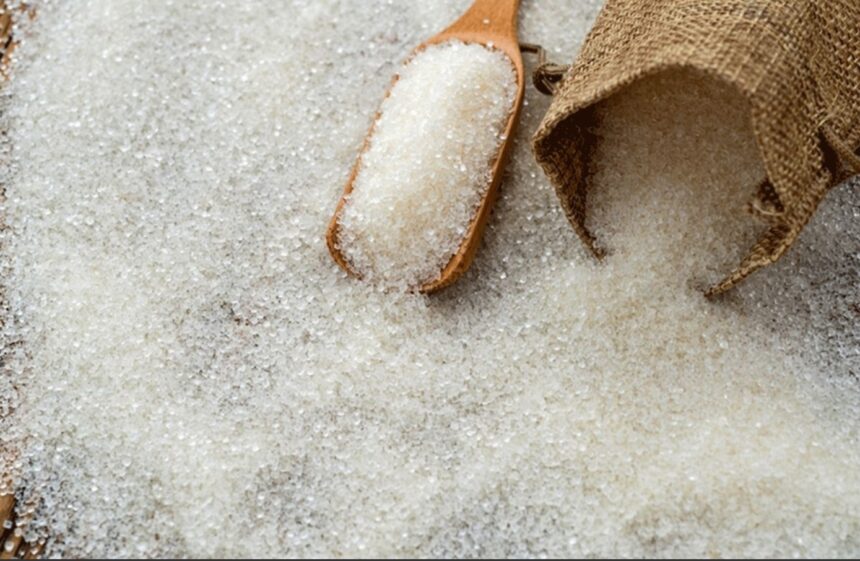
Sugar prices remained elevated across much of India on August 30, with the all-India average retail price rising above Rs 64 per kg despite a series of government measures aimed at cooling the market.
Official data from the Consumer Affairs Ministry showed that the average retail price of sugar stood at Rs 64.24 per kg on Sunday. The figure was 1.77% higher than the Rs 63.12 per kg recorded a week earlier.
The sharper concern, however, is the speed of the recent increase. The current average retail price is around 30% higher than a month ago and 38.63% above the level recorded during the corresponding period last year.
The continued rise in retail prices comes despite the Centre opening the door to duty-free imports of raw sugar, tightening stockholding norms for bulk users and dealers, and previously imposing restrictions on sugar exports.
See more of our coverage in your search results.
Add INDYASTORY on GoogleSugar prices remain elevated across major cities
Sugar continued to sell above Rs 60 per kg in several major retail markets on August 30, according to the Consumer Affairs Ministry’s data.
The maximum retail price recorded was Rs 74 per kg, while the minimum was Rs 40 per kg.
Among major cities, retail prices stood at:
- Delhi: Rs 62 per kg
- Mumbai: Rs 66 per kg
- Chennai: Rs 63 per kg
- Ranchi: Rs 68 per kg
The difference between the highest and lowest prices also highlights the variation consumers are facing across different markets and locations.
With sugar being a widely consumed household commodity and an important input for the food and beverage industry, a sustained increase in prices can affect both family budgets and production costs for businesses.
See more of our coverage in your search results.
Add INDYASTORY on GoogleWholesale sugar prices also remain firm
The increase was not limited to retail markets.
Wholesale sugar prices stood at Rs 59.73 per kg, compared with Rs 58.66 per kg a week earlier, according to the data cited in the report.
On a month-on-month basis, wholesale prices were around 31% higher, while the year-on-year increase was 38.63%.
See more of our coverage in your search results.
Add INDYASTORY on GoogleThe persistence of elevated prices at both wholesale and retail levels suggests that the government’s interventions have yet to produce a significant reduction in the prices consumers are currently paying.
The price trend has drawn attention because it has continued even after ex-mill sugar rates reportedly declined sharply following the government’s import decision.
Ex-mill prices fall, but consumers still pay more
One of the key developments in the sugar market has been the gap between ex-mill prices and the prices paid by consumers.
Ex-mill rates have reportedly declined by nearly 20% after the government decided to permit duty-free imports of 10 lakh tonnes of raw sugar.
However, the fall in ex-mill rates has not yet resulted in a similar reduction at the retail level.
Industry sources note that there is normally a difference between prices at different stages of the supply chain.
According to the industry estimates cited in the report:
- A gap of around Rs 2-3 per kg between ex-mill and wholesale prices is considered typical.
- A gap of around Rs 7-8 per kg between ex-mill and retail prices is also considered common.
These differences can reflect transportation, storage, distribution, packaging and retail margins, among other commercial costs.
However, when retail prices remain elevated even after ex-mill rates decline, the gap becomes an important part of the broader discussion around price transmission through the supply chain.
Centre takes multiple steps to control sugar prices
The government has taken several measures in an effort to increase supply availability and prevent excessive price increases.
Among the most significant recent interventions is the decision to allow duty-free imports of 10 lakh tonnes of raw sugar.
The move was intended to increase availability and help ease pressure on domestic prices.
The Centre has also tightened stockholding norms for bulk users and dealers, aiming to prevent excessive accumulation of stocks that could potentially worsen supply pressures.
In addition, the government had earlier imposed restrictions on sugar exports as part of efforts to prioritise domestic availability.
Despite these steps, retail sugar prices remained above Rs 60 per kg in most markets covered by the latest official data.
Government blames mills for pushing prices higher
The Centre has maintained that the country has adequate sugar stocks and has blamed sugar mills for increasing prices.
The government has accused mills of “jacking up” prices despite what it considers sufficient domestic availability.
The industry’s pricing decisions have therefore become a central point in the government’s response to the recent surge.
At the same time, the sugar sector is dealing with concerns over production levels.
Sugar output for the 2025-26 marketing year, which runs from October to September, has been pegged at around 306 lakh tonnes, according to the figures cited in the report.
That estimate is lower than the earlier projection of 343 lakh tonnes.
The reduction in expected production has added to concerns about the overall balance between domestic supply, consumption and available stocks.
Domestic demand estimated at 280-285 lakh tonnes
India’s annual domestic sugar demand is estimated at around 280 lakh to 285 lakh tonnes.
The relationship between production and demand is closely watched by policymakers because even relatively small changes in output expectations, stock levels or market availability can influence prices.
A projected production figure of 306 lakh tonnes would still need to be assessed alongside existing opening stocks, imports, industrial demand, government reserves and other market factors.
This is why headline production figures alone do not necessarily determine retail prices.
Market conditions can also be affected by the pace at which sugar is released by mills, distribution patterns, speculative activity, regional supply differences and demand from bulk consumers.
The latest price data indicates that these market dynamics remain under close scrutiny.
Consumers face the impact of a sharp monthly increase
For households, the most immediate concern is the sharp rise in the price paid at the retail counter.
An all-India average of Rs 64.24 per kg represents a significant increase from the level seen a month earlier.
The roughly 30% month-on-month rise is particularly notable because sugar is a regular household purchase and is also used extensively by food manufacturers, restaurants, bakeries and beverage companies.
Higher sugar prices can eventually have wider implications for the cost of sugar-based products, although the extent of any price impact depends on individual businesses and other input costs.
With the festive season and changing consumer demand patterns capable of influencing food markets, the government’s next steps will be closely monitored.
Why the sugar market is under pressure
The latest price surge reflects a combination of concerns surrounding supply, production expectations and the movement of sugar through the market.
While the Centre has rejected suggestions that sugar price inflation should be attributed to the diversion of sugarcane for ethanol production, the issue remains part of the wider public debate around the country’s sugar and ethanol policies.
The government has sought to increase ethanol use as part of its broader energy strategy while simultaneously managing domestic food commodity availability.
Farmer groups and sections of the food industry have raised questions about the relationship between sugarcane use, ethanol production and sugar supply, although the Centre has rejected the claim that ethanol diversion is responsible for the current price increase.
The latest retail and wholesale figures show that sugar remains one of the closely watched food commodities in India.
What happens next?
The key question now is whether recent government measures will begin to have a stronger effect on prices in the coming weeks.
The decline in ex-mill rates following the import decision suggests that policy interventions may be influencing parts of the supply chain. But the benefit has not yet been reflected to the same extent in retail prices.
The government is likely to remain focused on stock levels, mill releases, wholesale distribution and retail market trends.
For consumers, the most important indicator will be whether sugar prices begin to move closer to pre-surge levels.
As of August 30, the data showed no major relief at the retail level. With the national average still at Rs 64.24 per kg and prices in several major cities remaining above Rs 60 per kg, the government’s efforts to contain the surge continue to face a significant market challenge.
The coming weeks will be crucial in determining whether higher imports, tighter stockholding rules and continued government monitoring are enough to bring sugar prices under control.
For now, India’s sugar market remains caught between policy intervention, production concerns and persistently high prices at the consumer level.