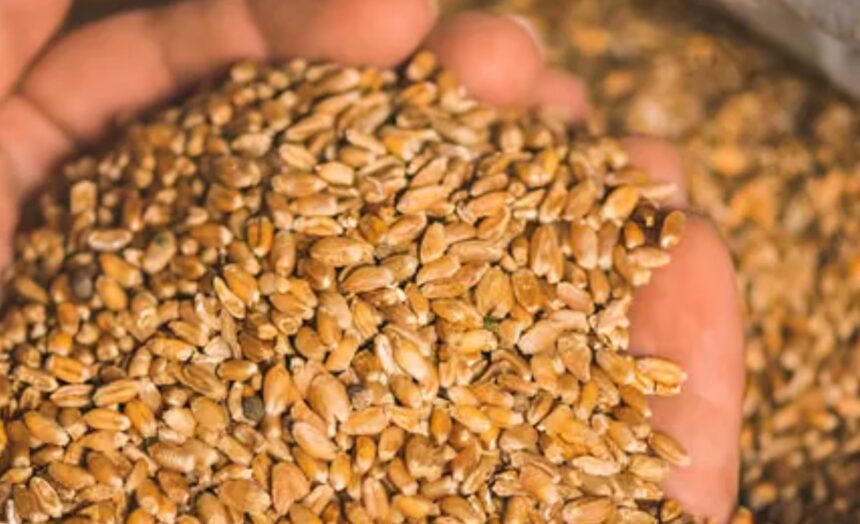
India could have an opportunity to expand its presence in the international wheat trade as strong domestic production, comfortable government stocks and changes in global sourcing patterns create room for higher exports, according to an ASSOCHAM report.
The industry body estimates that the potential opportunity for Indian wheat exports could exceed $1.5 billion.
The assessment comes as India gradually eases some of the restrictions that had constrained wheat exports for several years. At the same time, international buyers are increasingly looking to diversify their sources of supply, potentially opening additional markets for Indian exporters.
However, the opportunity is not automatic. India will need to maintain adequate domestic supplies while improving export logistics, grain quality, storage infrastructure and policy predictability if it wants to establish itself as a dependable long-term supplier.
See more of our coverage in your search results.
Add INDYASTORY on GoogleWhy India’s Wheat Export Outlook Is Changing
India’s position in the global wheat market has changed significantly over the past few years.
Export restrictions introduced during a period of domestic supply and food-price concerns limited India’s participation in international trade. The gradual relaxation of those restrictions in 2026 has created a pathway for exporters to explore overseas demand again.
According to the ASSOCHAM assessment, policy changes have also covered categories such as wheat, durum wheat, wheat flour, maida and semolina/rava.
The reopening of export channels comes at a time when India has recorded strong domestic wheat production and maintains substantial stocks.
That combination could give exporters greater flexibility, provided domestic food-security requirements remain protected.
See more of our coverage in your search results.
Add INDYASTORY on GoogleIndia Produced a Record 120.7 Million Tonnes of Wheat
India’s production strength is central to the export opportunity.
The country produced approximately 120.7 million tonnes of wheat in FY2025-26, according to the figures cited in the report.
India remains the world’s second-largest wheat producer, giving it a sizeable domestic production base from which to serve both local consumption and overseas markets.
See more of our coverage in your search results.
Add INDYASTORY on GoogleProduction alone, however, does not determine export capacity. Domestic consumption, government procurement, buffer-stock requirements, weather conditions and food-security policies all influence how much wheat can ultimately be exported.
Government Wheat Stocks Provide an Additional Cushion
The availability of stocks is another factor highlighted by ASSOCHAM.
As of May 28, 2026, wheat stocks in India’s central pool stood at approximately 51.3 million tonnes, compared with a July 1 buffer-stock norm of around 27.58 million tonnes.
The difference indicates that stocks were comfortably above the specified buffer requirement at the time cited in the report.
That does not mean the entire surplus is available for international sale. Government inventories also support India’s food-distribution system and other domestic requirements.
Nevertheless, the relatively strong stock position provides a degree of flexibility that could support a measured expansion in exports.
India May Have a Price Advantage
Price competitiveness could also influence India’s ability to win international orders.
ASSOCHAM’s report compares India’s wheat support price with international market prices. For FY2026-27, India’s wheat MSP was equivalent to approximately $268 per tonne, while the international wheat price cited for May 2026 was around $303 per tonne.
That represented a difference of approximately $35 per tonne.
The comparison provides an indication of potential price competitiveness, but it should not be interpreted as a direct measure of exporters’ margins.
The final economics of an export shipment depend on several additional costs, including inland transportation, storage, handling, testing, insurance, financing, port charges and ocean freight.
Bangladesh Emerges as a Key Opportunity
Among potential overseas markets, Bangladesh stands out as an important opportunity for Indian wheat exporters.
Bangladesh imported approximately 6.7 million tonnes of wheat in FY2024-25, according to the figures cited by ASSOCHAM.
India already has an established position among Bangladesh’s wheat suppliers, giving Indian exporters an advantage in terms of existing trade relationships and geographic proximity.
Shorter transportation distances can also be commercially useful when compared with suppliers located farther from the Bangladeshi market.
The opportunity could extend beyond Bangladesh, with ASSOCHAM identifying markets including Egypt, Indonesia, Algeria, Morocco and the Philippines as potential destinations for gradually expanding Indian wheat exports.
Global Wheat Production Could Decline
India’s potential export opportunity is also emerging against a changing global supply backdrop.
ASSOCHAM’s report puts projected global wheat production for 2026-27 at around 819 million tonnes, compared with approximately 843.8 million tonnes in 2025-26.
Weather-related difficulties affecting major producing and exporting countries could contribute to the expected decline.
Lower production in major exporting regions can tighten international supply and encourage importers to explore alternative origins.
For India, this creates a potential opening. Buyers that previously relied heavily on a smaller group of major suppliers may increasingly value supply diversification.
Global Buyers Are Looking for More Reliable Suppliers
Food-importing countries have strong incentives to avoid excessive dependence on any single source.
Weather disruptions, geopolitical tensions, transportation bottlenecks and sudden changes in trade policy can all affect the availability and cost of agricultural commodities.
As a result, importers may seek a broader supplier base.
India’s large production capacity gives it the potential to participate in this diversification.
But gaining a larger share of the global wheat trade will require more than competitive pricing. International buyers also expect consistency in quality, shipment schedules and contractual execution.
Quality Could Determine India’s Long-Term Export Success
One of the biggest challenges for India will be ensuring that export-oriented wheat consistently meets the specifications required by international buyers.
Different markets can have specific requirements relating to grain quality, moisture levels, protein content, contamination controls and other characteristics.
That makes testing and certification infrastructure particularly important.
A larger export programme would therefore need stronger quality-assurance systems across the supply chain, from procurement and storage through processing, transportation and port handling.
Logistics Remain a Critical Factor
India’s competitiveness will also depend on the efficiency of moving wheat from producing regions to overseas customers.
Transportation costs can significantly affect the final export price of agricultural commodities.
Better storage facilities can reduce quality deterioration and post-harvest losses, while efficient rail, road and port infrastructure can improve delivery reliability.
For Indian exporters competing against established suppliers, these factors could be just as important as the headline price of wheat.
Policy Predictability Will Matter for Exporters
Wheat is both an internationally traded commodity and an important food item for India’s domestic population.
That creates a policy challenge.
The government needs to balance opportunities for agricultural exports with food availability and domestic price stability.
For exporters, predictable rules are particularly important because international contracts can extend over periods during which policy conditions may change.
ASSOCHAM has therefore stressed the importance of a gradual and predictable export-policy framework.
Greater policy clarity could help exporters plan contracts, build overseas relationships and invest in infrastructure with more confidence.
Can India Become a More Important Global Wheat Supplier?
India has several advantages that could support a larger role in global wheat trade:
- A large domestic production base
- Substantial government stocks
- Proximity to major Asian markets
- Existing relationships with some importing countries
- Potential price competitiveness
- A growing ability to serve multiple overseas destinations
At the same time, there are limitations.
Domestic food-security requirements will remain a priority. International buyers may demand specific quality standards, while freight and handling costs can affect India’s competitiveness.
The country will therefore need to convert its production advantage into a reliable export supply chain.
What the $1.5 Billion Opportunity Really Means
The $1.5 billion-plus figure cited by ASSOCHAM should be viewed as a potential market opportunity rather than guaranteed export revenue.
Actual exports will depend on international wheat prices, India’s available surplus, government policy, overseas demand, quality specifications and logistics costs.
The size of the opportunity could also change as global production forecasts and market conditions evolve.
In other words, the estimate highlights the scale of the potential market rather than promising that India will immediately generate that amount from wheat exports.
India’s Next Challenge Is Turning Surplus Into Sustainable Exports
The immediate opportunity may come from countries seeking alternative wheat suppliers, but the longer-term objective would be to establish India as a dependable participant in global wheat trade.
That requires investment across the entire supply chain.
Better warehouses, modern testing laboratories, efficient transportation networks, improved port infrastructure and consistent export standards can help Indian suppliers compete beyond individual short-term price opportunities.
A predictable policy framework would further support this transition.
The Road Ahead for Indian Wheat Exports
India’s wheat export prospects have improved as domestic production remains strong and restrictions have gradually eased.
The combination of 120.7 million tonnes of FY2025-26 production, substantial central-pool stocks and changing global procurement strategies provides a stronger foundation for exports than India had during the period of tighter restrictions.
Bangladesh could remain one of the most accessible markets, while opportunities in Egypt, Indonesia, Algeria, Morocco and the Philippines could provide additional avenues for expansion.
But the next phase will require careful execution.
India will need to protect domestic food security while building a competitive export industry capable of delivering the quality, consistency and reliability demanded by international buyers.
Bottom Line
ASSOCHAM’s assessment points to a potentially significant opening for India in the global wheat market, with an export opportunity estimated at more than $1.5 billion.
Strong production and stocks give India a useful starting point, while supply diversification among global buyers could create new demand.
Whether that potential becomes sustained export growth will depend on competitive pricing, grain quality, logistics, infrastructure and stable trade policy.
For India, the opportunity is therefore not simply about exporting more wheat. It is about building the infrastructure and market credibility required to become a reliable long-term supplier in global wheat trade.