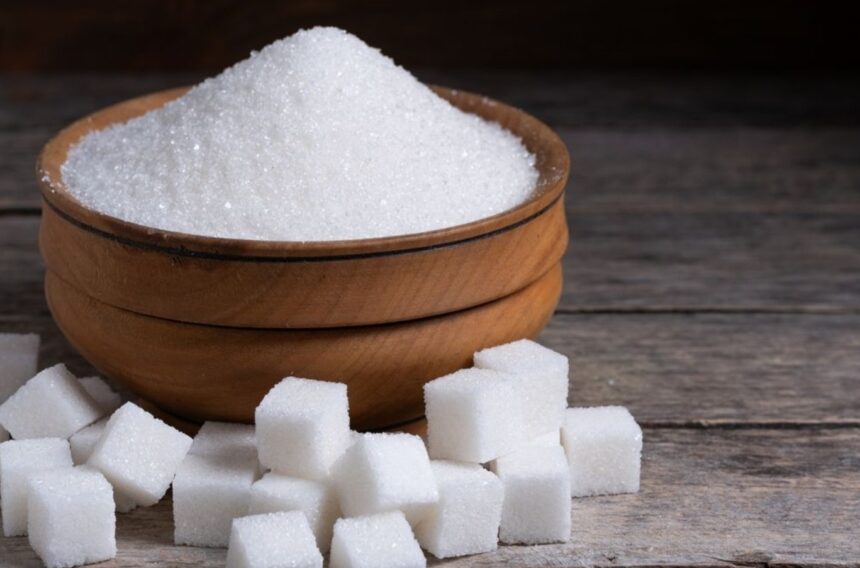
The recent rise in sugar prices has renewed debate over ethanol production and the availability of sugarcane for different industries, with farmers in Karnataka demanding permission for jaggery units to produce ethanol.
The demand comes as the government faces questions over whether the increasing use of sugarcane-based ethanol is affecting the domestic sugar market. While the Centre has rejected suggestions that the rise in sugar prices is directly linked to the diversion of sugarcane for ethanol production, farmer groups and food industry representatives continue to raise concerns about the broader impact of ethanol policy on sugar availability and prices.
For sugarcane growers in Karnataka, however, the debate has also opened the door to a larger demand: greater participation in the ethanol economy.
The State Sugarcane Growers’ Association has argued that the benefits of ethanol production should not remain limited to large sugar factories. Instead, the association wants local jaggery units to be given the technology and regulatory approval required to produce ethanol from eligible feedstocks.
See more of our coverage in your search results.
Add INDYASTORY on GoogleFarmers seek a larger role in the ethanol economy
State Sugarcane Growers’ Association president Kurubur Shanthakumar said smaller, local jaggery units should be allowed to participate in ethanol production rather than leaving the sector primarily in the hands of large industrial sugar factories.
“Why should the government restrict the benefits of ethanol production, which is now used as a fuel additive, to large sugar factories? Local jaggery units should be provided the technology and given permission to produce ethanol,” he argued.
The proposal reflects a wider concern among sugarcane farmers over the limited control they have over the value chain after selling their crop to sugar mills.
Farmers have long complained about delayed payments and prices they consider inadequate for the costs involved in growing sugarcane. Supporters of decentralised ethanol production believe that allowing smaller processing units to enter the sector could potentially create another market for agricultural produce and reduce growers’ dependence on conventional sugar mills.
However, any expansion of ethanol production would require government approval, regulatory oversight, appropriate technology and compliance with applicable fuel, food and environmental standards.
See more of our coverage in your search results.
Add INDYASTORY on GoogleCould jaggery units produce ethanol?
The farmers’ proposal is based on the idea of expanding ethanol production beyond the large sugar industry.
According to Shanthakumar, jaggery units could potentially be equipped with technology to process suitable surplus material into ethanol. He argued that such a system could create an additional source of income for farmers while supporting the broader push towards alternative fuels.
He also suggested that ethanol produced by such units could have multiple uses, subject to appropriate policy permissions and safety standards.
See more of our coverage in your search results.
Add INDYASTORY on GoogleThese could include applications as a cleaner household fuel and, where legally permitted and technically appropriate, use in the transport sector.
The suggestion reflects the growing importance of ethanol in India’s energy strategy. Ethanol is blended with petrol as part of the country’s broader effort to reduce dependence on fossil fuel imports and increase the use of domestically produced renewable fuels.
But the policy has also generated periodic debate about the relationship between fuel production, agricultural resources and food availability.
Sugar prices put the spotlight on ethanol policy
The current surge in sugar prices has brought renewed attention to how sugarcane is allocated between sugar production and ethanol manufacturing.
Some farmer organisations and representatives of the food industry have argued that a greater focus on ethanol could place pressure on sugar availability if a significant share of the sugarcane supply is directed towards fuel production.
The Centre, however, has rejected the claim that ethanol production is responsible for the increase in sugar prices.
This difference of opinion highlights the complexity of India’s sugar and ethanol economy.
Sugarcane is a major commercial crop with several possible uses. Depending on market conditions and government policy, the crop can enter the sugar supply chain or contribute to products and by-products that may be used in industries ranging from fuel to food processing.
As a result, changes in one part of the value chain can become part of a much larger debate involving farmers, sugar mills, consumers, food manufacturers and energy policy.
Farmers see ethanol as a potential income opportunity
For Karnataka’s sugarcane growers, the demand for permission to produce ethanol is closely connected to the question of farmer income.
Shanthakumar argued that access to the ethanol market could create an additional revenue opportunity for growers and smaller processing units.
He pointed to ethanol procurement rates as an example of why farmers are interested in entering the sector, saying that the value available through ethanol could potentially improve returns for sugarcane producers.
“Why should the government restrict the benefits” of ethanol production to large sugar factories, he asked, reiterating the association’s demand for a more decentralised approach.
The argument is particularly relevant in a state with a large sugarcane economy.
According to figures cited by the farmers’ association, Karnataka produces around 600 lakh metric tonnes of sugarcane annually. Of that volume, only around 30 to 40 lakh metric tonnes is estimated to go to local jaggery units, while the majority is supplied to sugar factories.
The association believes that policy changes could significantly expand the role of local processing units.
Jaggery units could increase substantially, farmers claim
Karnataka currently has a large network of jaggery-making units, which process sugarcane into traditional jaggery products.
Shanthakumar said the number of such units could rise substantially if they were given an approved pathway to participate in ethanol production.
He claimed that Karnataka’s existing number of roughly 15,000 jaggery units could potentially increase to as many as 50,000 under a more supportive policy framework.
Whether such expansion is commercially, technically and environmentally feasible would depend on a range of factors, including government regulations, infrastructure, feedstock availability, licensing, safety requirements, water and energy use, financing and market demand.
Nevertheless, the demand shows how ethanol policy is increasingly being viewed not only as an energy issue but also as a question of rural industry and agricultural economics.
Concerns over dependence on sugar mills
Another major concern raised by the farmers’ association is the dependence of growers on large sugar factories.
Shanthakumar argued that farmers often have limited bargaining power when dealing with sugar mills. Even when governments announce or recommend prices, disputes over payments and implementation can continue.
“Even if the government fixes a price and directs the sugar mills to pay the farmers, the factory managements approach the court and secure a stay,” he said.
For farmers, access to additional processing and marketing options could potentially strengthen their position in the agricultural value chain.
Instead of relying almost entirely on sugar factories to purchase their crop, growers could theoretically have access to more buyers and alternative uses for sugarcane.
That is the central economic argument behind the demand to allow smaller jaggery units to enter ethanol production.
However, the model would require a carefully designed policy framework to ensure that expansion does not create unintended pressure on food markets or encourage unsafe and unregulated fuel production.
Balancing energy security and food availability
India’s ethanol-blending programme is part of a larger national strategy to increase the use of renewable and domestically produced fuel.
Supporters say ethanol can help reduce dependence on imported crude oil while creating new markets for agricultural products.
At the same time, food manufacturers and other industry stakeholders have periodically raised concerns about the effect that agricultural feedstock diversion could have on the availability and price of essential commodities.
The recent increase in sugar prices has intensified this discussion.
The Centre’s position is that the current price rise should not be attributed simply to the diversion of sugarcane for ethanol production. Farmer groups and food industry representatives, however, continue to seek closer scrutiny of how agricultural production is being distributed between food and fuel.
The debate demonstrates why ethanol policy involves more than a single industry.
It affects agricultural planning, rural employment, consumer prices, food processing, energy security and environmental policy.
Karnataka farmers await a policy decision
For Karnataka’s sugarcane growers, the immediate issue is whether local jaggery units can eventually receive a legal and regulated pathway to produce ethanol.
The proposal is being framed by farmers as an opportunity to democratise access to a growing fuel market and allow smaller rural enterprises to participate in the economic benefits associated with ethanol production.
Supporters believe such a move could increase farmer incomes, create additional rural employment and reduce dependence on large sugar mills.
Critics and policymakers, however, would need to consider important questions around regulation, production standards, feedstock allocation, environmental safeguards, public safety and the possible impact on food prices.
The demand has gained fresh attention as sugar prices remain a major concern for consumers and the food industry.
As the debate continues, Karnataka’s sugarcane farmers are pushing for a larger role in an industry they believe could reshape the economics of sugarcane cultivation.
The outcome will depend on future policy decisions, but the discussion has made one point clear: the ethanol economy is increasingly becoming a central part of the conversation around the future of Indian agriculture.