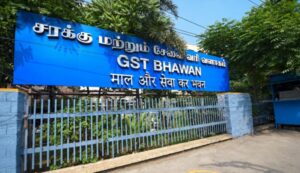
Union Finance Minister Nirmala Sitharaman has highlighted the role of India’s Next-Gen Goods and Services Tax (GST) reforms in supporting economic activity, easing tax compliance and expanding opportunities for businesses. She said the changes form part of the government’s broader vision of building a developed India, or Viksit Bharat.
The reforms build on the GST system introduced in 2017. According to the Finance Minister’s assessment, the next phase focuses on rationalising tax rates, reducing compliance costs and making the indirect tax system more accessible to businesses of different sizes.
The revised GST rates took effect on September 22, 2025, while further proposals are intended to address registration, return filing, refunds, disputes and the flow of input tax credit.
Sitharaman has pointed to growth in reported taxable supplies, GST collections and taxpayer registrations as encouraging indicators. However, the longer-term impact of the reforms will also depend on implementation, economic conditions and the ability of businesses to translate lower tax and compliance burdens into sustainable growth.
See more of our coverage in your search results.
Add INDYASTORY on GoogleNext-Gen GST: From Tax Rationalisation to Easier Compliance
India introduced GST in 2017 to bring multiple indirect taxes under a common national framework. Since then, the system has evolved through changes in rates, procedures and administration.
The Next-Gen GST initiative aims to take this process further through two broad priorities: rationalising tax rates and simplifying compliance.
Lower or more appropriate tax rates can reduce the tax burden on selected goods and services, while simpler procedures can help businesses spend less time managing filings and documentation.
For smaller enterprises, these changes can be particularly important. Administrative costs and delays can affect working capital, limit expansion and make it harder to serve customers across state boundaries.
The government has also emphasised cooperation between the Centre and state governments through the GST Council, which provides a forum for decisions on the indirect tax framework.
See more of our coverage in your search results.
Add INDYASTORY on GoogleGST Collections Rise 11.6% in April-September 2026
According to the figures cited in the supplied article, gross GST collections reached ₹12.46 trillion during April-September 2026, representing an increase of 11.6% compared with the corresponding period a year earlier.
Net GST collections, after refunds, reportedly increased by 10.4% over the same six-month period.
The article also states that monthly gross collections recorded double-digit year-on-year growth from June through September, with growth accelerating to nearly 15% across those four months.
See more of our coverage in your search results.
Add INDYASTORY on GoogleThese figures suggest that tax revenues continued to expand during the period covered. However, collection growth can reflect several factors, including changes in consumption, prices, imports, compliance and economic activity. It should not be attributed exclusively to GST rate reforms without further evidence.
The reported combination of taxpayer relief and revenue growth is central to the government’s argument that tax simplification and economic expansion can progress together.
Reported Taxable Supplies Grow 25.8%
The Finance Minister’s article reports that the value of taxable supplies increased by 25.8% between October 2025 and July 2026 compared with the same period a year earlier.
It also reports a 26.7% increase in sales to consumers, commonly described as business-to-consumer (B2C) transactions.
These figures are presented as signs of expanding reported economic activity following the GST changes. They may also reflect changes in reporting, prices, demand and the composition of transactions during the comparison period.
If tax reductions are passed on to consumers through lower prices, households may have more disposable income available for other purchases or savings. Stronger consumer demand can, in turn, support retailers, distributors and manufacturers.
The extent of any benefit depends on how businesses adjust prices and costs, as well as on household income and broader market conditions.
GST Growth Across Sectors and States
The supplied article states that reported taxable supplies expanded across all 11 sector groups and major states.
Broad-based growth is important for an economy as diverse as India because businesses operate under different conditions across industries and regions. Wider participation can create opportunities for suppliers, distributors, manufacturers and service providers.
A common indirect tax framework can also make it easier for enterprises to transact across state boundaries. For small and medium-sized businesses, access to customers beyond their immediate markets can support expansion and investment.
The article further highlights the potential for businesses in Tier-II and Tier-III cities to benefit from wider commercial networks. Enterprises entering these markets may create additional opportunities for local suppliers and service providers.
Whether these benefits materialise will depend on infrastructure, access to finance, consumer demand and the practical ease of complying with GST requirements.
GST Registrations and Return Filing Show Growth
GST registrations across central and state jurisdictions reportedly reached approximately 17.1 million at the end of August 2026, an increase of nearly 15% over a year earlier.
The article also reports that GSTR-3B returns filed by their due dates for the April-July 2026 tax periods were 12.6% higher than in the corresponding periods of the previous year.
These indicators are relevant to the formal tax system, although registration growth and timely filing alone do not establish how much additional economic activity has entered the formal sector.
For businesses, the quality of tax administration remains as important as the number of registered taxpayers. Clear guidance, reliable digital services and timely resolution of disputes can help reduce the time and cost associated with compliance.
As the GST system matures, the challenge is to ensure that additional obligations do not place a disproportionate burden on smaller enterprises.
Input Tax Credit and Refunds Remain Key Business Priorities
Input tax credit is an important feature of GST because eligible businesses can use credits for tax paid on inputs against their output tax liability, subject to applicable rules.
The supplied article indicates that the share of tax liability discharged through input tax credits increased after the reforms, while accumulated credit declined relative to taxable supplies.
It also reports that approximately ₹1.80 trillion was refunded during April-September 2026.
For businesses, access to eligible credits and timely refunds can make a material difference to cash flow. Delays may tie up working capital that could otherwise be used to purchase inventory, pay suppliers, meet payroll or finance expansion.
A more predictable refund process could therefore help firms manage day-to-day operations and plan production with greater certainty.
The actual benefit will depend on eligibility, the speed of processing and whether businesses can resolve documentation or verification issues without prolonged delays.
State GST Revenues Also Increase
The Finance Minister’s article reports that aggregate state GST receipts, including states’ share of Integrated GST settlements, grew by approximately 16% during April-September 2026.
State revenues help finance infrastructure, public services and other development priorities. Stronger revenue collections can support these responsibilities, although the effect on public spending depends on budgetary priorities and expenditure decisions.
The broader policy argument is that a more effective tax system can support several connected objectives: household purchasing power, business activity and public revenue.
Achieving those objectives requires both sound policy design and consistent implementation across jurisdictions.
GST Council Proposals Target Compliance Costs
The next phase of GST reform is expected to focus on practical difficulties faced by taxpayers.
According to the supplied article, proposals placed before the GST Council on October 7 address registration, returns, refunds, disputes and improvements to input tax credit flows.
The stated objective is to reduce the time and cost required to comply with GST obligations.
For smaller firms, simpler registration procedures and fewer administrative delays can free up resources for core business activities. Better refund processing and clearer dispute-resolution mechanisms can also improve financial planning.
The proposals’ final scope and implementation timelines should be confirmed through official GST Council announcements. Businesses should rely on notified rules and official guidance rather than assume that draft or proposed measures are already in force.
Next-Gen GST and the Vision of Viksit Bharat
The government’s case for Next-Gen GST rests on the idea that a simpler and more predictable tax framework can help enterprises grow, support consumer demand and strengthen public finances.
The reported increases in GST collections, taxable supplies and registrations provide indicators of developments in the tax system. Assessing the reforms’ full impact, however, requires considering wider economic trends and whether businesses and consumers are receiving the intended benefits.
For India to advance towards its Viksit Bharat ambition, tax administration must combine revenue collection with efficiency, transparency and ease of compliance.
The next stage of GST reform will therefore be judged not only by collection figures but also by the practical experience of taxpayers: how easily businesses file returns, use eligible credits, obtain refunds and resolve disputes.
Nirmala Sitharaman is India’s Union Minister of Finance and Corporate Affairs. This article summarises the policy arguments and figures in the supplied material; official releases should be consulted to verify the latest statistics and the status of proposed measures.