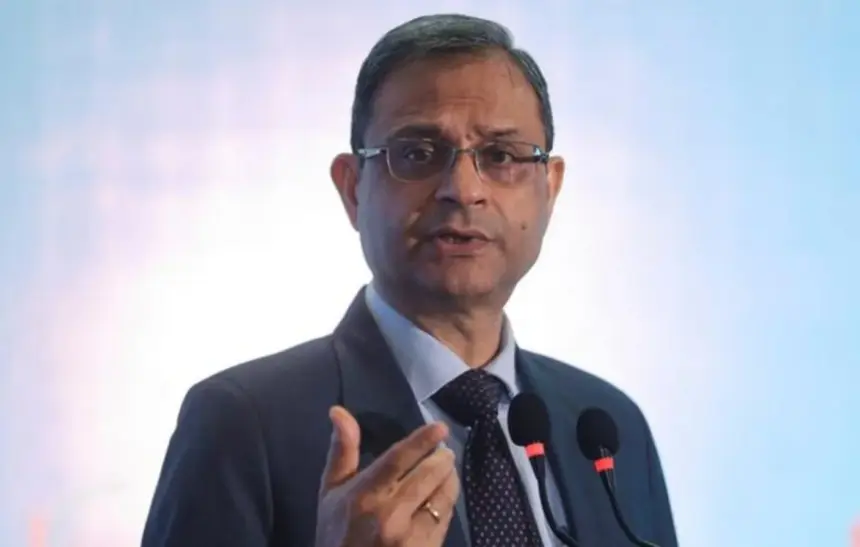
Reserve Bank of India (RBI) Governor Sanjay Malhotra has expressed confidence that the pressure on India’s current account is temporary, saying the country’s external sector is expected to improve as global headwinds ease and domestic economic fundamentals remain supportive.
Speaking during a post-monetary policy interaction with the media, Malhotra discussed the outlook for inflation and interest rates, foreign currency non-resident (FCNR(B)) deposits, non-banking financial companies (NBFCs), and the banking sector’s readiness for the Expected Credit Loss (ECL) framework.
The RBI Governor said the central bank remains focused on bringing headline inflation down to the government’s target of 4 per cent. He also indicated that the Monetary Policy Committee (MPC) is considering either keeping interest rates unchanged or increasing them, with a rate cut not expected in the near term.
RBI Expects India’s External Sector to Improve
Addressing concerns about pressure on India’s current account and foreign exchange flows, Malhotra said the current situation reflects temporary external headwinds rather than a lasting deterioration in the country’s economic fundamentals.
See more of our coverage in your search results.
Add INDYASTORY on Google“Pressure on the current account is a temporary problem. Sooner rather than later, our external sector will improve,” the Governor said.
He pointed to several factors that could support the external sector, including exports of goods and services, remittances from Indians overseas, and government measures aimed at economic reforms and improving the ease of doing business.
Malhotra also referred to policy initiatives intended to attract foreign investment, including changes in the insurance sector.
The Governor expressed confidence that India’s external position would improve over time. He also highlighted the country’s foreign exchange reserves, saying they provide an important buffer for managing external payment obligations.
However, the pace of any recovery will depend on global financial conditions, capital flows, trade performance and other developments affecting the balance of payments.
See more of our coverage in your search results.
Add INDYASTORY on GoogleRBI Signals No Rate Cut in the Near Term
The RBI Governor indicated that the MPC is weighing the possibility of a pause in interest rates or a rate increase, depending on how inflation and economic growth evolve.
Responding to a question about whether the MPC had considered a 50-basis-point increase, Malhotra said all available options are discussed before a policy decision is taken. He added that any further adjustment to the real policy rate would depend on evolving macroeconomic conditions.
The policy stance, he explained, makes clear that a rate cut is not expected in the near term.
See more of our coverage in your search results.
Add INDYASTORY on GoogleThe RBI continues to focus on bringing headline inflation towards its 4 per cent target. At the same time, Malhotra said policymakers examine a wider range of indicators rather than relying exclusively on the headline inflation figure.
These include core inflation and diffusion indices, which can help policymakers assess the breadth and underlying direction of price increases.
Supply-side disruptions and base effects can influence headline inflation, making it important to distinguish temporary price movements from more persistent inflationary pressures.
The MPC’s future decisions will therefore depend on the inflation outlook, economic growth and the balance of risks facing the economy.
FCNR(B) Deposits and India’s Foreign Exchange Position
Malhotra also addressed concerns about FCNR(B) deposits and the implications of currency movements for banks and the broader economy.
FCNR(B) deposits allow eligible non-resident Indians to hold foreign currency deposits with Indian banks. These deposits can provide banks with foreign currency funding, although their management also involves maturity, liquidity and foreign exchange considerations.
The Governor said India’s macroeconomic fundamentals remained strong and expressed confidence that banks would deploy their funds prudently.
He noted that banks had recorded credit growth of 19 per cent and said they would continue to meet credit demand.
On the question of meeting future repayment obligations, Malhotra referred to India’s foreign exchange reserves and expressed confidence in the country’s ability to manage its external commitments.
The RBI’s assessment is that temporary pressure on foreign currency flows does not undermine the longer-term outlook for India’s external sector. Nevertheless, movements in the rupee, capital flows and overseas funding conditions remain important factors to monitor.
RBI Sees No Immediate Asset Quality Concern at NBFCs
Malhotra said the RBI does not currently see a significant asset quality concern among non-banking financial companies.
NBFCs play an important role in extending credit to individuals and businesses, including borrowers who may have limited access to traditional bank lending. However, rapid credit expansion can also create risks if lending standards weaken or borrowers struggle to repay their loans.
The Governor said the central bank remains alert to potential risks, including those associated with asset quality, demand and price pressures.
His comments indicate that the RBI continues to monitor NBFC lending practices and the wider financial system even as it assesses current asset quality conditions as stable.
RBI Reviews Draft Rules on Revolving Credit by NBFCs
The Governor also clarified the regulatory background surrounding revolving credit offered by NBFCs.
According to Malhotra, the RBI had previously issued instructions to individual NBFCs regarding such lending arrangements. In some cases, technological systems were being used to provide revolving credit in the form of term loans.
The central bank subsequently published a draft proposal to bring the relevant requirements into its regulatory framework.
Malhotra said the RBI had received responses to the draft and was examining the feedback before issuing final guidelines.
He highlighted liquidity risk as one of the considerations behind the restrictions, suggesting that the final framework would need to account for potential risks to individual lenders and the broader financial system.
The final rules will clarify the regulatory treatment of the relevant lending arrangements and the conditions under which they may be permitted.
Banks Are Prepared for Expected Credit Loss Framework, Says RBI Deputy Governor
Deputy Governor S C Murmu said banks were well prepared for the implementation of the Expected Credit Loss framework and that the transition was expected to be smooth.
The ECL framework changes how financial institutions assess and recognise expected credit losses. Rather than waiting for a loss event to occur, lenders must estimate potential future credit losses using relevant information and risk assessments.
The approach is intended to support more forward-looking recognition of credit risk and improve the transparency of financial reporting.
Murmu said the RBI had developed the framework in advance and had conducted back-testing. The central bank is also monitoring developments and engaging with banks to address implementation questions.
Workshops and other forms of regulatory support are being used to clarify requirements and help institutions prepare for the transition.
The framework’s implementation will require banks to assess their data systems, credit-risk models, internal processes and reporting arrangements.
RBI Discusses Risks From High AI Stock Valuations
Malhotra also addressed concerns about elevated valuations in global artificial intelligence-related stocks and the possible consequences of a market correction.
He explained that his earlier remarks on AI valuations were made in the context of global risks to emerging market economies.
A sharp correction in highly valued technology stocks could affect international financial markets and influence capital flows across countries. The implications for individual economies would depend on their exposure to the affected markets and the way global investors respond.
For India, Malhotra said the direct negative impact could be limited because the domestic economy has comparatively less exposure to the AI sector than some other markets. He suggested that any resulting shift in global capital flows could potentially benefit emerging markets, including India.
However, such an outcome is not guaranteed. The effect would depend on the scale of any market correction, investor sentiment and broader global financial conditions.
What the RBI Governor’s Remarks Mean for India’s Economy
Malhotra’s comments highlight several priorities for India’s monetary and financial authorities: bringing inflation towards target, maintaining orderly foreign exchange market conditions, monitoring risks in non-bank lending and preparing banks for changes in credit-loss accounting.
His confidence in the external sector reflects the RBI’s assessment that current pressures are manageable, supported by exports, remittances, policy reforms and foreign exchange reserves.
At the same time, the indication that interest rates could remain unchanged or increase suggests that inflation will continue to play a central role in monetary policy decisions.
For businesses, lenders and investors, the key developments to watch include the inflation trajectory, rupee movements, foreign currency flows, the final NBFC revolving-credit guidelines and the implementation of the ECL framework.