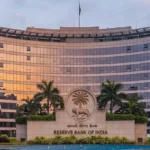
Anup Bagchi is set to take over as MD and CEO of HDFC Bank on October 27 after receiving clearance from the Reserve Bank of India. The veteran ICICI executive inherits India’s largest private-sector bank at a time when questions around governance, customer practices and a steep decline in the stock have intensified the focus on its next phase of leadership.
Anup Bagchi is moving from ICICI Prudential Life Insurance to the top job at HDFC Bank, bringing more than three decades of experience across banking, capital markets and insurance.
The Reserve Bank of India has cleared his appointment as managing director and chief executive officer, effective October 27, according to the information supplied for this report.
His arrival comes at an important transition point for HDFC Bank.
See more of our coverage in your search results.
Add INDYASTORY on GoogleThe bank’s current MD and CEO, Sashidhar Jagdishan, announced in July that he would not seek another term. HDFC Bank subsequently put forward two names to the RBI, with Bagchi and deputy managing director Kaizad Bharucha among the candidates considered.
More Read
Bagchi was ultimately selected.
His challenge now goes beyond maintaining the bank’s growth engine. He will also inherit a period in which governance questions and investor concerns have received considerable attention.
Why Anup Bagchi was chosen to lead HDFC Bank
Bagchi is not a newcomer to large-scale banking.

He spent years inside the ICICI Group, including a senior leadership role at ICICI Bank, before moving to ICICI Prudential Life Insurance.
See more of our coverage in your search results.
Add INDYASTORY on GoogleHis career has covered retail banking, business banking, rural banking, wholesale banking, capital markets, insurance and other financial services.
That breadth is likely to be relevant at HDFC Bank, a business with a very large and diversified operating structure.
There was also a practical consideration in the succession process.
See more of our coverage in your search results.
Add INDYASTORY on GoogleAccording to the supplied reporting, Bharucha had been viewed by some observers as a strong internal candidate, but private-sector bank rules on the tenure of whole-time directors meant he would approach the 15-year regulatory limit in 2029.
Bagchi, by contrast, has a much longer potential runway in the role.
From ICICI Bank to ICICI Prudential Life
Before joining the insurer, Bagchi was an executive director at ICICI Bank from 2017 to 2023.
He initially oversaw retail, business and rural banking, and later took responsibility for wholesale banking.
That gave him exposure to both mass-market and institutional banking.
His time at ICICI Bank also coincided with a period in which the lender expanded its retail franchise and focused on profitability, credit discipline and operating efficiency.
The supplied material credits Bagchi’s tenure with helping the bank expand its mortgage business and navigate the disruption following demonetisation.
In particular, ICICI Bank became the first private-sector bank in India to cross a ₹2 lakh crore retail mortgage portfolio, according to the information provided.
A career built across financial services
Bagchi’s professional background goes well beyond conventional lending.
| Area | Bagchi’s experience |
|---|---|
| Retail banking | Senior oversight at ICICI Bank |
| Business banking | Leadership responsibility at ICICI Bank |
| Rural banking | Leadership responsibility at ICICI Bank |
| Wholesale banking | Senior oversight at ICICI Bank |
| Capital markets | Early career through ICICI Securities |
| Insurance | MD & CEO, ICICI Prudential Life |
| Asset management | Leadership role at ICICI Prudential Asset Management |
| Other finance businesses | Board and senior roles across the ICICI ecosystem |
He began his career after studying chemical engineering at IIT Kanpur and completing an MBA in finance from IIM Bangalore.
That mix of technical education and financial-sector experience has been a recurring feature of his profile.
HDFC Bank is changing leadership at a sensitive time
The leadership transition comes after several developments that have placed corporate governance and customer practices at the centre of attention.
The most prominent episode involved Atanu Chakraborty, who served as HDFC Bank’s part-time chairman.
In March 2026, Chakraborty resigned unexpectedly and said that certain happenings and practices he had observed over the previous two years were not consistent with his personal values and ethics.
His departure prompted questions from investors and the wider market about the bank’s governance environment.
HDFC Bank subsequently commissioned an independent review.
According to the supplied account, that review concluded that Chakraborty’s statement and its implications were not substantiated by the record and witness interviews.
That finding is important, but it did not end scrutiny of the bank.
Why governance will be a major issue for the new CEO
For a large bank, governance is closely linked to investor confidence.
Banks manage deposits, extend credit, sell financial products and operate under a detailed regulatory framework. Weak controls in any one part of that system can affect customers, employees, regulators and shareholders.
Bagchi therefore enters the role with a responsibility to reinforce confidence in the bank’s internal processes as well as its financial performance.
The question is not simply whether the bank can grow.
It is whether investors and customers believe that growth is being achieved with appropriate controls, compliance and conduct standards.
The Credit Suisse AT1 bond dispute
Another issue involved allegations of mis-selling of Additional Tier 1, or AT1, bonds linked to Credit Suisse.
Officials at HDFC Bank’s Dubai branch were accused of mis-selling the securities to investors.
The bonds were subsequently written down after Credit Suisse was rescued through its takeover by UBS, generating significant losses for holders.
The supplied reporting says HDFC Bank won all seven cases filed against it in Bahrain by investors in connection with the matter.
The bank also took action against some employees.
For the new management, the episode is a reminder that sales practices and controls in overseas branches can have consequences for the wider institution.
The Maharashtra State Road Development Corporation matter
HDFC Bank also faced scrutiny over an allegation involving Maharashtra State Road Development Corporation (MSRDC).
It was alleged that the bank made payments worth approximately ₹45 crore in the form of higher interest on deposits and that the arrangement was disguised through marketing budgets and sponsorships linked to a road-safety initiative.
The matter was reviewed internally, according to the supplied information.
The bank subsequently imposed fines on Sashidhar Jagdishan and two other senior officials.
Because this involves allegations and an internal disciplinary response, the final published article should use precise language and cite the relevant filings or reporting rather than presenting every allegation as an established regulatory finding.
Investor confidence has also come under pressure
The governance questions have coincided with significant weakness in HDFC Bank’s share price, according to the market data supplied.
The stock was down by more than 27% year to date in 2026 on the NSE in the reporting period.
For comparison, the supplied figures put the Nifty 50’s decline at more than 14% and the Nifty Bank index’s decline at about 9% over the same period.
Those figures indicate that HDFC Bank had underperformed the broader benchmark and its banking-sector index during the period covered by the report.
The exact percentages should be updated to the publication date because stock prices change every trading session.
Why the stock performance matters for Bagchi
A bank chief executive is judged on much more than share-price performance, but market valuation does matter.
Persistent underperformance can signal that investors have concerns about future earnings, asset quality, governance, capital allocation or management execution.
It can also create a feedback loop.
Negative news can weaken sentiment. Weak sentiment can pressure the stock. A lower valuation can then make every new issue appear more significant to investors.
Rebuilding confidence therefore requires more than a communications strategy.
Investors typically look for consistent operating performance and evidence that identified risks are being addressed.
Bagchi’s advantage: long experience inside a complex financial group
Bagchi’s background gives him experience that cuts across several areas relevant to HDFC Bank.
He has worked in both retail and wholesale banking.
He has experience in insurance, where regulatory oversight, customer conduct and long-term financial products are particularly important.
He has also worked across capital markets and asset management.
That makes his professional profile broader than a conventional retail-banking specialist.
The task at HDFC Bank will be to apply that breadth to an organisation operating at enormous scale.
The leadership transition is also a succession test
The move from Jagdishan to Bagchi is more than a routine CEO transition.
HDFC Bank has historically been known for developing senior leaders internally, making an external appointment particularly notable.
Bagchi therefore needs to manage two transitions at once.
One is strategic: determining the bank’s next phase of growth.
The other is organisational: establishing his own leadership style while maintaining continuity across a large institution.
How quickly he can establish credibility with employees, regulators, customers and institutional investors will be an important part of the early phase of his tenure.
Why governance and growth cannot be separated
For a bank of HDFC Bank’s size, the two challenges are interconnected.
Strong growth requires disciplined lending.
Higher product sales require robust customer-protection controls.
Digital expansion requires strong technology and cybersecurity systems.
A large branch and distribution network requires consistent compliance standards.
This means governance is not a separate issue from business performance.
It is part of the infrastructure that allows a bank to grow without taking on uncontrolled operational or regulatory risk.
Bagchi inherits a very large banking franchise
HDFC Bank is one of India’s most systemically important private-sector financial institutions.
Its operations span retail customers, businesses, corporations, payments and a wide range of financial products.
The scale itself creates management complexity.
A policy that works in one business unit needs to operate consistently across thousands of employees, branches, digital channels and customer interactions.
For Bagchi, the central leadership challenge will therefore be translating strategic priorities into consistent execution across the organisation.
What investors are likely to watch
Several indicators will matter as the leadership transition approaches.
Asset quality: Investors will continue to monitor bad loans, credit costs and underwriting discipline.
Profitability: Net interest margins, fee income and operating costs will remain central to the earnings story.
Deposit growth: Sustaining deposits is important for a large bank’s lending capacity and funding profile.
Governance: Investors will look for evidence that internal controls and conduct standards are being strengthened where necessary.
Customer practices: Product sales and complaint trends can provide insight into the effectiveness of front-line controls.
Capital and liquidity: Strong capital and liquidity remain essential for a bank operating at scale.
Shareholder confidence: The stock’s performance will continue to reflect how investors interpret the bank’s operating and governance trajectory.
The bank’s challenge is not simply to restore the stock price
It would be too narrow to define Bagchi’s task entirely through the share price.
A sustainable improvement in investor sentiment would ultimately depend on business fundamentals and confidence in the bank’s governance.
That could mean demonstrating consistent earnings, disciplined growth, better transparency and effective responses to issues that have attracted scrutiny.
The share price is an outcome, not a management strategy.
Anup Bagchi’s insurance experience could also matter
Bagchi’s current position at ICICI Prudential Life Insurance gives him another perspective that may become useful at HDFC Bank.
Insurance businesses operate with long-duration liabilities, extensive regulatory oversight and a strong focus on customer suitability and distribution practices.
Those experiences can provide additional context when managing financial products that involve large customer populations.
This is also only the second prominent instance cited in the supplied material of a senior insurance executive moving directly into the leadership of a major private-sector bank.
The earlier example was Amitabh Chaudhry, who moved from HDFC Life to become MD and CEO of Axis Bank in 2018.
A difficult moment, but also a leadership opportunity
Bagchi’s appointment comes with a demanding starting brief.
He inherits a bank with enormous scale and a strong franchise, but also one operating under heightened scrutiny around governance and customer practices.
At the same time, the stock has significantly underperformed the broader market during the period cited.
That combination makes the transition closely watched by shareholders and the broader financial sector.
The response will not come from one announcement.
It will come through day-to-day management, operating results, regulatory relationships, customer practices and the bank’s ability to demonstrate that internal controls are working as intended.
What Anup Bagchi will need to establish
The new CEO’s early priorities can be understood through three questions.
Can HDFC Bank maintain growth without weakening credit or cost discipline?
Can the bank strengthen confidence in its governance and customer-protection systems?
Can management explain a credible path back to stronger investor confidence through operating performance rather than expectations alone?
Those are not questions that can be answered on the day of an appointment.
They will be judged over time through results, disclosures and the bank’s response to issues that matter to stakeholders.
The road ahead for HDFC Bank
Bagchi arrives with a long record inside India’s financial sector and experience running both a major bank business and a large insurer.
That provides him with substantial institutional experience.
But HDFC Bank’s immediate environment will require a combination of operational discipline, governance focus and clear communication with investors.
The bank’s recent controversies and market underperformance have made the leadership transition more closely watched than a routine succession.
Anup Bagchi’s appointment gives HDFC Bank an experienced financial-services executive at a pivotal moment. The longer-term measure of his tenure will be whether he can preserve the bank’s scale and growth while strengthening confidence in its governance, customer practices and financial performance.