The Bombay High Court on Friday, November 27, 2026, refused to grant interim relief to Tata Trusts in its legal dispute with Tata Sons over the reappointment of N. Chandrasekaran as Executive Chairman, allowing the company’s scheduled November 30 board meeting to proceed.
Justice Abhay Ahuja declined to stay or postpone the meeting but clarified that decisions taken during the board proceedings would remain subject to the final outcome of the legal challenge.
The court has scheduled the next hearing for January 21, 2027.
The development marks a significant turn in the corporate governance dispute involving Tata Sons and its majority shareholder, Tata Trusts, which collectively holds approximately 66% of the group’s principal holding company.
See more of our coverage in your search results.
Add INDYASTORY on GoogleBombay High Court Allows Tata Sons Board Meeting to Proceed
The High Court’s refusal to grant interim relief allows Tata Sons to conduct its scheduled board meeting despite the ongoing legal challenge surrounding Chandrasekaran’s reappointment.
However, the order does not amount to a final judicial determination regarding the validity of his appointment or the disputed September board resolution.
Decisions taken at the November 30 meeting will remain subject to the eventual outcome of the court proceedings.
The distinction is important because the court has permitted the company’s immediate business activities to continue without conclusively resolving the underlying corporate governance dispute.
Why Tata Trusts Is Challenging Chandrasekaran’s Reappointment
The dispute originated from a Tata Sons board resolution passed on September 17, 2026, approving another five-year term for N. Chandrasekaran as Executive Chairman, beginning February 21, 2027.
See more of our coverage in your search results.
Add INDYASTORY on GoogleTata Trusts has challenged the resolution, alleging that the approval process violated provisions of the company’s Articles of Association, particularly Articles 104B and 121.
The resolution was reportedly approved through a 4-1 vote, with Chandrasekaran abstaining.
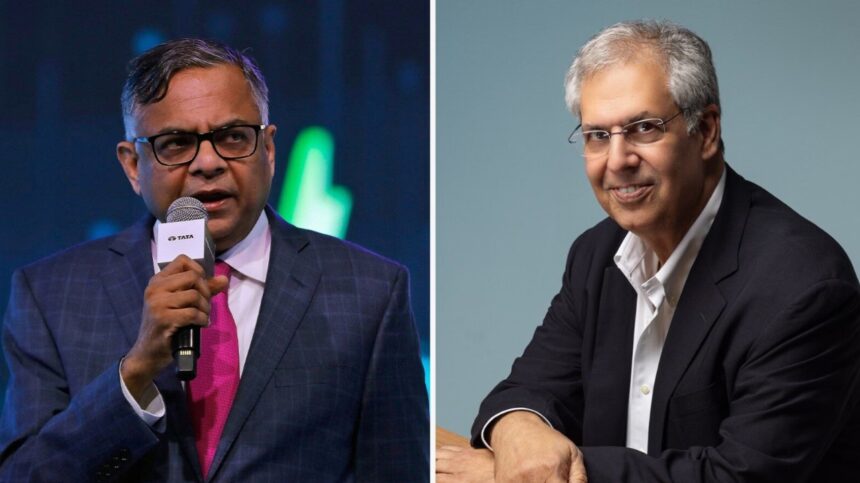
Noel Tata, one of the directors nominated by Tata Trusts, opposed the proposal, while fellow nominee director Venu Srinivasan supported it.
See more of our coverage in your search results.
Add INDYASTORY on GoogleThe trusts contend that certain board decisions require affirmative approval from a majority of their nominated directors and cannot be passed by overriding that requirement through a casting vote.
These arguments remain contested and are yet to receive a final judicial determination.
Casting Vote Emerges as Central Issue in Legal Dispute
One of the principal questions before the Bombay High Court concerns the interpretation of voting rights under Tata Sons’ Articles of Association.
Tata Trusts has questioned whether a casting vote can be used to approve resolutions when the required affirmative votes from its nominated directors have not been secured.
A casting vote is generally an additional vote exercised by an authorised chairperson to resolve an evenly divided voting outcome, subject to the applicable governance rules.
The trusts maintain that such authority cannot override the affirmative voting requirements they argue are established under Article 121.
Tata Sons has disputed that interpretation, maintaining that its board must retain the ability to conduct legitimate corporate business.
The court’s eventual interpretation of these provisions could have significant implications for the relationship between Tata Sons’ board and its majority shareholders.
Tata Trusts Seeks ₹65 Crore in Damages
The legal proceedings also include financial claims amounting to ₹65 crore.
Tata Trusts has sought damages in connection with the disputed board resolution and the alleged violations of Tata Sons’ corporate governance provisions.
Senior advocates Abhishek Manu Singhvi and Aspi Chinoy appeared on behalf of Tata Trusts during the proceedings.
Senior advocates Mukul Rohatgi and Janak Dwarkadas represented Noel Tata, while Harish Salve appeared for Tata Sons and N. Chandrasekaran.
The damages sought represent claims made in the legal proceedings and have not been awarded by the court.
RBI Listing Deadline Becomes a Major Factor
The proposed public listing of Tata Sons emerged as another important issue during Friday’s hearing.
Tata Sons informed the court that postponing the November 30 board meeting could jeopardise its ability to comply with a December 10 deadline reportedly established by the Reserve Bank of India for submitting a listing plan.
Representing Tata Sons, Harish Salve argued that the company needed to continue its scheduled board activities to meet the regulatory requirements.
He also submitted that Tata Sons could potentially become a publicly listed company by the autumn of 2027 if the process progressed without significant disruption.
However, this timeline represents a submission made during the court proceedings rather than a confirmed initial public offering schedule.
The company’s eventual listing would remain subject to applicable regulatory requirements, corporate approvals and other necessary procedures.
Tata Sons Defends Board’s Decision-Making Authority
Tata Sons’ legal representatives challenged the trusts’ interpretation of the company’s governance framework.
Salve pointed out that Tata Trusts had appointed only two nominee directors despite provisions allowing it to nominate up to five.
He argued that the absence of agreement between the existing nominee directors should not automatically prevent the company’s board from conducting its business.
The company’s counsel also maintained that approving the minutes of the September 17 meeting would not independently establish the legal validity of the disputed resolutions.
According to the arguments presented, Tata Trusts would retain the ability to challenge those decisions through the ongoing judicial process.
The disagreement highlights the competing interpretations of shareholder protections, board authority and affirmative voting requirements within Tata Sons.
Why the Potential Tata Sons Listing Matters
Tata Sons serves as the principal holding and promoter company of the Tata Group, whose businesses operate across information technology, automobiles, steel, aviation, hospitality, retail and several other industries.
Unlike several major Tata Group companies that are already publicly traded, Tata Sons remains privately held.
A potential public listing could introduce significant changes to the company’s ownership structure, financial disclosures and regulatory obligations.
Publicly listed companies are generally required to comply with additional transparency, corporate governance and investor protection requirements.
However, a listing could also raise questions concerning ownership control, shareholder rights and the long-term strategic priorities of the Tata Group.
Tata Sons’ counsel maintained that an eventual listing decision would require shareholder approval, making Tata Trusts’ substantial ownership stake particularly relevant.
No final decision regarding the proposed public listing has been established in the supplied reporting.
What the High Court Order Means for N. Chandrasekaran
The Bombay High Court’s decision provides immediate procedural clarity by permitting Tata Sons to proceed with its scheduled board meeting.
It does not conclusively validate Chandrasekaran’s reappointment or dismiss the legal objections raised by Tata Trusts.
The disputed September resolution remains subject to the ongoing court proceedings.
For Chandrasekaran and the Tata Sons board, the immediate focus will be conducting scheduled corporate business while addressing regulatory obligations.
For Tata Trusts, the legal challenge concerning voting rights, governance provisions and the chairman’s reappointment remains unresolved.
What Happens Next in the Tata Sons Legal Dispute?
The November 30 board meeting represents the next important development in the ongoing dispute, particularly in relation to the proposed listing plan and the company’s regulatory obligations.
Tata Sons is expected to address matters requiring board consideration ahead of the reported December 10 RBI deadline.
Meanwhile, the Bombay High Court is scheduled to hear the matter again on January 21, 2027.
The eventual judicial outcome could provide greater clarity on the interpretation of Tata Sons’ Articles of Association, the authority of its board and the validity of Chandrasekaran’s reappointment.
Until then, the legal challenge remains active, and decisions taken during the forthcoming board meeting will remain subject to the final outcome of the proceedings.