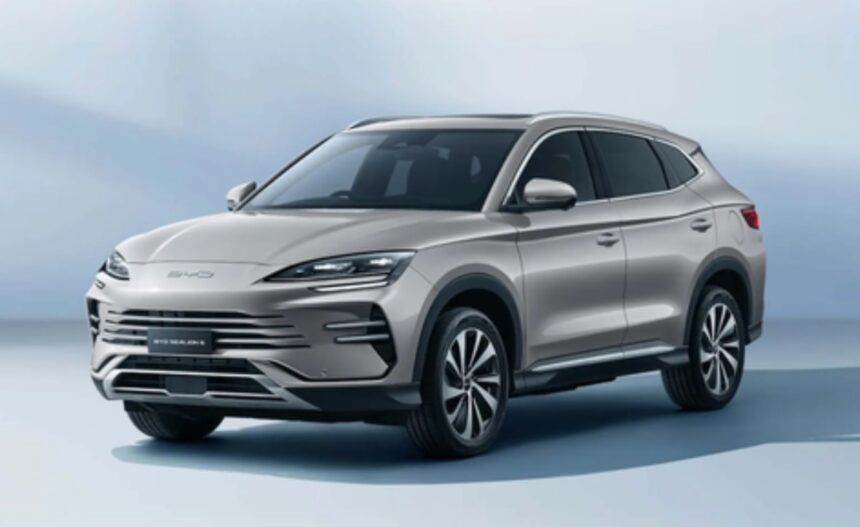
The United States Congress is moving closer to advancing bipartisan legislation that could restrict the sale of Chinese-linked vehicles in the American market, following reported progress in negotiations between lawmakers and major international automakers.
The proposed Connected Vehicle Security Act aims to address national security concerns involving connected vehicles, automotive software and technologies associated with countries considered foreign adversaries by the United States.
Sponsored by Republican Senator Bernie Moreno of Ohio and Democratic Senator Elissa Slotkin of Michigan, the legislation has reportedly gained additional industry support after lawmakers agreed to modify provisions affecting certain European and American automotive manufacturers.
According to reporting by POLITICO, the bill’s supporters are seeking congressional approval in December 2026 before the current congressional session concludes.
See more of our coverage in your search results.
Add INDYASTORY on GoogleHowever, the legislation has not yet received final congressional approval, and its provisions remain subject to change.
Connected Vehicle Security Act Gains Bipartisan Support
The proposed legislation seeks to establish restrictions on vehicles containing certain technologies and components associated with countries such as China and Russia.
Supporters argue that modern connected vehicles increasingly rely on sophisticated software, communication systems and digital infrastructure that could create cybersecurity and national security risks.
Lawmakers are reportedly exploring an expedited legislative process, including a Senate voice vote, while coordinating with members of the House of Representatives.
Senate Majority Leader John Thune previously supported efforts to advance the measure through the Senate Commerce Committee, according to the supplied reporting.
See more of our coverage in your search results.
Add INDYASTORY on GoogleSupport from both political parties and major automotive industry representatives could help the legislation progress, although its passage remains uncertain.
Automakers Seek Changes to Chinese Ownership Restrictions
One of the principal areas of disagreement involved provisions defining which automotive companies would be subject to the proposed restrictions.
Earlier versions of the legislation reportedly included restrictions affecting manufacturers with Chinese ownership exceeding 15%.
See more of our coverage in your search results.
Add INDYASTORY on GoogleThat threshold raised concerns among international automakers with established manufacturing operations, investment relationships and customers in the United States.
Mercedes-Benz and Volvo Cars were among the manufacturers whose ownership structures attracted attention during legislative discussions.
According to people familiar with the negotiations cited by POLITICO, lawmakers have agreed to introduce greater flexibility regarding certain non-controlling shareholders and existing regulatory authorisations.
The revised approach could allow both manufacturers to continue selling vehicles in the United States.
However, the final legislative language and its practical implications have not been independently confirmed.
Mercedes-Benz and Volvo Could Avoid Proposed Restrictions
Mercedes-Benz has acknowledged constructive discussions with American lawmakers regarding the proposed legislation.
Volvo Cars has maintained that it possesses specific federal authorisation to continue selling connected vehicles in the United States despite its ownership links to China.
The reported agreement seeks to distinguish between different forms of foreign ownership, corporate control and potential cybersecurity exposure.
This distinction is particularly important for international manufacturers operating across multiple jurisdictions and maintaining complex global investment structures.
Automotive companies frequently rely on multinational partnerships for research, manufacturing, technology development and component sourcing.
Consequently, broadly defined ownership restrictions could create unintended consequences for manufacturers that already operate within the American regulatory framework.
Ford’s Battery Technology Partnership Could Remain Unaffected
Battery technology has emerged as another important subject during negotiations over the proposed vehicle restrictions.
Ford Motor Company has an existing technology licensing partnership with Chinese battery manufacturer Contemporary Amperex Technology Co. Limited, commonly known as CATL.
According to the supplied reporting, lawmakers have decided against including broader battery restrictions in the proposed legislation.
Instead, the measure is expected to retain a narrower focus on battery management systems.
Battery management systems monitor and regulate important aspects of electric vehicle battery performance, including charging, temperature, power distribution and operational safety.
The reported distinction could allow certain battery technology licensing arrangements to continue while maintaining regulatory oversight of potentially sensitive connected systems.
Ford has not publicly confirmed the implications of the proposed changes in the supplied material.
Why the United States Is Scrutinising Connected Vehicles
Modern vehicles increasingly function as digitally connected computing platforms.
Many contemporary cars incorporate internet connectivity, navigation systems, cameras, remote diagnostics, location tracking and software-based vehicle management features.
These technologies offer significant benefits for drivers, manufacturers and service providers but also introduce cybersecurity and data privacy considerations.
Potential security concerns include unauthorised access to sensitive vehicle information, exposure of location data and interference with connected systems.
Supporters of stricter regulation argue that automotive technology should be subject to appropriate security standards, particularly when critical systems involve suppliers associated with foreign governments.
However, the presence of foreign-manufactured components does not, by itself, establish that an individual vehicle presents a security threat.
Effective cybersecurity assessment requires consideration of software architecture, data handling practices, access permissions, supplier relationships and applicable security controls.
Chinese Vehicles Already Face Major US Market Barriers
Chinese automotive manufacturers face substantial challenges entering the American market.
Existing trade restrictions, including additional tariffs on Chinese electric vehicles and regulatory requirements concerning connected vehicle technologies, have significantly limited their commercial opportunities.
The proposed Connected Vehicle Security Act would seek to establish additional legislative protections that could remain in place beyond individual administrative decisions.
For American automotive manufacturers, clearer long-term regulations could provide greater certainty when making investment and supply chain decisions.
However, stricter restrictions could also reduce access to lower-cost technologies and increase manufacturing expenses for companies that rely on international suppliers.
The overall economic consequences would depend on the final scope of the legislation, its exemptions and how federal authorities implement the requirements.
Environmental Concerns Lead to Proposed Sunset Provision
Lawmakers have reportedly agreed to include a sunset provision following concerns about the long-term environmental consequences of permanently excluding certain vehicles from the American market.
A sunset provision establishes a mechanism through which legislation or specific restrictions expire after a defined period unless renewed.
Some lawmakers have expressed concerns that permanently restricting access to affordable Chinese electric vehicles could affect the pace of electric vehicle adoption and emissions reduction.
Chinese manufacturers have expanded their international presence by offering electric vehicles across a wide range of price categories.
The proposed sunset provision could provide future lawmakers with an opportunity to reassess restrictions in response to technological developments, national security considerations and changes in international trade conditions.
The exact duration and conditions of the provision have not been confirmed in the supplied reporting.
What the Proposed Ban Could Mean for the Global Automotive Industry
The legislation comes at a time when competition within the global automotive industry is increasingly shaped by electric vehicle technology, software development and battery manufacturing capabilities.
Chinese automotive manufacturers have strengthened their international presence through competitive pricing, domestic supply chains and investment in electric mobility.
American, European, Japanese and South Korean manufacturers are simultaneously investing in electric vehicles, connected technologies and advanced manufacturing infrastructure.
Additional trade restrictions could encourage automotive companies to reconsider supplier relationships, manufacturing locations and technology partnerships.
Manufacturers may also need to increase investment in cybersecurity compliance and supply chain transparency.
For consumers, the long-term effects could include changes in vehicle availability, pricing and access to emerging automotive technologies.
Could US Vehicle Restrictions Affect India’s Automotive Industry?
India’s automotive sector could experience indirect consequences as global manufacturers reassess their production networks and international supply chains.
India has been developing its electric vehicle manufacturing ecosystem, battery production capabilities and automotive component industry.
Changes in international sourcing strategies could create opportunities for Indian manufacturers seeking to supply components, software and engineering services to global automotive companies.
However, increased investment would depend on manufacturing competitiveness, regulatory stability, infrastructure quality and compliance with international technical and cybersecurity standards.
The proposed American restrictions do not automatically apply to the Indian automotive market, and any impact on Indian consumers or manufacturers would depend on wider industry developments.
What Happens Next in Congress?
Supporters of the Connected Vehicle Security Act are reportedly working to finalise the legislative language and secure sufficient congressional support before the end of 2026.
The revised provisions concerning foreign ownership, battery technologies and the proposed sunset mechanism could address some of the concerns raised during negotiations.
Nevertheless, the legislation must complete the required congressional process before it can become federal law.
Its final impact will depend on the approved statutory language, subsequent regulatory implementation and the treatment of existing automotive manufacturing arrangements.
For now, the proposed Chinese vehicle restrictions represent an important development in the intersection of international trade, automotive cybersecurity and global electric vehicle competition.