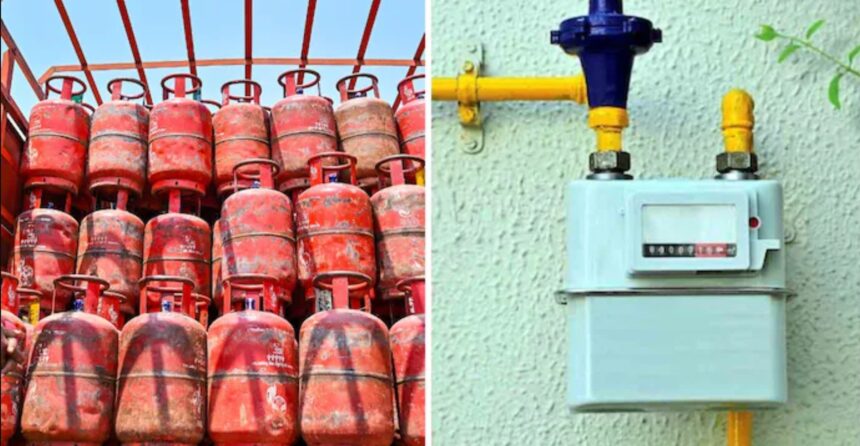
The Petroleum Ministry has asked States and Union Territories to appoint district-level nodal officers to support a faster transition from LPG cylinders to piped natural gas in areas where PNG infrastructure is already available. The move follows supply disruptions during the West Asia crisis and reflects India’s broader push to strengthen energy security and reduce dependence on imported cooking fuel.
India’s Petroleum Ministry has stepped up efforts to accelerate the adoption of piped natural gas (PNG) for household cooking, asking States and Union Territories to provide district-level administrative support for the transition from LPG cylinders to gas supplied through pipelines.
In a letter dated August 21 to State Chief Secretaries, Petroleum Secretary Neeraj Mittal sought the appointment of district-level nodal officers who would work with city gas distribution companies, oil marketing companies and local authorities to speed up PNG connections.
The government’s renewed focus on piped cooking gas comes after disruptions to India’s LPG supply chains during the West Asia crisis earlier this year. The episode highlighted the country’s exposure to international energy disruptions and strengthened the case for expanding domestic gas infrastructure for household consumers.
See more of our coverage in your search results.
Add INDYASTORY on GoogleCentre Seeks Stronger District-Level Support for PNG Expansion
The Petroleum Ministry has said that administrative coordination at the district level will be essential for implementing the transition efficiently.
States and Union Territories have been asked to nominate a nodal officer in every district, preferably from the Department of Food and Civil Supplies and not below the rank of district supply officer. These officials will be formally associated with local PNG Coordination Committees and will help coordinate between government agencies, gas distributors, oil marketing companies, housing societies and consumers.
According to the ministry, Food and Civil Supplies departments are well placed to provide this support because they already have a regulatory relationship with LPG distributors and a strong administrative presence at the field level.
The district-level officers are expected to help resolve practical issues that can delay the expansion of PNG, including access to residential complexes, coordination with resident welfare associations and consumer outreach.
Why the Government Is Pushing Households Towards PNG
The Centre has described PNG as a safer, cleaner and more efficient cooking fuel with an important role in India’s energy transition.
See more of our coverage in your search results.
Add INDYASTORY on GoogleUnlike LPG, which must be transported, stored and delivered in cylinders, piped natural gas can be supplied directly to homes through an established distribution network. The government believes wider PNG adoption can reduce the logistics burden associated with transporting LPG cylinders while improving consumer convenience.
The expansion of household PNG use could also improve the utilisation of city gas distribution infrastructure created through substantial public and private investment.
For consumers, the transition may offer greater convenience by reducing dependence on cylinder deliveries and the need to monitor or arrange LPG refills. For the broader energy system, a larger PNG network could help reduce pressure on LPG distribution chains in areas where pipeline infrastructure is already operational.
See more of our coverage in your search results.
Add INDYASTORY on GoogleWest Asia Crisis Highlighted India’s LPG Supply Vulnerability
The latest policy push has been shaped in part by the supply disruptions witnessed during the West Asia crisis earlier this year.
India imports a significant share of its LPG requirement, with major supplies traditionally linked to producers in countries including Qatar, Saudi Arabia, the United Arab Emirates and Kuwait. A large portion of these energy shipments moves through strategically important maritime routes, making supply chains vulnerable to geopolitical tensions and shipping disruptions.
During the crisis, LPG emerged as one of the fuels most exposed to supply uncertainty. The government was required to prioritise domestic requirements, while some commercial and industrial users faced restrictions before supplies were gradually restored.
India has since worked to diversify its LPG sourcing, including increased purchases from countries such as the United States and Algeria, as part of a broader effort to reduce dependence on any single region or supply route.
The experience has reinforced the strategic value of energy diversification and domestic infrastructure.
PNG Supplies Proved More Resilient
Piped natural gas for domestic consumers was considered more resilient during the period of disruption.
Domestic PNG supplies received priority allocation of domestically produced natural gas, helping insulate household consumers from some of the volatility affecting imported fuel cargoes.
Industrial and commercial users with greater dependence on imported liquefied natural gas faced more exposure to international supply conditions. However, domestic PNG and compressed natural gas supplies were expected to remain relatively protected because of priority arrangements for essential consumer segments.
The government sees this as an important lesson for India’s long-term energy security.
Expanding city gas networks and increasing household access to PNG could help reduce dependence on imported LPG while creating a more resilient system capable of withstanding future geopolitical or shipping disruptions.
New Rules Aim to Prevent Households From Keeping Both LPG and PNG
The government has also introduced a regulatory framework designed to encourage a clearer transition from LPG to PNG in areas where piped gas supply is available.
The Natural Gas and Petroleum Products Distribution Orders of 2026 and related LPG Control Orders notified under Section 3 of the Essential Commodities Act, 1955, provide the legal framework for the transition.
Under the new approach, households in notified areas are not expected to retain simultaneous LPG and PNG connections once piped gas is available and the required process has been completed.
The rules provide for action in cases where eligible households fail to apply for PNG connections despite due notice. The objective is to ensure that existing city gas infrastructure is effectively utilised while avoiding unnecessary duplication of household cooking-fuel connections.
The implementation of these provisions, however, will depend heavily on clear communication, fair notice procedures and effective coordination among local authorities, gas companies and consumers.
PNG Coordination Committees to Drive Local Implementation
The Ministry has directed authorised city gas distribution entities and public-sector oil marketing companies to establish a PNG Coordination Committee, or PCC, in every geographical area.
These committees are expected to play a central role in identifying households and housing societies eligible for PNG connections.
Their responsibilities include issuing statutory notices where required, engaging with resident welfare associations and housing societies, organising consumer outreach programmes and helping eligible households complete the transition process.
The committees will also conduct awareness and outreach camps aimed at explaining the availability and benefits of PNG connections.
Although the PCC mechanism is already operational, the ministry has indicated that district-level administrative support is necessary to overcome implementation challenges and meet prescribed timelines.
What District Administrations Will Be Expected to Do
The proposed district-level support mechanism will have both administrative and consumer-facing responsibilities.
District authorities may assist in securing right of way or right of use for gas infrastructure within residential communities and housing societies. They will also help facilitate coordination between LPG distributors and city gas distribution entities during the transition process.
Other responsibilities include:
- Supporting consumer awareness and outreach programmes
- Assisting with household verification
- Helping resolve consumer grievances
- Facilitating coordination with housing societies and RWAs
- Monitoring PNG adoption in notified areas
- Supporting the implementation of applicable control orders
- Addressing access-related issues where required under the legal framework
The ministry has asked States and Union Territories to share the names, designations and contact details of their nominated district-level officers so that local PNG Coordination Committees can begin working closely with them.
A Larger Energy Security Strategy
The push for PNG adoption is not simply about replacing one cooking fuel with another.
It forms part of a wider strategy focused on energy security, infrastructure utilisation and reducing exposure to international supply disruptions.
India remains one of the world’s major energy consumers and continues to depend on imports for a significant portion of its energy requirements. Events in international markets can therefore have a direct impact on fuel availability, shipping costs and supply security.
Expanding domestic energy infrastructure can help reduce some of these vulnerabilities.
A stronger city gas distribution network, combined with diversified fuel imports and greater use of domestic natural gas where available, could provide India with more flexibility during periods of international disruption.
What the PNG Push Means for Consumers
For households living in areas where PNG infrastructure is already available, the government’s policy could mean a more active transition process in the coming months.
Consumers may see increased outreach from city gas companies, local authorities, housing societies and LPG distributors. Awareness camps and coordination programmes are also expected to play a larger role as authorities work to expand connections.
For the policy to succeed, implementation will need to balance regulatory objectives with consumer awareness and practical service delivery. Clear information about connection procedures, safety requirements, billing, infrastructure access and grievance mechanisms will remain important.
The government’s emphasis on district-level officers suggests that authorities are seeking a more coordinated approach rather than relying solely on gas companies and oil marketing firms.
The Road Ahead for India’s Household Cooking Fuel Transition
India’s move to accelerate PNG adoption marks an important stage in the evolution of the country’s household energy infrastructure.
The West Asia crisis demonstrated how international events can affect fuel supply chains, particularly for commodities that depend heavily on imports and maritime transportation.
By expanding piped gas networks, improving coordination at the district level and encouraging the use of existing city gas infrastructure, the government is seeking to build a more resilient household energy system.
The success of the initiative will ultimately depend on the pace of infrastructure expansion, consumer participation, administrative coordination and the ability of city gas distributors to provide reliable service.
For now, the Petroleum Ministry has made its direction clear: States and Union Territories are being asked to treat the expansion of PNG as a priority and provide district-level administrative support to speed up India’s transition towards a more pipeline-based household cooking fuel system.
As India continues to balance energy security, consumer convenience and long-term infrastructure development, the transition from LPG cylinders to PNG could become an increasingly important part of the country’s broader energy strategy.