Surat’s upcoming bullet train station is moving closer to completion, offering a glimpse into India’s ambitious high-speed railway infrastructure. Inspired by the city’s internationally recognised diamond industry, the station combines contemporary architecture with modern passenger facilities and integrated urban transport connectivity.
Developed by the National High Speed Rail Corporation Limited (NHSRCL), the station forms part of the Mumbai–Ahmedabad High-Speed Rail Corridor, India’s first bullet train project.
Construction is reportedly progressing towards its final stages, with work continuing on passenger facilities, accessibility infrastructure, electrical systems and transport integration.
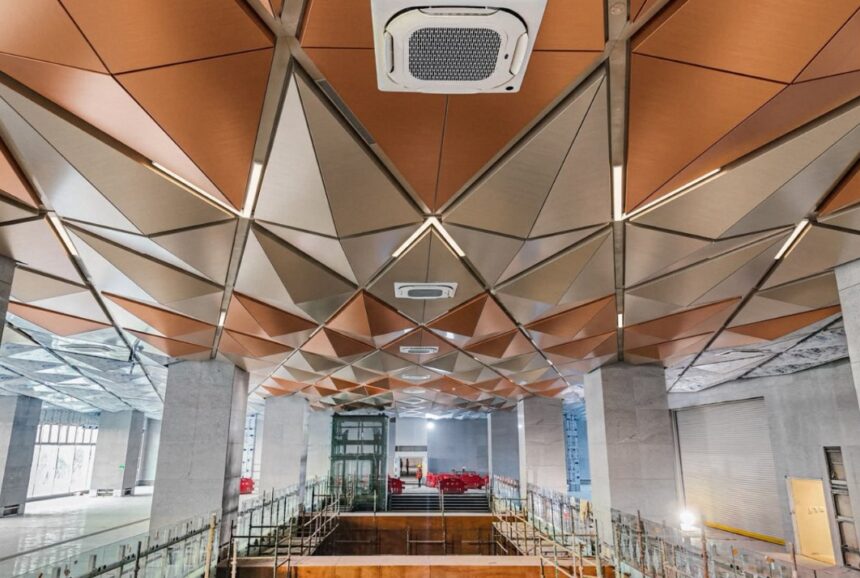
The station’s distinctive diamond-inspired architecture reflects Surat’s commercial identity while introducing a new approach to railway station design in India.
See more of our coverage in your search results.
Add INDYASTORY on GoogleSurat Bullet Train Station Features Diamond-Inspired Architecture
Surat is internationally known for its diamond cutting and polishing industry, an important contributor to the city’s economy and global commercial reputation.
The architectural design of the upcoming high-speed railway station draws inspiration from this heritage through its geometric patterns and contemporary exterior.
The design aims to establish a distinctive identity for the station while incorporating practical features that support passenger movement, accessibility and operational efficiency.
Unlike conventional railway stations, the Surat facility has been designed around the requirements of a dedicated high-speed rail network, with separate levels for vehicle access, passenger services and boarding platforms.
Three-Level Station Designed for Smooth Passenger Movement
The Surat bullet train station features a three-level layout intended to organise passenger movement and reduce congestion during arrivals and departures.
See more of our coverage in your search results.
Add INDYASTORY on GoogleThe ground level will accommodate parking, passenger pickup and drop-off facilities.
The concourse level will contain ticket counters, waiting areas, retail outlets and other passenger services.
The upper platform level will provide access to high-speed trains.
See more of our coverage in your search results.
Add INDYASTORY on GoogleMultiple elevators and escalators are being installed to facilitate movement between different levels of the station.
These accessibility features are particularly important for senior citizens, passengers with disabilities, families travelling with children and travellers carrying luggage.
Airport-Like Facilities Planned for Passengers
The upcoming station is expected to offer several modern amenities designed to improve comfort and convenience during railway journeys.
According to the supplied project details, passenger facilities will include:
- Business-class lounges and comfortable waiting areas.
- Childcare and nursery facilities.
- Modern restrooms.
- Retail shops and commercial outlets.
- Digital passenger information displays.
- Information kiosks and clear directional signage.
- Automated public announcement systems.
- Elevators and escalators for easier accessibility.
These facilities are intended to provide passengers with an organised travel experience comparable in some respects to modern airport terminals.
The availability of individual services will depend on the final operational arrangements once the station opens to passengers.
Sustainable Design to Reduce Environmental Impact
Environmental sustainability is another important component of the Surat bullet train station’s architectural planning.
The building incorporates skylights and design features intended to increase the availability of natural daylight and support ventilation.
Using natural lighting during daytime hours could help reduce dependence on artificial lighting and lower electricity consumption.
The station also reportedly incorporates rainwater harvesting infrastructure and landscaping initiatives.
Rainwater harvesting allows collected water to be stored or used for appropriate purposes, potentially reducing pressure on conventional water supplies.
Green spaces and plantation initiatives are expected to improve the surrounding station environment.
The actual environmental performance of the facility will depend on its completed infrastructure, maintenance practices and operational energy requirements.
Surat Bullet Train Station to Offer Multimodal Connectivity
One of the important features of the upcoming station is its planned integration with Surat’s urban transportation network.
The multimodal connectivity plan aims to make it easier for passengers to travel between the high-speed railway station and other parts of the city.
Proposed connectivity facilities include a nearby metro station, Bus Rapid Transit System (BRTS) stops, taxi stands and auto-rickshaw services.
Improved last-mile connectivity could reduce the inconvenience of transferring between different modes of transportation.
For passengers, effective transport integration could be particularly valuable when travelling with luggage or connecting to residential, commercial and industrial areas.
However, the completion and operational availability of individual connecting transport projects may follow separate timelines.
Surat–Bilimora Section Moves Towards Testing
The development of the Surat station comes alongside reported progress on the Surat–Bilimora section of the Mumbai–Ahmedabad High-Speed Rail Corridor.
According to the supplied information, overhead electrical infrastructure on the section has recently been commissioned, raising expectations for subsequent testing activities.
Overhead equipment, commonly known as OHE, supplies electricity to compatible electric railway vehicles through an overhead power system.
The completion of electrical infrastructure represents an important milestone, but several additional technical and safety requirements must be satisfied before commercial high-speed railway operations can begin.
These may include infrastructure inspections, signalling verification, train testing, operational assessments and regulatory clearances.
An official schedule for trial runs and passenger services should be confirmed through NHSRCL announcements.
Surat Station’s Role in the Mumbai–Ahmedabad Bullet Train Corridor
The Mumbai–Ahmedabad High-Speed Rail Corridor is designed to connect Maharashtra and Gujarat through a dedicated high-speed railway network.
The project spans approximately 508 kilometres and includes 12 planned stations.
Surat occupies an important position along the corridor because of its commercial activities, industrial development and connectivity with other major economic centres.
Once operational, the high-speed railway network is expected to provide an additional transportation option for passengers travelling between participating cities.
The project could support business travel, tourism and regional economic connectivity by reducing journey times compared with certain existing transportation options.
However, actual travel times, service frequencies and ticket prices will depend on the final operational schedule.
Could the Bullet Train Transform Surat’s Regional Connectivity?
Surat is an important economic centre with established diamond processing, textile manufacturing and commercial industries.
High-speed railway connectivity could provide additional travel options for business professionals, entrepreneurs and passengers travelling between major urban centres in western India.
Improved connectivity could also create opportunities for hospitality businesses, retail establishments and transportation service providers near the station.
The broader economic benefits will depend on ticket affordability, passenger demand, service reliability and integration with local transportation networks.
The station’s development represents part of a wider effort to modernise India’s railway infrastructure and introduce dedicated high-speed passenger services.
When Will Surat Bullet Train Station Open?
Construction of the Surat bullet train station is reportedly approaching its final stages, while infrastructure development continues across the wider high-speed railway corridor.
The supplied reporting indicates expectations of bullet train operations beginning in 2027.
However, the precise opening date for Surat station and the commencement of commercial passenger services have not been independently confirmed.
Passengers should refer to official NHSRCL and Ministry of Railways announcements for verified information regarding trial runs, inauguration dates, ticket bookings and operational schedules.
For now, Surat’s diamond-inspired bullet train station offers a glimpse into the architectural design, passenger facilities and technological infrastructure planned for India’s first high-speed railway network.