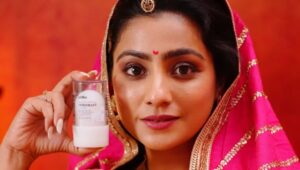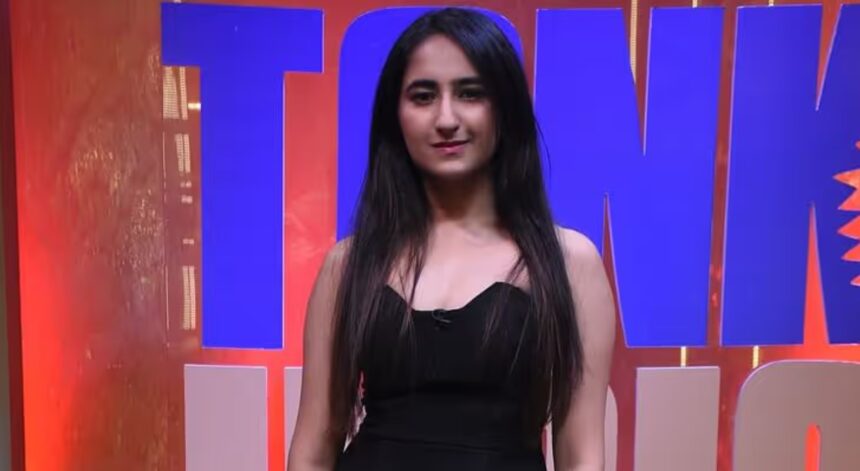
Riya Khattar launched Heart Up My Sleeves during the pandemic with an idea to transform existing outfits through detachable fashion accessories. Her innovative concept later won investment on Shark Tank India.
When the COVID-19 pandemic changed shopping habits around the world, many consumers began reconsidering how much they spent on clothing. With social events limited and people spending more time at home, buying an entirely new wardrobe became less important for many shoppers.
For entrepreneur Riya Khattar, that shift in consumer behaviour sparked an unusual business idea.
Instead of encouraging customers to purchase an entirely new outfit every time they wanted a different look, she considered whether a single fashion accessory could transform clothes that were already sitting in a person’s wardrobe.
That idea eventually led to the creation of Heart Up My Sleeves, a fashion brand built around detachable sleeves, capes and brooches designed to give existing outfits a fresh appearance.
See more of our coverage in your search results.
Add INDYASTORY on GoogleThe concept later reached a national audience when Riya pitched the business on Shark Tank India. Her presentation attracted the attention of investors Vineeta Singh and Anupam Mittal, and she reportedly secured an investment of Rs 25 lakh for 30% equity.
An Idea Born During the Pandemic
The pandemic created major challenges for the fashion industry, but it also encouraged consumers to rethink their relationship with clothing.
Riya observed that people were often relying on clothes they already owned rather than regularly purchasing new outfits.
At the same time, she identified another familiar problem: many people feel they have a wardrobe full of clothes but still struggle to decide what to wear.
The solution, she believed, could be to create accessories that would change the appearance of an existing outfit.
See more of our coverage in your search results.
Add INDYASTORY on GoogleAccording to Riya, Heart Up My Sleeves was designed around the idea of giving consumers more ways to reuse the clothing they already owned.
The brand’s detachable sleeves became its central product concept, allowing customers to add a dramatic, elegant or playful element to an otherwise simple outfit.
“Most girls and women complain of having too many clothes but yet nothing to wear. We wanted to change this by giving every outfit a glamorous take,” Riya said while explaining the idea behind the brand.
What Is Heart Up My Sleeves?
Heart Up My Sleeves was created as a fashion brand offering detachable accessories that could be paired with different types of clothing.
See more of our coverage in your search results.
Add INDYASTORY on GoogleThe collection reportedly included statement sleeves, capes and brooches designed to help customers create multiple looks from the same wardrobe.
The detachable sleeves were positioned as the brand’s signature product.
A simple outfit could potentially be transformed by adding sleeves featuring different textures, shapes or designs. Depending on the styling, the accessories could be paired with western wear, ethnic outfits, dresses or more formal clothing.
The central business proposition was based on versatility.
Instead of purchasing a completely new garment for every occasion, a customer could theoretically create different visual looks by combining existing clothing with interchangeable accessories.
Giving Old Clothes a New Look
One of the biggest challenges in fashion is the tendency to associate special occasions with buying something new.
Heart Up My Sleeves attempted to offer an alternative approach.
The brand’s accessories were designed to allow customers to restyle clothes they already owned.
A basic T-shirt and jeans, for example, could be paired with more dramatic sleeves for a different evening look. A sleeveless dress could potentially be styled with lace accessories, while a traditional saree could be given a different appearance through statement sleeves and jewellery.
The products were also designed to work with contrasting colours and fabrics.
According to the brand’s concept, neutral clothing could be enhanced with colourful accessories, while simpler looks could be transformed with sequins, lace, frills or other statement details.
This approach reflected the wider concept of wardrobe versatility.
A Fashion Concept Linked to Reuse
The idea behind Heart Up My Sleeves also aligned with the growing conversation around more conscious fashion consumption.
Fashion is often associated with frequent purchases and rapidly changing trends. Reusing existing garments and styling them differently can offer consumers an alternative to buying entirely new clothing for every occasion.
Riya said the pandemic had also increased her awareness of sustainable lifestyles.
The intention behind the brand, according to her, was to create fashion products that gave consumers more options to rewear and restyle outfits.
It is important, however, to distinguish between a brand’s sustainability goals and independently verified environmental impact. Terms such as “sustainable fashion” should ideally be supported by specific information about sourcing, production, materials, packaging and product durability.
For Heart Up My Sleeves, the reported core idea was centred on helping customers extend the styling possibilities of clothing they already owned.
From Rs 10,000 to Shark Tank India
According to the reported business story, Heart Up My Sleeves was started with an initial investment of Rs 10,000.
The company initially operated with a direct-to-consumer, or D2C, model, selling products directly to customers through its website.
At the time of its Shark Tank India appearance, the business had reportedly generated around Rs 15 lakh in sales.
The brand’s manufacturing was also supported by Riya’s family infrastructure. The sleeves, capes and brooches were reportedly produced at her father’s factory in Delhi, where the business had employed tailors to work on production.
This gave the young company access to a manufacturing setup while it developed its products and tested market demand.
The brand also offered customisation options, allowing customers to seek more personalised fashion choices.
The Shark Tank India Pitch
Riya Khattar took the concept of detachable fashion accessories to the investors on Shark Tank India.
The idea was distinctly different from many conventional fashion brands because it focused on changing an existing outfit rather than selling an entirely new garment.
Her pitch gave the business national visibility and brought the concept of detachable sleeves to a wider audience.
According to the reported account, Riya secured Rs 25 lakh in funding in exchange for 30% equity from Anupam Mittal and Vineeta Singh.
The investment brought two experienced entrepreneurs into the company’s journey.
For a young D2C fashion business, such exposure can be significant. Beyond the financial investment, appearing on a nationally watched platform can create awareness among potential customers, media organisations and business partners.
The investment also provided the founders with access to mentorship and entrepreneurial experience.
Building the Brand With Her Sister
Riya’s entrepreneurial journey was not entirely a solo venture.
Her elder sister, Chandani Khattar, was also associated with the business as a co-founder. According to the information shared about the company, Chandani had a postgraduate education from New York City and experience related to business and fashion.
The sisters brought different strengths to the venture.
While the product idea centred around Riya’s observation of changing consumer behaviour and fashion needs, the broader business also benefited from family support and professional collaboration.
Family-backed entrepreneurship has become an important part of India’s startup ecosystem, particularly for consumer brands that begin with limited resources and depend on close collaboration during their early stages.
From Sequins to Frills: Creating Different Looks
One of the defining features of Heart Up My Sleeves was the variety of styles it aimed to offer.
The collection reportedly included different designs ranging from sequins and lace to frills, balloon sleeves and other statement silhouettes.
The goal was to allow customers to choose accessories depending on the occasion and the outfit.
Some products were designed to create bold, attention-grabbing looks, while others focused on subtle elegance.
For example, decorative lace sleeves could be paired with a sleeveless dress, while more neutral styles could potentially be worn with workwear.
The idea was not to create one standard fashion accessory but to build a category of interchangeable products.
This approach reflected the growing demand for personalisation in fashion.
Celebrity and Influencer Attention
Fashion influencers and celebrities can play a major role in introducing new styling ideas to consumers.
According to the reported account, several influencers had styled Heart Up My Sleeves products in different ways.
The brand’s accessories were reportedly associated with appearances by personalities including Hansika Motwani, Komal Pandey, Niki Mehra, Bandagi Kalra and Ankita Tiwari.
Such associations should be verified using original posts, campaign disclosures or official brand information before publication.
For a small fashion startup, influencer visibility can be an important marketing channel. When creators demonstrate different ways to wear a product, customers can better understand how it fits into their own wardrobe.
That was particularly relevant to detachable sleeves, as the product’s value depended heavily on demonstrating different styling possibilities.
Aiming for a Global Fashion Audience
Heart Up My Sleeves reportedly targeted women between the ages of 18 and 33, with ambitions that extended beyond the Indian market.
The D2C model provided the brand with a direct relationship with customers and allowed it to develop its identity through digital channels.
The company also reportedly planned to expand its presence across additional e-commerce platforms.
The founders saw the brand as more than a detachable-sleeve business.
Future plans mentioned in the reported account included products such as detachable collars and potentially a broader clothing collection.
The idea was to develop a larger ecosystem of fashion products built around versatility and styling.
Why the Business Idea Stood Out
The Heart Up My Sleeves concept demonstrates an important principle of entrepreneurship: innovation does not always require inventing an entirely new technology.
Sometimes, innovation comes from looking at an everyday problem from a different perspective.
People already own clothing.
People also want variety in what they wear.
The brand attempted to connect these two realities by creating accessories designed to change the appearance of clothes that customers already had.
That simple idea created a distinct product category.
The Shark Tank India pitch also demonstrated the increasing diversity of Indian entrepreneurship. Startups are emerging not only in technology and software but also in fashion, consumer products, food, beauty and lifestyle.
A niche product with a clear use case can sometimes attract attention in a highly competitive market.
The Road Ahead
The reported Rs 25 lakh investment was an important milestone in the early journey of Heart Up My Sleeves.
However, long-term success for a consumer fashion brand depends on much more than a television appearance.
Product quality, pricing, repeat purchases, manufacturing efficiency, customer service and the ability to build a strong brand identity are all important.
For Heart Up My Sleeves, the challenge was to turn initial curiosity about detachable fashion into sustained customer demand.
The company also faced the question that every startup eventually encounters: how to scale without losing the uniqueness that helped it stand out in the first place.
Riya Khattar’s entrepreneurial journey remains an interesting example of how changing consumer behaviour can inspire a new business idea.
During a period when people were spending less on new clothing, she saw an opportunity to help them create new looks from clothes they already owned.
With an initial reported investment of Rs 10,000, a distinctive fashion concept and national visibility through Shark Tank India, Heart Up My Sleeves turned a simple styling idea into a recognised entrepreneurial venture.
Her journey also sends a broader message to aspiring founders: sometimes the most promising business ideas can begin with an everyday observation.
For Riya, that observation was simple. A wardrobe may already contain plenty of clothes—the challenge is finding new ways to wear them.