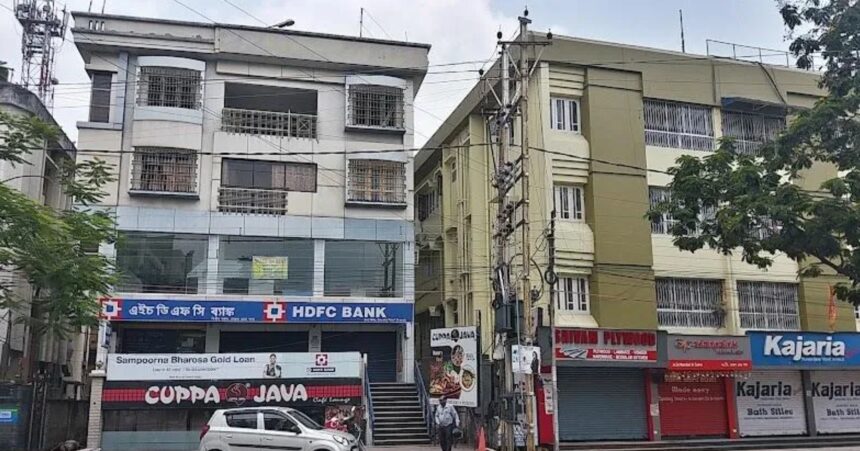
HDFC Bank shares fell to their lowest level in about 30 months as investors assessed the lender’s leadership transition after CEO Sashidhar Jagdishan decided not to seek another term. The market is now focused on the bank’s succession plan and whether a swift appointment can help restore confidence.
Shares of HDFC Bank closed at their lowest level in around 30 months as investors turned their attention to the succession process at India’s largest private-sector lender.
The pressure on the stock followed the announcement that Managing Director and Chief Executive Officer Sashidhar Jagdishan will not seek a third term when his current tenure ends in late October. The decision has brought a fresh layer of uncertainty to a bank that has already faced a difficult year in the market.
HDFC Bank shares have declined sharply in 2026, with concerns surrounding corporate governance and leadership contributing to investor caution. On the latest trading day, the stock ended about 1.6% lower, while the broader Nifty 50 benchmark recorded a comparatively smaller decline.
See more of our coverage in your search results.
Add INDYASTORY on GoogleThe immediate question for investors is no longer whether Jagdishan will continue at the helm. Instead, the focus has shifted to who will lead HDFC Bank next and how quickly the transition can be completed.
For a financial institution of HDFC Bank’s scale, leadership continuity and regulatory clarity carry significant weight. The appointment of a new chief executive will therefore be watched closely by shareholders, analysts, regulators and institutional investors.
CEO Succession Becomes the Market’s Biggest Question
Jagdishan’s decision not to seek another term surprised sections of the market because he had widely been expected to pursue an extension.
His departure now creates a new succession process at a particularly important moment for HDFC Bank.
The lender has undergone a period of major transformation since the completion of its merger with HDFC Ltd, a transaction that created one of India’s largest financial-services institutions. The integration brought significant opportunities but also increased the complexity of managing a substantially larger organisation.
See more of our coverage in your search results.
Add INDYASTORY on GoogleAnalysts believe the next chief executive will inherit both the strengths and challenges associated with that transformation.
According to market commentary cited in recent reports, investors are likely to remain focused on the identity of the successor and the mandate given to the incoming CEO.
Nomura analysts said that while Jagdishan’s decision removes uncertainty around his reappointment, attention has now moved directly to the succession question. The brokerage expects the stock to remain sensitive to developments surrounding the leadership transition until greater clarity emerges.
See more of our coverage in your search results.
Add INDYASTORY on GoogleThat reaction reflects the importance of management stability in India’s banking sector, where chief executive appointments are subject to regulatory processes and corporate governance standards.
A Potential Opportunity to Reset the Narrative
While leadership changes can create short-term uncertainty, some analysts believe HDFC Bank’s transition could also provide an opportunity for a strategic reset.
Bernstein described the CEO change as potentially positive because it creates an opportunity for the incoming leadership to reshape the bank’s narrative.
That assessment centres partly on the uncertainty that had surrounded the possibility of Jagdishan receiving a shorter regulatory-approved term if he had sought reappointment.
A fresh appointment could provide the next leader with greater scope to set a longer-term strategic agenda, depending on the final regulatory and board decisions.
For investors, the transition could therefore represent more than a simple management change.
The new CEO will face expectations around several key areas, including:
- Improving shareholder returns
- Maintaining strong asset quality
- Managing the post-merger balance sheet
- Strengthening profitability metrics
- Maintaining investor confidence
- Addressing governance-related concerns
- Communicating a clear long-term strategy
The appointment will be particularly significant because HDFC Bank remains one of the most closely followed companies in India’s financial sector.
Kaizad Bharucha Among Names Reportedly Under Consideration
According to reports citing people familiar with the matter, Deputy Managing Director Kaizad Bharucha is among the potential options being considered as part of the succession process.
The bank is also reportedly evaluating an external candidate, reflecting regulatory requirements and governance processes applicable to senior leadership appointments at major banks.
No final appointment had been formally announced at the time of the reports.
That distinction is important.
Speculation surrounding potential successors can increase market attention, but investors will ultimately be looking for an official announcement from the bank and the completion of the required regulatory process.
An internal appointment could provide continuity because an existing executive would already be familiar with the bank’s operations, strategy and post-merger structure.
An external appointment, meanwhile, could potentially bring a different management perspective and signal a broader reset.
Until an official decision is made, the succession process is likely to remain a central issue for the stock.
Analysts Call for a Timely Appointment
Analysts at J.P. Morgan said a timely and expedited appointment of the next CEO could help reduce uncertainty.
The timing of the decision may be as important to investors as the identity of the eventual successor.
Extended periods of uncertainty can create an overhang on a company’s shares, particularly when the business is as large and systemically important as HDFC Bank.
A clearly communicated succession plan could help investors evaluate the transition more confidently.
It could also allow the incoming leadership to begin outlining priorities for the bank’s next phase of growth.
For HDFC Bank, that next phase will be closely linked to the long-term impact of the HDFC Ltd merger.
Jagdishan’s Tenure Defined by a Historic Merger
Sashidhar Jagdishan took over as chief executive of HDFC Bank in October 2020.
During his nearly six-year tenure, one of the most significant developments was the merger of HDFC Bank with its former parent, HDFC Ltd.
The transaction transformed the scale and structure of the institution and created one of India’s biggest financial-services groups.
Managing such a large merger represented a major operational and strategic challenge.
According to analyst assessments, Jagdishan’s tenure was marked by resilient asset quality and the successful execution of the complex merger process.
However, some profitability measures and shareholder returns have faced scrutiny.
Macquarie noted that while the bank managed the merger and maintained resilient asset quality, returns to shareholders and certain profitability metrics have lagged.
The next CEO will therefore inherit an institution with substantial scale but also high expectations regarding future performance.
Governance Concerns Have Weighed on Investor Sentiment
Investor sentiment has also been affected by governance concerns that emerged during 2026.
Earlier in the year, Chairman Atanu Chakraborty resigned, saying that certain practices at the bank were inconsistent with his personal values and ethics.
However, an external legal review did not find evidence supporting those concerns.
The developments nevertheless added to market scrutiny at a sensitive time for the bank.
Governance is particularly important in the banking industry because financial institutions depend heavily on public confidence, regulatory credibility and investor trust.
Questions around leadership, internal controls or governance processes can therefore have an impact beyond immediate financial performance.
In July, HDFC Bank’s board also penalised Jagdishan and two other executives in connection with a matter involving the pricing of large deposits.
The succession process now takes place against this wider backdrop of heightened investor attention.
Why the Stock Has Been Under Pressure
HDFC Bank’s shares are down roughly 28.5% so far in 2026, according to the market data cited in recent reports.
The decline has made the stock’s leadership transition even more closely watched.
Investors appear to be weighing multiple factors at once:
1. Leadership uncertainty
The decision by Jagdishan not to seek another term has shifted the market’s attention to succession.
2. Governance concerns
Earlier developments have increased scrutiny of the bank’s internal governance environment.
3. Post-merger performance
The integration of HDFC Ltd created a larger institution but also brought expectations regarding profitability, growth and returns.
4. Regulatory considerations
Bank CEO appointments and tenures are subject to regulatory processes, making succession more complex than a standard corporate leadership change.
5. Foreign investor exposure
With a significant portion of HDFC Bank’s shareholding held by foreign investors, changes in institutional sentiment can have an important impact on the stock.
Together, these factors have created a challenging environment for the lender’s market valuation.
What the New CEO Will Inherit
The next HDFC Bank chief executive will take charge of one of India’s most important private financial institutions.
The bank has a substantial customer base, a major national presence and a central role in India’s banking system.
However, the new leadership will face a demanding agenda.
The first priority is likely to be reassuring stakeholders that the leadership transition will be smooth.
The next challenge will be maintaining growth while improving metrics that have attracted investor attention.
The bank will also need to continue demonstrating that the integration of HDFC Ltd can translate into sustainable long-term value.
Perhaps most importantly, the incoming CEO will need to establish a clear strategic narrative.
Markets tend to respond positively when leadership transitions are accompanied by clarity on priorities, capital allocation, growth plans and governance standards.
For HDFC Bank, a strong communication strategy following the appointment could therefore be crucial.
What Investors Will Watch Next
The most immediate catalyst for the stock is likely to be an official announcement regarding Jagdishan’s successor.
Investors will be closely watching:
- Who is selected as the next CEO
- Whether the appointment is internal or external
- The regulatory approval process
- The timing of the leadership transition
- The incoming CEO’s strategic priorities
- Any changes to senior management
- The bank’s outlook on profitability and shareholder returns
A quick and orderly succession process could reduce one of the biggest sources of uncertainty currently surrounding the company.
A prolonged process, however, could keep investors cautious.
The Bottom Line
HDFC Bank’s fall to a roughly 30-month low highlights the extent to which leadership uncertainty has become a key market concern.
Sashidhar Jagdishan’s decision not to seek another term closes one chapter of the bank’s recent history but opens an important new one.
His tenure included the successful execution of the historic HDFC Ltd merger and a period of resilient asset quality, while the bank also faced questions surrounding profitability, shareholder returns and governance.
The next CEO will inherit a banking giant at a critical moment.
For investors, the focus is now straightforward: Who will lead HDFC Bank next, how quickly will the appointment be completed, and what strategy will the new leadership bring to restore confidence and drive the bank’s next phase of growth?
Until those questions are answered, HDFC Bank’s leadership transition is likely to remain one of the most closely watched stories in India’s financial markets.