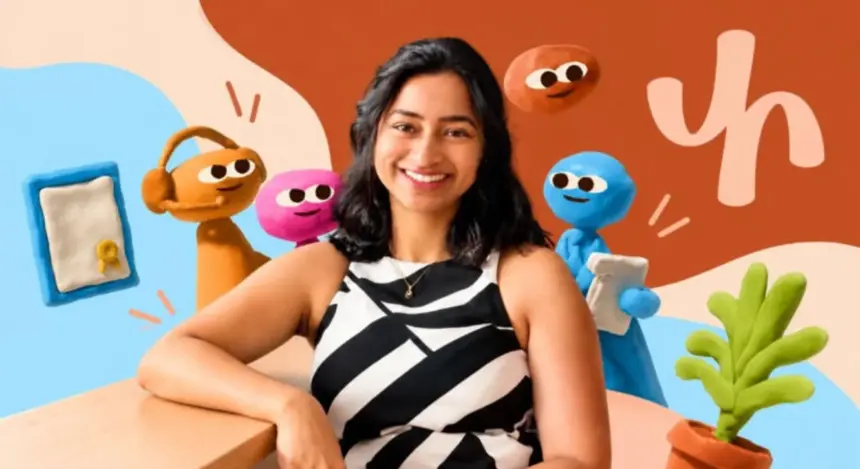
UniqueHuman aims to connect wearable signals, symptom logs and medical records to support people managing long-term conditions. Its predictive claims require clinical validation.
Praneeta Pujari’s move into health technology grew from a problem close to home: watching her mother navigate years of chronic pain and fragmented care.
The IIT Kanpur graduate and former Apple employee is now building UniqueHuman, a startup focused on helping people organise health information and manage chronic conditions. Her journey was recently profiled by India Today Tech.
On the company’s mission page, Pujari also describes her own experience of delayed migraine diagnosis. These experiences, she says, shaped her interest in care that continues between medical appointments.
See more of our coverage in your search results.
Add INDYASTORY on GoogleBringing scattered health information together
UniqueHuman’s proposition is to combine information that might otherwise sit across separate devices, documents and apps.
Its product descriptions identify wearable data, medical records, laboratory results, medication information and symptom logs as inputs. An AI assistant called Niq is intended to use that context when responding to users.
The company’s website presents this as a more continuous view of a person’s health, rather than a series of disconnected interactions. That is its stated product approach, not an independently established clinical outcome.
What the app says it offers
The App Store listing describes several functions:
| Feature | Stated purpose |
|---|---|
| Symptom and episode tracking | Record symptoms, their intensity and duration |
| Connected health information | Bring records and wearable data into one place |
| Niq assistant | Respond using information supplied or connected by the user |
| Flare-up monitor | Flag patterns in wearable signals |
| Doctor-ready reports | Summarise recorded information for appointments |
| Human care support | Help users navigate providers and care options |
These descriptions come from the developer’s listing. They do not independently establish the accuracy or availability of every function for every user.
See more of our coverage in your search results.
Add INDYASTORY on GoogleTracking patterns is different from proving predictions
Organising symptoms can help a person prepare a clearer account for a medical appointment. Predicting a future flare-up is a separate claim that requires evidence.
A meaningful assessment would examine how reliably alerts identify episodes, how often they generate false alarms and whether performance varies across conditions and users.
The sources reviewed for this article did not establish independently validated accuracy figures or clinical trial results demonstrating that UniqueHuman’s alerts improve patient outcomes. Its prediction and care-coordination descriptions should therefore remain attributed to the company.
See more of our coverage in your search results.
Add INDYASTORY on GoogleSupporting care without replacing diagnosis
The App Store listing states that UniqueHuman does not issue medical diagnoses and is designed to support, rather than replace, a user’s primary doctor.
It also describes reports that users can bring to appointments and a care team that can help with finding specialists or seeking second opinions.
That distinction is important when describing the product. An AI-generated observation about a possible pattern is not, by itself, a diagnosis or a reason to change treatment.
Privacy is part of the product’s promise
Combining medical records and wearable information involves sensitive personal data.
UniqueHuman says its infrastructure is encrypted and describes privacy protections in its product materials. These are company representations; this article did not independently audit its security controls or compliance claims.
Users considering a connected health service should be able to understand what information it accesses, which functions require that access and how permissions can be withdrawn.
The next test is evidence
Pujari’s startup addresses a recognisable challenge: making scattered information easier to understand and discuss during chronic care.
The stronger claims—reliable early warnings, better treatment navigation and improved outcomes—will need evidence beyond product descriptions and testimonials. How UniqueHuman performs against those measures will determine the practical value of its approach.