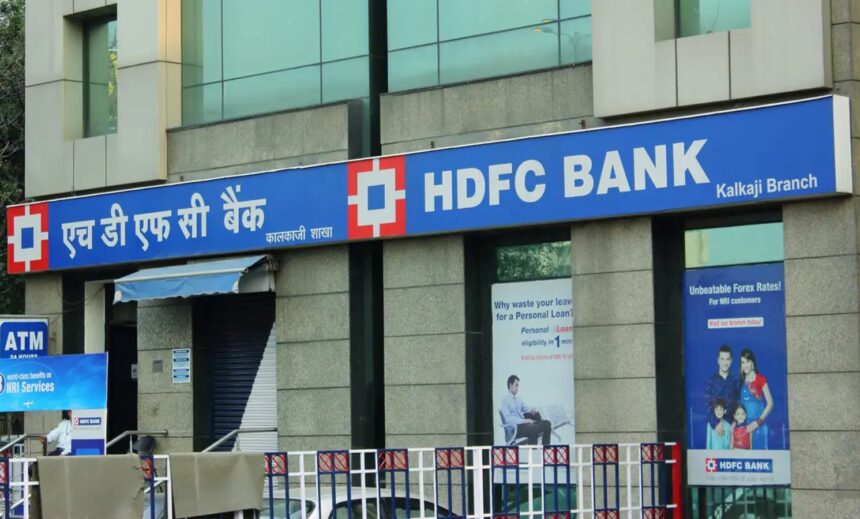
HDFC Bank, India’s largest private-sector lender, is facing a federal securities class-action lawsuit in the United States over allegations that it concealed certain interest-related payments by recording them as marketing expenses.
The lawsuit was filed in the US District Court for the Southern District of New York on behalf of investors who purchased HDFC Bank American Depositary Shares (ADS) between July 17, 2023, and May 26, 2026, according to the allegations described in the complaint.
Investor Jwalant Natwarlal Soneji is named as the plaintiff. HDFC Bank, its Managing Director and Chief Executive Officer Sashidhar Jagdishan, and Chief Financial Officer Srinivasan Vaidyanathan have been named as defendants.
HDFC Bank has rejected the allegations and described the lawsuit as baseless, saying it intends to defend itself strongly.
See more of our coverage in your search results.
Add INDYASTORY on GoogleWhat Does the Lawsuit Allege?
At the centre of the case is an allegation concerning payments associated with the Maharashtra State Road Development Corporation (MSRDC), a state-owned agency.
According to the lawsuit, HDFC Bank allegedly agreed to provide an interest rate of 6.01% to MSRDC on certain deposits. The complaint claims this rate was higher than the standard 3.5% savings interest rate referred to in the allegations and argues that the arrangement violated applicable Reserve Bank of India norms.
The plaintiffs further allege that the additional payments were not directly reflected as interest expenses. Instead, according to the complaint, the money was allegedly routed or accounted for as marketing expenditure connected with a road-safety awareness campaign involving MSRDC.
The lawsuit alleges that approximately ₹45 crore in additional payments were involved between 2023 and 2025.
These allegations have not been established as facts by a court. The case remains subject to the judicial process, and HDFC Bank is contesting the claims.
See more of our coverage in your search results.
Add INDYASTORY on GoogleAlleged Internal Investigation and RBI Compliance Questions
The complaint reportedly refers to an internal vigilance investigation that allegedly examined the payment arrangement.
According to the allegations, the investigation found that the practice was inconsistent with applicable banking directions and internal policies. The lawsuit further claims that payments were made through third-party vendors as part of the disputed arrangement.
The allegations raise potentially significant questions because interest payments, deposit practices and financial reporting are closely regulated areas for banks.
See more of our coverage in your search results.
Add INDYASTORY on GoogleHowever, the existence of a lawsuit does not by itself establish wrongdoing. The claims will need to be tested through the legal process, and the defendants will have an opportunity to challenge the allegations.
Investors Claim Financial Disclosures Were Misleading
A major part of the US securities case concerns HDFC Bank’s disclosures to investors.
The plaintiffs allege that the bank’s filings with the US Securities and Exchange Commission, including its Form 20-F annual reports, contained misleading statements regarding internal controls and financial reporting.
According to the complaint, HDFC Bank stated in its filings that its internal control over financial reporting was effective. The plaintiffs argue that the alleged treatment of the disputed payments as marketing expenditure should have been disclosed differently.
The lawsuit also claims that the alleged accounting treatment affected closely watched financial indicators, including operating expenses and net interest income.
The plaintiffs argue that investors purchased HDFC Bank ADS at prices that were allegedly affected by incomplete or misleading information.
Atanu Chakraborty’s Resignation Drew Attention
The controversy reportedly intensified in March 2026 after HDFC Bank Chairman Atanu Chakraborty resigned.
According to the information cited in the lawsuit and related reporting, Chakraborty referred to certain incidents and practices that he said were inconsistent with his personal values and ethics.
The developments attracted significant attention from investors.
HDFC Bank’s US-listed shares reportedly declined following the news, with the ADS falling sharply amid increased trading activity. The plaintiffs argue that subsequent disclosures resulted in further declines in the share price.
A fall in a company’s share price, however, does not automatically prove that securities laws were violated. One of the central issues in the case will be whether the alleged omissions or disclosures were materially misleading and whether investors suffered legally recoverable losses as a result.
May 2026 Report Added to Market Concerns
The complaint points to subsequent reporting in May 2026 that brought renewed attention to the alleged payments involving MSRDC.
According to the allegations cited in the lawsuit, an internal investigation examined the role of several senior officials. The complaint also contains allegations concerning discussions involving senior management.
These are allegations presented by the plaintiffs and should not be interpreted as judicial findings.
For a securities class-action case to succeed, plaintiffs generally need to meet legal requirements relating to material misstatements or omissions, investor reliance, loss causation and damages, among other issues.
The case will therefore depend on evidence, legal arguments and eventual decisions by the court.
What Is a Securities Class-Action Lawsuit?
A securities class-action lawsuit allows investors who allegedly suffered similar losses to pursue claims collectively.
In this case, the proposed class covers investors who purchased HDFC Bank ADS during the period specified in the complaint, from July 17, 2023, to May 26, 2026.
The lawsuit reportedly alleges violations of provisions of the US Securities Exchange Act of 1934. The plaintiffs are seeking class certification, damages in an amount to be determined by the court and a jury trial.
At this stage, however, the case has been filed but the allegations have not been proven.
Class certification is also a separate legal stage. The court must determine whether the proposed investors meet the requirements to proceed collectively as a class.
HDFC Bank Says It Will Defend the Case
HDFC Bank has pushed back against the lawsuit.
The bank said that shareholder lawsuits in the United States are common after substantial declines in a company’s share price and noted that many US-listed companies face similar litigation.
According to the bank’s position, the lawsuit lacks merit and will be defended vigorously.
That response is significant because the dispute is now likely to move through a legal process that could include motions, discovery and further court proceedings.
Until a court reaches a decision, the allegations against HDFC Bank and the individual defendants remain unproven claims.
Why the Case Matters to Investors
The lawsuit is drawing attention not only because HDFC Bank is one of India’s largest financial institutions, but also because the case involves issues that are closely monitored by investors: corporate governance, regulatory compliance, internal controls and financial disclosures.
For a large listed bank with both Indian and international investors, transparency around governance and regulatory matters can influence investor confidence.
The case also highlights the broader importance of how companies communicate potentially material risks to shareholders.
If the allegations are eventually proven, the legal and reputational consequences could be significant. If the claims are successfully challenged, the case could demonstrate the difficulty of establishing liability in complex securities litigation.
For now, investors should distinguish carefully between allegations made in a lawsuit and findings established by a court or regulator.
What Happens Next?
The immediate focus will be on the legal proceedings in the United States.
The court will eventually consider the arguments from both the plaintiffs and the defendants. Key questions may include whether the challenged statements or omissions were materially misleading, whether investors can establish a connection between the alleged conduct and investment losses, and whether the case qualifies for class-action treatment.
HDFC Bank’s response and any future regulatory developments could also be closely watched by investors.
The case remains an evolving legal matter. Until the court proceedings advance further, claims contained in the complaint should be treated as allegations rather than confirmed findings.