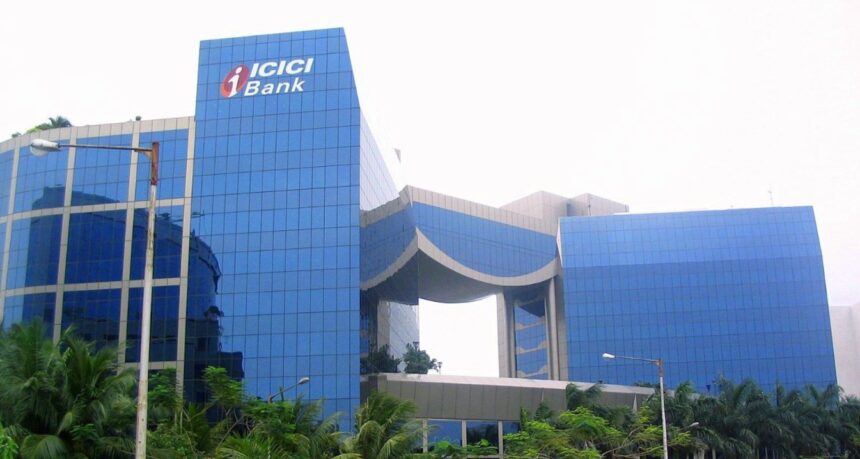
The reported 10-basis-point increase applies to select deposits below ₹3 crore, with general customers eligible for rates of up to 6.60% a year.
ICICI Bank has increased interest rates on select fixed deposits below ₹3 crore, offering higher returns to general depositors and eligible senior citizens.
The revision raises rates by 10 basis points, equivalent to 0.10 percentage point. General customers can earn up to 6.60% annually, while the highest reported rate for senior citizens is 7.20%.
Published reports date the changes to October 23, 2026. The increases cover selected longer tenures rather than the entire FD range.
See more of our coverage in your search results.
Add INDYASTORY on GoogleWhich ICICI Bank FD rates have increased?
The reported revisions include deposits running for two years and one day through longer tenures, along with the five-year tax-saver FD.
| FD tenure or product | General: previous | General: revised | Senior citizen: previous | Senior citizen: revised |
|---|---|---|---|---|
| 2 years 1 day to 3 years | 6.45% | 6.55% | 6.95% | 7.05% |
| 3 years 1 day to 5 years | 6.50% | 6.60% | 7.10% | 7.20% |
| 5 years 1 day to 10 years | 6.50% | 6.60% | 7.00% | 7.10% |
| 5-year tax-saver FD | 6.50% | 6.60% | 7.10% | 7.20% |
Annual rates for deposits below ₹3 crore, as reported for the October revision. Confirm the applicable rate and eligibility with the bank before booking.
The tenure boundaries matter. A deposit lasting exactly three years falls in the 6.55% general-customer band; the 6.60% band starts at three years and one day.
For senior citizens, choosing the longest available tenure does not automatically produce the highest annual rate. The reported rate for three years and one day to five years is 7.20%, compared with 7.10% for five years and one day to 10 years.
How much difference does a 10-basis-point increase make?
A small rate increase becomes easier to understand when expressed in rupees.
See more of our coverage in your search results.
Add INDYASTORY on Google| Deposit amount | Additional interest over one year at a 0.10-percentage-point increase |
|---|---|
| ₹1 lakh | ₹100 |
| ₹5 lakh | ₹500 |
| ₹10 lakh | ₹1,000 |
| ₹20 lakh | ₹2,000 |
These are simple-interest comparisons before tax, assuming the principal remains unchanged for a year. They are not exact cumulative-FD maturity calculations.
For example, annual interest on ₹5 lakh at 6.50% would be ₹32,500 on a simple-interest basis. At 6.60%, it would be ₹33,000—a difference of ₹500.
Actual interest credited and maturity proceeds depend on the deposit’s duration, compounding method and payout option.
See more of our coverage in your search results.
Add INDYASTORY on GoogleWill an existing FD automatically earn the higher rate?
Depositors should distinguish between a newly booked FD and one already running.
ICICI Bank states that revised rates apply to new and renewed fixed deposits. An existing deposit should therefore not be assumed to receive the higher rate automatically.
Closing an older deposit to reinvest also requires a separate calculation. The bank’s premature-withdrawal terms can affect the interest payable, potentially reducing or outweighing the benefit of a higher advertised rate.
Compare the product terms as well as the headline rate
Before booking, check that the displayed rate matches the deposit amount, exact tenure, customer category and withdrawal facility selected.
A five-year tax-saver FD should also be assessed separately from a regular FD. Its tax treatment and access conditions are part of the product decision; the interest rate alone does not establish whether it suits a depositor’s needs.
Interest payouts are subject to applicable tax rules. The extra interest illustrated above is a gross amount, rather than a guaranteed increase in after-tax income.
Check the final booking rate
The bank’s retrieved public webpage contains a discrepancy between its headline maximum rates and the detailed tenure table. Depositors should verify the final rate displayed before authorising a deposit and retain the confirmation showing the agreed terms.
The reported revision improves returns on selected deposits, but the practical benefit depends on how much is invested, how long the money can remain deposited and whether early access may be needed.