Artificial intelligence is transforming industries across India, but some of its most significant contributions are happening beyond the familiar world of consumer chatbots. From making speech recognition more accessible in regional languages to improving business finance and developing scientific AI models, women researchers and entrepreneurs are helping expand what intelligent technology can achieve.
India’s artificial intelligence story is often told through investments, startup valuations, technology announcements and the companies developing increasingly powerful AI systems.
Far less attention is sometimes given to the researchers and entrepreneurs working on problems that affect people’s daily lives.
These include the difficulty of accessing technology in regional languages, barriers to business financing, the need for affordable healthcare solutions and the development of more accurate scientific models.
See more of our coverage in your search results.
Add INDYASTORY on GoogleWomen innovators are contributing to these fields through research, entrepreneurship and technology development.
Their work also challenges the assumption that meaningful AI innovation happens only within a handful of large technology companies.
Among the notable figures are Preethi Jyothi, Hardika Shah, Lakshmi Kalyani Chinthala, Neha Shukla and Anima Anandkumar.
Their contributions span different disciplines and stages of technological development, but they share a focus on applying advanced computing techniques to practical challenges.
Women AI Innovators: Key Contributions at a Glance
| Innovator | Main area | Notable work |
|---|---|---|
| Preethi Jyothi | Speech recognition | Low-resource languages and multilingual speech technology |
| Hardika Shah | Financial technology | Kinara Capital, technology-enabled MSME lending |
| Lakshmi Kalyani Chinthala | Healthcare AI | Reported HIVSense-Econ biosensing concept |
| Neha Shukla | Accessible technology and AI safety | Mobility-assistance projects and child-focused AI governance |
| Anima Anandkumar | Scientific AI | Neural operators and AI-based weather modelling |
The profiles are based on the supplied material. These are different types of contributions, ranging from established academic research and commercial platforms to reported prototypes requiring further validation.
See more of our coverage in your search results.
Add INDYASTORY on Google1. Preethi Jyothi: Making Speech Recognition Work for India’s Languages
India is home to extraordinary linguistic diversity.
Millions of people communicate in regional languages, local dialects and combinations of different languages.
Yet many speech recognition technologies have historically performed better on languages for which large quantities of high-quality training data are available.
See more of our coverage in your search results.
Add INDYASTORY on GoogleThis creates challenges for users whose languages or accents are underrepresented in technology datasets.
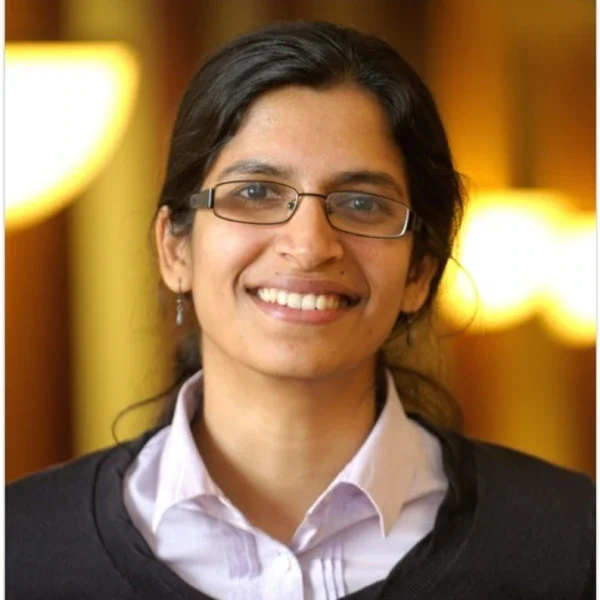
Preethi Jyothi, a researcher associated with the Indian Institute of Technology Bombay, has worked on speech and language technologies, particularly automatic speech recognition for low-resource settings.
Automatic speech recognition, commonly known as ASR, is the technology that converts spoken language into text.
It supports voice assistants, transcription services, dictation tools and voice-based interfaces.
The challenge of low-resource languages
Developing accurate speech recognition systems usually requires substantial quantities of recorded speech and corresponding transcripts.
For widely studied languages, researchers and technology companies may have access to extensive datasets.
For many regional languages and dialects, the available data can be much more limited.
This makes it harder to train systems that recognise different pronunciations, speaking styles and accents.
Research into low-resource speech recognition aims to address this imbalance through techniques that make better use of limited data.
Such work has implications for education, digital public services, accessibility and voice-based communication.
Understanding code-switching
Another important research challenge is code-switching.
In India, it is common for speakers to move between languages within a conversation.
Someone may speak Hindi and English in the same sentence, or combine English words with a regional language.
Traditional speech recognition systems may struggle when the language changes unexpectedly.
Research into multilingual and code-switching speech recognition can help make voice interfaces more responsive to natural speaking patterns.
For India, this is particularly relevant because technology users should not necessarily have to change the way they speak to interact with digital systems.
Why her work matters
Improved multilingual speech recognition could make AI-powered services easier to use for people who are less comfortable typing or interacting in English.
It could also support better transcription tools and speech interfaces for education and other services.
However, accessibility depends on more than language coverage alone. Systems must also be evaluated for accuracy across different accents, speakers and real-world environments.
Jyothi’s work illustrates how foundational AI research can contribute to broader digital participation.
2. Hardika Shah: Using Technology to Expand Small-Business Lending
Artificial intelligence is also increasingly relevant to financial services, particularly when lenders assess applications and manage credit risk.
Traditional business lending can be difficult for micro, small and medium enterprises.
Many smaller businesses lack substantial collateral, extensive credit histories or the documentation commonly required by conventional financial institutions.
Hardika Shah, founder of Kinara Capital, has worked on addressing financing challenges faced by smaller enterprises.
Kinara Capital operates in business lending, with technology playing a role in its credit assessment and customer-service processes.

How AI can support MSME lending
Financial institutions use information about applicants to evaluate whether loans are likely to be repaid.
Technology-enabled credit assessment can potentially help process information more efficiently and reduce manual administrative work.
Machine learning may also support risk analysis, although lending decisions require appropriate oversight, data quality and compliance with applicable financial regulations.
According to the supplied profile, Kinara developed the multilingual myKinara application to improve accessibility for business borrowers.
The source describes AI-supported lending processes and collateral-free financing, with certain loans reportedly receiving decisions within a short period.
These claims should be checked against the company’s current product disclosures because eligibility, approval timelines and terms may vary.
Funding businesses beyond major cities
Access to formal financing can be a significant challenge for small manufacturers, traders and service providers.
Some businesses need loans to purchase machinery, maintain inventory, hire workers or manage working capital.
Digital financial services can potentially reduce barriers when application processes are understandable and accessible.
The supplied profile states that Kinara Capital had disbursed more than ₹4,500 crore in loans to over 87,000 businesses.
Those figures should be treated as historical, source-reported milestones until their reporting period and definitions are confirmed.
Supporting women entrepreneurs
The company’s HerVikas initiative has been associated with improving financing opportunities for women entrepreneurs.
Such initiatives are relevant because access to business credit can vary depending on financial documentation, collateral availability, business experience and other factors.
However, the effectiveness of any lending programme should be assessed through outcomes such as repayment performance, affordability, borrower protection and business sustainability.
Why her work matters
Shah’s experience demonstrates how technology can be used within financial services to address practical problems affecting small businesses.
It also highlights an important distinction: expanding credit access is valuable only when loans are suitable, transparent and financially sustainable for borrowers.
AI-driven lending can introduce risks such as inaccurate predictions or unfair treatment if data and decision-making systems are poorly designed.
Responsible deployment therefore requires fairness testing, explainability where appropriate, privacy protection and human oversight.
3. Lakshmi Kalyani Chinthala: Exploring AI and Biosensing for Healthcare
Healthcare presents opportunities for artificial intelligence, particularly in areas such as medical imaging, clinical decision support and the analysis of complex health information.
AI techniques can help researchers identify patterns in data, but medical applications require rigorous scientific testing before they can be considered dependable for clinical use.
The supplied profile identifies Lakshmi Kalyani Chinthala as a developer associated with a proposed healthcare technology called HIVSense-Econ.
The system is described as combining artificial intelligence with biosensing technology to support HIV-related detection and healthcare resource planning.
What is HIVSense-Econ?
According to the supplied description, HIVSense-Econ is intended to combine sensor-based measurements with AI analysis.
The proposed system is described as having two potential functions.
The first involves identifying health-related markers that could assist in detecting illness.
The second involves using aggregated information to support decisions about healthcare resources.
The supplied material claims that the system can detect HIV in less than 30 minutes with 94.6% accuracy.
That claim cannot be treated as established clinical performance without access to a peer-reviewed validation study, the reference testing method, the patient population and the system’s measured sensitivity and specificity.
In particular, a general accuracy percentage is insufficient to establish whether an HIV diagnostic device is suitable for clinical use.

Could predictive AI improve healthcare planning?
Healthcare organisations may use statistical models and AI to analyse disease trends, resource requirements and service demand.
In principle, these tools could help policymakers identify areas where additional testing, healthcare staff or treatment resources might be necessary.
However, reliable predictions require representative data, appropriate privacy safeguards and careful evaluation.
AI systems should not independently redirect medical resources without suitable clinical and public-health oversight.
Why the research direction matters
The proposed combination of biosensing and data-driven analysis illustrates an area of growing interest in healthcare technology.
Affordable, appropriately validated diagnostic tools could be particularly useful in settings with limited medical infrastructure.
But medical innovation must be evaluated through scientific evidence rather than promotional performance claims.
Until independent documentation is available, HIVSense-Econ is best described as a reported research or development project rather than a clinically validated HIV diagnostic solution.
4. Neha Shukla: Developing Accessible Technology and Promoting Safer AI
The next generation of AI innovation includes young researchers and technology advocates working on accessibility, safety and responsible technology development.
Neha Shukla has been profiled for projects involving assistive technology and AI governance.
The supplied account describes her work on mobility-related systems and tools intended to make public environments more accessible.
MobileMe: Exploring AI for Mobility Support
One project mentioned in the supplied material is MobileMe, a device concept developed to examine mobility and fall-related risks.
The described technology uses sensor information to analyse aspects of movement, including gait and balance.
In principle, wearable sensors and machine learning can help researchers identify movement patterns that may be associated with fall risk.

Such information could potentially support clinical assessment and rehabilitation planning.
However, predicting individual falls is a complex medical challenge.
A prototype that collects mobility measurements should not be described as a proven fall-prevention device without appropriate clinical evidence.
The supplied report does not provide a validation study establishing the device’s accuracy or effectiveness.
Accessibility for people with hearing disabilities
The source also describes Shukla’s involvement in an AI and edge-computing prototype intended to improve accessibility for people with hearing disabilities.
Edge computing refers to processing information locally on a device or nearby system rather than relying entirely on distant servers.
This approach can reduce latency and may offer privacy or connectivity advantages depending on the application.
For accessibility technology, rapid local processing can be useful when systems need to respond to environmental information.
The report associates the project with NVIDIA-related recognition, although the precise nature of that collaboration and award should be verified before publication.
Advocating for child-safe AI
Beyond technical projects, Shukla has been linked in the supplied account to youth-oriented discussions about artificial intelligence safety.
These include concerns about how AI systems affect children, education and digital participation.
Child-focused AI governance involves questions about privacy, age-appropriate design, transparency, harmful content and the responsible use of automated systems.
Such concerns are increasingly important as AI tools become available through everyday digital products.
Why her work matters
Shukla’s reported projects illustrate how accessibility and responsible design can form part of AI development from an early stage.
The underlying principle is important: intelligent systems should be evaluated not only by their technical sophistication but also by whether they work safely and effectively for people with different needs.
Her age and current institutional affiliations should be confirmed from dated primary sources rather than repeated as permanent biographical facts.
5. Anima Anandkumar: Advancing AI for Weather, Science and Engineering
While some researchers focus on consumer applications, others are developing AI methods for scientific computing.
Anima Anandkumar is a researcher known for contributions to machine learning, including work involving tensor methods and scientific AI.
She has held a professorship at the California Institute of Technology and has been associated with AI research leadership at NVIDIA.
Her research demonstrates how advanced AI can contribute to areas extending beyond conversational systems and image generation.

What are neural operators?
Traditional machine learning often involves learning relationships between input data and particular outputs.
Neural operators are a class of methods designed to learn mappings between functions or fields.
They are relevant to scientific problems involving physical systems governed by mathematical relationships, including partial differential equations.
These systems appear in applications such as fluid dynamics, weather modelling and engineering simulation.
By learning patterns from suitable datasets, neural-operator methods may provide efficient approximations for certain scientific computations.
However, their performance depends on the problem, training data, model architecture and evaluation conditions.
They should not be assumed to outperform established numerical methods in every setting.
FourCastNet: AI-based weather forecasting
One significant scientific application associated with Anandkumar’s research is FourCastNet, an AI-based weather forecasting model.
FourCastNet uses machine learning techniques to generate forecasts of atmospheric conditions.
AI weather models can offer computational advantages because they may produce forecasts more rapidly than some traditional numerical forecasting workflows once trained.
This creates opportunities for faster experimentation, ensemble forecasting and research into weather prediction.
Nevertheless, forecasting accuracy depends on the weather variable, location, lead time and benchmark.
Extreme weather prediction is particularly challenging, and no single AI system can be assumed to predict every severe event more accurately than established forecasting systems.
Applications beyond weather
Scientific machine learning can also support research in engineering, materials and other fields involving complex physical systems.
Potential applications include accelerating simulations, exploring design alternatives and helping researchers analyse large datasets.
AI may also assist drug discovery research, although converting a computational prediction into an approved treatment requires extensive laboratory, clinical and regulatory work.
Anandkumar’s contributions demonstrate how AI research can help scientists investigate difficult problems rather than simply automate existing digital tasks.
What These Women Reveal About India’s AI Ecosystem
These five profiles cover significantly different areas of artificial intelligence.
Some focus on foundational research, while others involve business applications, technology prototypes or responsible AI advocacy.
That diversity is important because AI is not a single industry or product category.
It encompasses research disciplines and applications with different technical requirements, commercial models and social implications.
Speech recognition addresses problems involving language and communication.
Financial technology explores how digital systems can process information and support services.
Healthcare AI involves medical data and requires particularly rigorous safety and clinical evaluation.
Accessibility projects seek to ensure that technology can serve users with different physical and communication needs.
Scientific AI develops computational methods for understanding complex systems.
Together, these areas demonstrate the breadth of work involved in the development and application of artificial intelligence.
Why Gender Representation in AI Research Matters
Artificial intelligence systems are shaped by decisions about research priorities, training data, evaluation methods and deployment.
The people participating in those decisions can influence which problems receive attention.
For example, researchers working on regional languages may recognise limitations that are less visible when technology is primarily tested on widely represented languages.
Accessibility specialists may identify design barriers overlooked in conventional product development.
Healthcare researchers may highlight the importance of clinical evidence, patient safety and equitable access to treatment.
Greater participation across different professional and demographic backgrounds can broaden the questions that research teams investigate.
However, representation alone does not guarantee that an AI system will be fair, accurate or inclusive.
Those outcomes require disciplined research methods, appropriate datasets, evaluation across relevant populations and effective governance.
The Challenges Facing Women in Artificial Intelligence
Women working in AI may encounter challenges related to professional networks, leadership opportunities, financing, mentoring and visibility.
The nature of these barriers varies considerably.
An academic researcher may face different constraints from a startup founder raising investment.
A technology entrepreneur may need access to customers, computing infrastructure and skilled employees.
A student entering the field may require educational resources, mentorship and opportunities to participate in research.
Addressing these barriers requires different forms of support rather than a single universal programme.
Universities, research institutions, investors and technology companies can all contribute by making opportunities more accessible and evaluating work on its merits.
It is also important to recognise women as technical contributors and business leaders in their own right, rather than framing their achievements solely as exceptions to an assumed male-dominated norm.
AI in India: Why Local Problems Need Local Solutions
India’s diversity creates both opportunities and challenges for artificial intelligence development.
Language variation, uneven internet connectivity, differences in digital access and the scale of the country’s small-business economy influence how technology is used.
Systems developed for other markets may not automatically perform well in Indian conditions.
For example, speech recognition systems trained primarily on English-language datasets may require further adaptation for multilingual Indian conversations.
Financial services must account for the documentation, cash-flow patterns and regulatory requirements relevant to local businesses.
Healthcare applications must consider clinical infrastructure, patient diversity and the quality of available data.
These challenges create opportunities for researchers and entrepreneurs to develop solutions suited to particular contexts.
The most useful systems will be those supported by reliable evidence, appropriate safeguards and a clear understanding of the people they are intended to serve.
What Can Aspiring Women AI Researchers and Founders Learn?
The experiences represented in these profiles suggest several practical directions for people interested in artificial intelligence.
Build strong technical foundations. Mathematics, statistics, programming and data analysis remain important across many AI disciplines.
Choose meaningful problems. Understanding a real-world challenge can help guide research and product development.
Work with domain experts. Financial, medical and scientific applications require expertise beyond machine learning alone.
Evaluate systems carefully. AI models must be tested for accuracy, reliability, fairness and suitability for their intended environments.
Seek research and professional networks. Academic collaborations, mentorship and practical experience can help researchers and founders develop their capabilities.
Understand responsible deployment. Privacy, safety, transparency and accountability should be considered before technologies are introduced into real-world settings.
These principles apply to people entering AI research as well as entrepreneurs building products that use existing models.
The Future of Women-Led AI Innovation
The next phase of artificial intelligence development will likely involve a growing range of specialised applications.
Progress will depend not only on model capabilities but also on whether technologies can be deployed reliably and responsibly.
In India, opportunities include multilingual digital interfaces, tools for education, services for small businesses and research supporting healthcare and scientific understanding.
Women researchers and entrepreneurs already contribute to these areas, and their participation can help broaden the range of problems receiving attention.
The most useful measure of progress will not simply be how many people appear on lists of leading innovators.
It will also be whether research produces reliable knowledge, whether products address genuine needs and whether more people can participate in developing the technology.
Conclusion: Recognising the Women Behind Practical AI Innovation
Artificial intelligence is often presented through powerful new models and major corporate investments.
But important advances also emerge from specialised research and technology developed around particular human needs.
Preethi Jyothi’s work on speech recognition addresses linguistic accessibility.
Hardika Shah’s entrepreneurial experience illustrates the application of technology in business finance.
Lakshmi Kalyani Chinthala’s reported biosensing concept highlights an area of healthcare research that requires further validation.
Neha Shukla’s projects bring attention to accessible technology and AI safety.
Anima Anandkumar’s scientific research demonstrates how machine learning can support complex computational problems.
Their stories offer a broader perspective on what participation in the AI ecosystem can look like.
The future of artificial intelligence will be shaped not only by the size of models or the amount of investment they attract, but also by the quality of research, the reliability of applications and the range of people who help develop them.