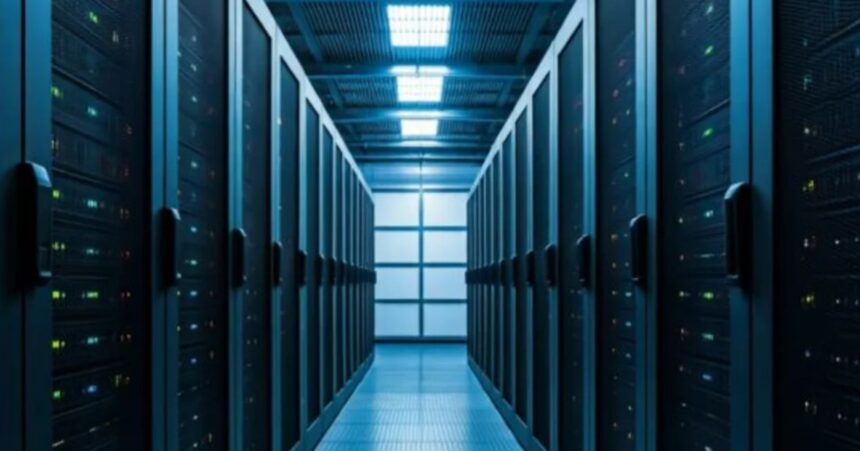
The rapid expansion of artificial intelligence applications is creating unprecedented demand for computing infrastructure, and Nebius Group N.V. (NASDAQ: NBIS) is emerging as one of the companies benefiting from this global trend.
As businesses race to deploy advanced AI models, demand for high-performance computing resources, cloud-based AI platforms and specialized data center capacity continues to accelerate. Investors are increasingly watching companies that provide the infrastructure powering the next phase of artificial intelligence development.
AI Infrastructure Becomes a Critical Growth Market
The artificial intelligence sector has evolved far beyond experimental deployments. Organizations across industries are now investing heavily in AI-powered tools for automation, analytics, customer service and decision-making.
This transformation requires enormous computing resources.
See more of our coverage in your search results.
Add INDYASTORY on GoogleTraining and operating large AI models depends on:
- Graphics processing units (GPUs)
- High-performance cloud infrastructure
- Advanced networking systems
- Large-scale data centers
- AI optimization software
As demand grows, infrastructure providers are becoming increasingly important participants in the AI ecosystem.
Nebius Focuses on AI-Native Cloud Infrastructure
Nebius has positioned itself as a specialized provider of infrastructure designed specifically for artificial intelligence workloads.
Unlike traditional cloud platforms that serve a broad range of applications, the company focuses on:
- Machine learning workloads
- AI model training
- AI model deployment
- High-performance computing
- GPU-accelerated cloud services
This specialization allows the company to target one of the fastest-growing segments of the technology industry.
See more of our coverage in your search results.
Add INDYASTORY on GoogleStrong Revenue Growth Highlights Market Demand
Investor interest in Nebius has been supported by rapid business expansion.
The company reported substantial year-over-year revenue growth during 2026 as enterprise demand for AI infrastructure continued to increase.
Market participants point to several factors supporting growth:
See more of our coverage in your search results.
Add INDYASTORY on Google- Rising AI adoption across industries
- Limited availability of advanced computing capacity
- Expanding enterprise AI budgets
- Increased demand for cloud-based AI services
The broader AI infrastructure market has become one of the most closely watched areas in technology investing.
Data Center Expansion Signals Long-Term Ambitions
One of the most significant developments announced by Nebius during 2026 was the expansion of its data center strategy.
The company revealed plans related to a large-scale data center campus designed to support future AI workloads.
Industry analysts note that access to data center capacity is becoming a key competitive advantage as demand for AI processing power continues to rise globally.
Modern AI models require vast amounts of computing infrastructure, making data center investment a critical component of long-term growth strategies.
Why AI Computing Demand Continues to Grow
Several structural trends are driving demand for AI infrastructure.
Enterprise Adoption
Organizations increasingly use AI to automate business processes, improve productivity and analyze large datasets.
Agentic AI Development
The emergence of more autonomous AI systems capable of performing complex tasks is increasing computing requirements.
Generative AI Applications
Large language models and generative AI platforms require significant computational resources for both training and inference.
Digital Transformation
Businesses continue integrating AI capabilities into existing software platforms and customer-facing applications.
These trends are expected to sustain demand for advanced computing infrastructure over the coming years.
Competitive Position in a Fast-Growing Market
Nebius operates in a market that includes some of the world’s largest technology companies.
However, investors often focus on the company’s specialized approach to AI infrastructure.
Key areas of differentiation include:
- AI-focused cloud services
- Proprietary infrastructure development
- Integrated software and hardware solutions
- High-performance computing capabilities
Industry observers believe specialized providers may benefit as enterprises seek infrastructure tailored specifically for AI workloads.
Investor Sentiment Reflects AI Optimism
The broader technology sector performed strongly during the second quarter of 2026, supported by optimism surrounding artificial intelligence and innovation-led growth.
Many investors continue to view AI infrastructure providers as potential beneficiaries of long-term industry expansion.
However, analysts also note that companies operating in rapidly growing sectors often experience significant share-price volatility as markets reassess future growth expectations.
Risks Investors Should Consider
While AI infrastructure remains a high-growth market, investors should be aware of potential risks.
These include:
- Intensifying competition
- Technology spending cycles
- Data center construction costs
- Regulatory developments
- Supply chain constraints for advanced chips
The sector’s rapid evolution means competitive dynamics can change quickly.
Outlook for the AI Infrastructure Industry
Industry forecasts suggest demand for AI computing resources could continue expanding throughout the remainder of the decade.
Growth drivers include:
- Increasing enterprise AI adoption
- Expansion of cloud-based AI services
- Larger and more complex AI models
- Growing demand for real-time AI applications
Companies capable of delivering reliable, scalable and cost-efficient computing infrastructure may be well positioned to benefit from these trends.
Conclusion
Nebius Group’s performance reflects the growing importance of AI infrastructure in the global technology landscape. As businesses invest more heavily in artificial intelligence capabilities, demand for computing power, cloud services and advanced data centers continues to rise.
While competition remains intense and market conditions can change rapidly, the long-term expansion of AI applications is creating significant opportunities for infrastructure providers that can support the next generation of machine learning and high-performance computing workloads.