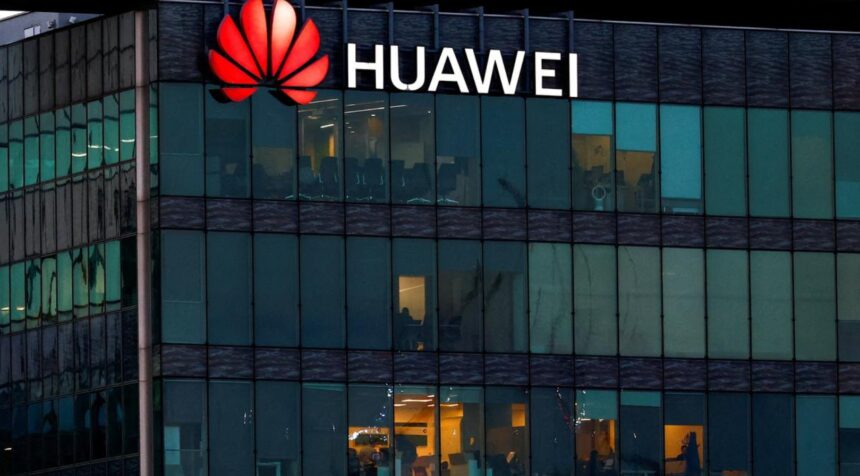
Huawei is looking to deepen its artificial intelligence partnerships with pharmaceutical companies in China, with plans to expand beyond existing projects into drug development and clinical applications, according to a senior company executive.
The move signals Huawei’s growing interest in the rapidly developing AI-driven drug discovery market, where pharmaceutical companies and technology firms are increasingly using machine learning, modelling systems and automated laboratories to accelerate research and potentially reduce development costs.
William Zhang, president of Huawei’s healthcare business unit, told Reuters that the company expects to expand its cooperation with pharmaceutical companies as its medical AI research advances.
“As we further deepen our research into AI in the medical field, we’ll have more collaboration and results emerging with pharmaceutical companies from drug manufacturing to clinical to final implementation,” Zhang said on Wednesday.
See more of our coverage in your search results.
Add INDYASTORY on GoogleHuawei Looks to Expand AI Role in Healthcare
Huawei already has some collaborations involving the use of AI in clinical practice at hospitals, Zhang said.
The company is also exploring additional opportunities, although he did not provide further details about specific projects or partners.
For now, Huawei’s pharmaceutical collaborations are primarily focused on domestic drugmakers, according to Zhang.
The company’s broader strategy reflects the increasing convergence between artificial intelligence and pharmaceutical research, particularly in areas where large amounts of scientific and clinical data can be analysed computationally.
AI Drug Discovery Is Attracting Big Tech Companies
Huawei is entering a market that has drawn interest from major technology companies and pharmaceutical groups around the world.
See more of our coverage in your search results.
Add INDYASTORY on GoogleUS chipmaker Nvidia, for example, has established AI-related partnerships with drug companies including Eli Lilly and Novo Nordisk as technology providers seek opportunities in AI-powered pharmaceutical research.
Artificial intelligence can be used at several stages of drug discovery, including identifying potential targets, screening compounds and designing molecules. Machine-learning systems are also being explored for applications related to clinical-trial planning and other stages of pharmaceutical development.
For technology companies, the pharmaceutical sector offers a potentially significant application for increasingly powerful AI models and specialised computing infrastructure.
See more of our coverage in your search results.
Add INDYASTORY on GoogleHuawei Offers AI Tools for Drug Compound Screening
Huawei has developed technologies aimed at helping researchers identify potentially viable drug compounds.
Its healthcare AI efforts are supported by the company’s Ascend and Kunpeng computing platforms, which are designed to provide the processing infrastructure required for AI and other computational workloads.
In May, Huawei said a project involving state-owned Guangzhou Pharmaceutical Holdings had achieved what the company described as the industry’s first production validation of independently developed AI drug-research models adapted to Huawei’s Ascend and Kunpeng technologies.
The project illustrates Huawei’s effort to develop an AI ecosystem that combines software models with its own computing hardware.
Huawei Targets the Full Pharmaceutical Development Pipeline
Huawei’s latest comments suggest that its ambitions extend beyond the initial discovery and screening of drug candidates.
Zhang said the company’s future collaborations could span areas ranging from drug manufacturing and clinical applications to final implementation.
That would give Huawei a potential role across multiple stages of the pharmaceutical lifecycle rather than limiting its technology to research laboratories.
However, the precise scope of those planned collaborations remains unclear. Huawei has not publicly detailed all of the pharmaceutical companies it expects to work with or provided timelines for specific drug-development and clinical projects.
AI Could Reduce Drug Development Time and Costs
The pharmaceutical industry has increasingly turned to AI as researchers look for ways to make drug discovery more efficient.
Industry forecasts cited by Reuters suggest that machine learning could significantly reduce the time and cost associated with early-stage drug development over the next three to five years.
Potential applications include optimising target discovery, designing molecules and improving clinical-trial planning.
Such projections represent industry expectations rather than guaranteed outcomes. The effectiveness of AI in drug development will depend on factors including model accuracy, quality of biological data, laboratory validation, regulatory requirements and the ability to translate computational predictions into successful clinical results.
Huawei’s Healthcare AI Push Gains Momentum
Huawei’s expanding pharmaceutical partnerships indicate that the company sees healthcare as an important area for its AI strategy.
Its combination of AI models, drug-screening tools and Ascend and Kunpeng computing technologies gives the company an opportunity to compete for a role in an industry increasingly interested in computational drug research.
The next stage of Huawei’s strategy will depend on how successfully it can move from AI-assisted research projects to practical applications in drug development and clinical settings.