By Bext Automotive Desk
Honda Motorcycle & Scooter India (HMSI) has reaffirmed that flex-fuel technology will remain a core element of its long-term mobility roadmap, positioning ethanol-compatible vehicles alongside electric mobility and conventional internal combustion engines as part of a diversified strategy for the future.
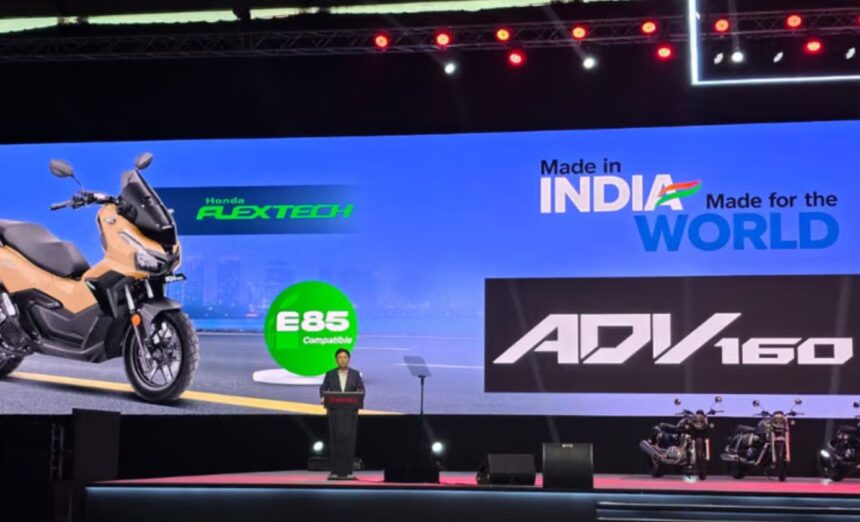
Speaking at the HMSI 2026 event, Krishnakumar, General Manager – Product Planning, Honda Motorcycle & Scooter India, said the company believes no single powertrain will meet every mobility need. Instead, Honda expects a mix of technologies to coexist as consumer preferences, infrastructure, and energy ecosystems continue to evolve.
Honda Backs a Multi-Fuel Future
According to Honda, the future of personal mobility will be driven by a multi-fuel, multi-pathway approach rather than a single technology.
See more of our coverage in your search results.
Add INDYASTORY on GoogleThe company sees electric vehicles as an important part of that future but believes alternative fuel solutions such as flex-fuel engines will continue to play a significant role, particularly in markets where charging infrastructure and fuel availability vary.
This strategy allows Honda to offer products suited to different customer requirements while supporting broader efforts to reduce transport-related emissions.
ADV 160 Demonstrates Honda’s Flex-Fuel Technology
At the event, Honda showcased the ADV 160, an E85-compatible scooter capable of operating on ethanol blends ranging from E0 to E85.
The vehicle is equipped with a system that automatically detects the fuel blend and adjusts engine settings accordingly, enabling seamless operation without requiring any input from the rider.
This flexibility allows owners to use different ethanol-petrol blends depending on local fuel availability while maintaining consistent performance.
See more of our coverage in your search results.
Add INDYASTORY on GoogleBuilt on Years of Flex-Fuel Experience
Honda said its work on flex-fuel motorcycles began in 2009 with the launch of the CG Titan Mix in Brazil, which the company identifies as the world’s first mass-produced flex-fuel motorcycle.
The experience gained through that programme has helped shape newer products such as the ADV 160, reflecting Honda’s continued investment in alternative fuel technologies across global markets.
Performance and Practicality Combined
The Honda ADV 160 is powered by a 156.9 cc, liquid-cooled, four-valve engine that delivers:
See more of our coverage in your search results.
Add INDYASTORY on Google- 12 kW of maximum power
- 14.9 Nm of peak torque
Honda says the scooter combines motorcycle-inspired performance with everyday convenience, making it suitable for both urban commuting and longer recreational rides.
Key features include:
- Compatibility with fuel blends from E0 to E85
- Long wheelbase for enhanced stability
- Upright riding position
- Spacious under-seat storage
- 14-inch front wheel with block-pattern tyres
- Flat and practical floorboard
These features position the ADV 160 as a versatile scooter designed for a variety of riding conditions.
Flex Fuel and EVs to Coexist
Honda emphasized that flex-fuel vehicles are not intended to replace battery-electric vehicles, but rather to complement them within its broader product portfolio.
During the event, the company also displayed a range of electric scooters and motorcycles alongside roadster, cruiser, and adventure models, highlighting its strategy of offering multiple propulsion technologies under one umbrella.
This diversified approach reflects Honda’s view that different markets and customer segments will adopt clean mobility solutions at different speeds.
Ethanol Gains Momentum in India
Honda’s continued focus on flex-fuel technology comes as India expands its ethanol blending programme to reduce dependence on imported fossil fuels and lower transport emissions.
The government’s push for higher ethanol blending has encouraged vehicle manufacturers to accelerate research and development of engines capable of operating on higher ethanol concentrations.
Industry experts believe flex-fuel vehicles could complement electric mobility, particularly in regions where EV charging infrastructure is still developing.
Outlook
Honda’s latest showcase reinforces its commitment to providing multiple technology options rather than relying on a single powertrain solution.
By combining electric vehicles, flex-fuel engines, and efficient internal combustion technologies, the company aims to adapt to changing consumer preferences while supporting the transition toward cleaner and more sustainable mobility.