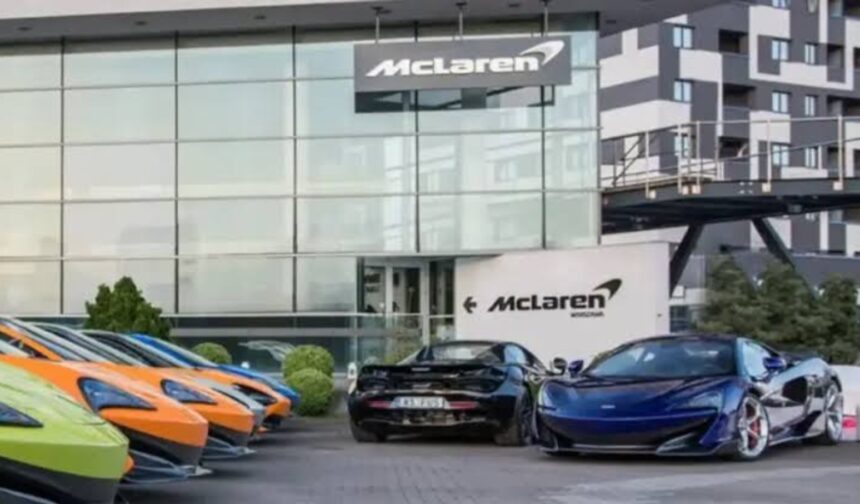
British supercar manufacturer McLaren is preparing to significantly reduce its India pricing, with cuts expected to be as high as 38 percent across its current lineup. The move comes ahead of the anticipated implementation of the India–UK Free Trade Agreement (FTA), which is expected to lower import duties on high-end British automobiles.
If implemented as expected, the revision would make McLaren the first pure supercar brand to pass on full anticipated benefits following similar action by Jaguar Land Rover.
Massive Price Cuts Across McLaren Lineup
The expected price reductions span McLaren’s key India models, including the 750S range and the GTS grand tourer.
Expected Revised Prices (India):
- McLaren 750S Coupe
- Old Price: ₹7.94 crore
- New Price: ₹4.94 crore
- Reduction: ₹3 crore
- McLaren 750S Spider
- Old Price: ₹8.78 crore
- New Price: ₹5.46 crore
- Reduction: ₹3.32 crore
- McLaren GTS
- Old Price: ₹6.15 crore
- New Price: ₹3.83 crore
- Reduction: ₹2.32 crore
Overall, reductions range between ₹2.3 crore and ₹3.3 crore, depending on the model.
See more of our coverage in your search results.
Add INDYASTORY on GoogleMcLaren has not officially confirmed these revised prices.
Why Prices Are Dropping
The expected price correction is linked to the upcoming India–UK Comprehensive Economic and Trade Agreement (CETA).
Key Tariff Changes Under the Agreement:
- Customs duty on British petrol cars above 3,000cc
- Reduced from 110% to 30% in the first year
- Further reduction to 10% over five years
- Annual import quota system applies
Both the McLaren 750S and GTS are powered by a 4.0-litre twin-turbocharged V8 engine, placing them within the eligible high-displacement category.
Artura Excluded from Price Cuts
Not all McLaren models will benefit from the revised structure.
The McLaren Artura hybrid is expected to remain unaffected due to current policy exclusions for hybrid vehicles in the early phases of the agreement framework.
See more of our coverage in your search results.
Add INDYASTORY on GoogleMcLaren Follows Jaguar Land Rover
McLaren’s move follows Jaguar Land Rover (JLR), which recently became the first automaker to revise prices in anticipation of the FTA.
JLR Price Cuts Included:
- Range Rover SV: down by ₹75 lakh
- Range Rover Sport SV: down by ₹40 lakh
- Average reduction: 15–18 percent
However, JLR has indicated it may not pass on the full benefit of the tariff reduction.
McLaren’s expected cuts are significantly higher, reflecting the brand’s positioning in the ultra-luxury supercar segment.
See more of our coverage in your search results.
Add INDYASTORY on GoogleTrade Agreement Still Pending Implementation
Although the India–UK FTA was signed on 24 July 2025, it has not yet come into force.
Current Status:
- Implementation target (April 2026) delayed
- Regulatory issues, including steel safeguards, still under negotiation
- Duty reductions will apply only after formal ratification
- Import quotas will limit eligible vehicle volumes
This means current price reductions are pre-emptive, based on expected policy changes rather than confirmed tariff relief.
Limited India Volume, High Impact Pricing
McLaren entered the Indian market in 2021 and opened its Mumbai showroom in 2022 through importer Infinity Cars.
India Presence:
- Approx. 50 cars delivered by early 2025
- Line-up includes: 750S Coupe, 750S Spider, Artura, and GTS
- Highly limited annual volumes
Given the restricted quota system under the FTA, allocation will play a critical role in determining actual availability even after price cuts.
Broader Luxury Car Impact Expected
Other British luxury brands eligible under the agreement include:
- Bentley
- Rolls-Royce
- Aston Martin
- Lotus
So far, none of these brands has officially announced price reductions.
The final impact will depend on quota distribution, import strategy, and demand forecasting.
AutIQ Insight
If fully implemented, the India–UK trade agreement could represent the largest structural price correction in India’s ultra-luxury automotive segment in decades. For supercar buyers, the McLaren adjustment signals a potential shift in pricing psychology, even if volumes remain strictly limited.