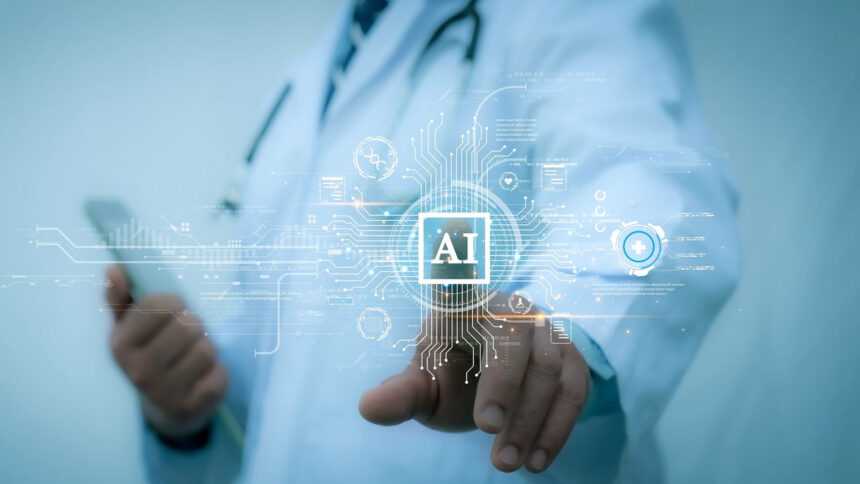
Artificial intelligence is reshaping healthcare by changing how medical information is analysed, how patients interact with health services and how healthcare organisations manage increasingly complex workloads.
From clinical decision-support systems and medical research to preventive health tools and virtual care, AI is becoming an increasingly important technology across the healthcare ecosystem. Its intended role is not simply to replace human expertise, but to support clinicians and patients with faster access to information, personalised insights and more efficient workflows.
As healthcare systems move towards prevention, early intervention and long-term wellness, AI could become an important tool for delivering more personalised and accessible care.
AI Is Supporting Clinical Decision-Making
Healthcare professionals routinely work with large volumes of information, including medical images, laboratory results, patient histories and other clinical records. AI systems can process and identify patterns across these datasets much faster than conventional manual workflows.
See more of our coverage in your search results.
Add INDYASTORY on GoogleIn areas such as radiology, pathology and cardiology, AI-assisted tools are being developed to help clinicians identify abnormalities, prioritise cases and interpret complex information.
The technology can highlight patterns or correlations that may require further clinical attention. However, AI-generated findings still need appropriate clinical interpretation and oversight, particularly when they could influence diagnosis or treatment decisions.
The potential benefit is that clinicians can spend less time on repetitive information-processing tasks and more time evaluating patients, discussing treatment options and providing care.
Personalised and Preventive Healthcare
AI is also contributing to the shift from reactive treatment towards more personalised and preventive approaches to healthcare.
By analysing relevant health information, AI-powered systems can generate personalised insights relating to areas such as physical activity, nutrition and lifestyle. When appropriately designed and used, these tools can help individuals understand their health patterns and make more informed everyday decisions.
See more of our coverage in your search results.
Add INDYASTORY on GoogleWearable devices and AI-enabled health applications can continuously collect information such as activity levels and selected physiological measurements. AI can then analyse those signals and provide users with timely feedback.
Such technologies are increasingly positioning health management as an ongoing process rather than something that begins only when a person becomes ill.
However, consumer-facing wellness insights should not automatically be treated as medical diagnoses. Their usefulness depends on the quality of the underlying data, the algorithms involved and appropriate professional guidance when a clinical concern arises.
See more of our coverage in your search results.
Add INDYASTORY on GoogleAI Can Improve the Patient Experience
Patient experience has become an important part of modern healthcare delivery, and AI is being used to simplify several routine interactions.
Virtual assistants and AI-powered chat interfaces can help patients find information, arrange appointments and manage certain follow-up activities. By providing assistance outside traditional operating hours, these systems can also make some healthcare services more convenient to access.
AI can also reduce administrative workloads by automating repetitive processes and helping organise information.
Reducing paperwork and unnecessary waiting can give healthcare professionals more time for direct interactions with patients. That can potentially contribute to better communication and a more efficient care journey.
Supporting Doctors, Nurses and Healthcare Teams
Healthcare professionals spend substantial amounts of time handling administrative and data-intensive tasks. AI can assist by automating selected workflows and processing information at scale.
Hospitals and clinics are exploring applications including predictive analytics, workflow optimisation and intelligent scheduling.
For example, predictive systems can help healthcare organisations anticipate demand and allocate resources more efficiently, while automated scheduling tools can assist with managing appointments, staff availability and other operational requirements.
These applications do not eliminate the need for healthcare professionals. Instead, their value lies in helping clinical and administrative teams use their time and resources more effectively.
AI Is Accelerating Medical Research
The impact of AI extends beyond healthcare delivery into medical research and pharmaceutical development.
Researchers can use AI to analyse large and complex biological datasets, examine scientific literature, identify potential therapeutic targets and model possible outcomes.
AI is also being explored in clinical-trial analysis, drug discovery and the development of precision-medicine approaches.
By helping researchers examine large datasets and identify relationships that might otherwise take considerable time to uncover, AI could accelerate parts of the research process.
At the same time, computational predictions need to be validated through scientific research and appropriate clinical testing before they can be translated into routine medical practice.
Expanding Access Through Digital Healthcare
AI-powered digital healthcare services are also helping extend medical support beyond traditional hospitals and clinics.
Telemedicine allows patients to consult healthcare professionals remotely, while AI-assisted triage systems can help direct users towards potentially appropriate levels of care.
This can be particularly relevant for people living in remote or underserved areas where access to specialist healthcare may be limited.
AI does not remove the underlying challenges of healthcare access, including connectivity, affordability and shortages of medical professionals. But when combined with reliable digital infrastructure and human clinical support, it can contribute to more accessible healthcare services.
AI Applications in Mental Health and Wellness
Artificial intelligence is also being incorporated into digital mental-health and wellness products.
Some applications use AI to provide guided exercises, mindfulness support, stress-management tools and personalised wellness recommendations.
Such systems can offer users convenient access to certain forms of digital support and may help encourage healthier routines.
However, AI wellness applications should not be treated as substitutes for qualified mental-health professionals, particularly when someone is experiencing serious or persistent psychological distress. Human clinical support remains essential for assessment, diagnosis and treatment.
Why Human Oversight Still Matters
The growing use of AI in healthcare makes human oversight more important, not less.
Healthcare decisions can involve complex medical histories, incomplete information and consequences that cannot be reduced to a simple algorithmic prediction. AI systems can also produce inaccurate or misleading outputs if their training data, implementation or interpretation is flawed.
For that reason, responsible healthcare AI requires appropriate validation, privacy safeguards, data governance, transparency and clinical oversight.
The strongest applications are likely to be those in which technology complements rather than attempts to replace professional expertise.
Building a Human-Centred Healthcare Future
Healthcare ultimately remains a human-centred field. Technology can process information, identify patterns and automate workflows, but empathy, clinical judgement, communication and trust remain central to patient care.
AI’s growing role in healthcare therefore represents less a replacement of human expertise than a potential expansion of what healthcare professionals and patients can accomplish with the right tools.
From preventive health and clinical decision support to medical research, telemedicine and hospital operations, AI is creating new possibilities across the health and wellness ecosystem.
Its long-term impact will depend not simply on how advanced the technology becomes, but on how responsibly it is deployed.