Kenyan President William Ruto has ordered Tata Chemicals to leave the country, escalating a long-running dispute over the Indian company’s operations at its soda ash facility near Lake Magadi.
Speaking on Thursday, September 3, Ruto accused Tata Chemicals of failing to create sufficient local employment and industrial investment while allegedly repatriating profits from Kenya to India. He also criticised the company over its use of local mineral resources.
According to reports in Kenyan media, Ruto said the company had held the relevant interests in the country for decades but had not done enough to build local manufacturing capacity or employ Kenyans.
“Tata has had the contract for 100 years. They have not built any factory or employed Kenyans. Recently, I told them to leave,” Ruto was quoted as saying.
See more of our coverage in your search results.
Add INDYASTORY on GoogleThe development comes while a broader legal dispute involving Tata Chemicals Magadi remains before the Kenyan courts.
Why Is Tata Chemicals Being Asked to Leave Kenya?
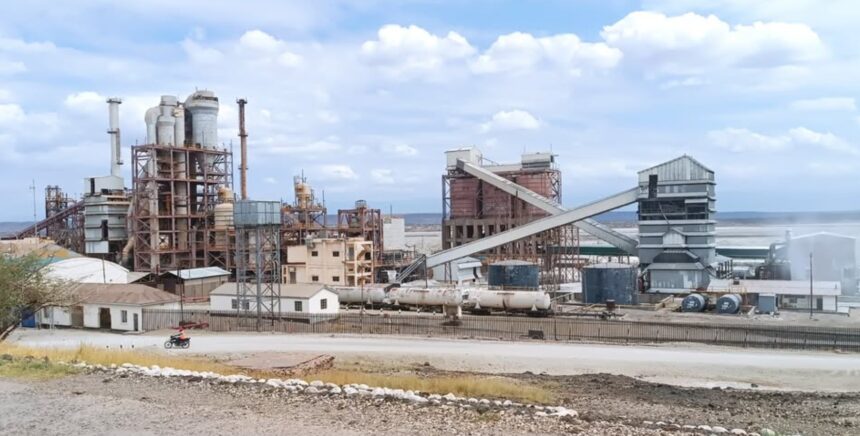
The latest confrontation centres on Tata Chemicals Magadi, the company’s soda ash mining and manufacturing operation near Lake Magadi in Kajiado County.
Ruto has accused the company of holding an industrial and mining permit without meeting conditions relating to local employment and industrial development. He also alleged that profits generated from the operation were being sent to India instead of being reinvested in Kenya.
The president has argued that Kenya should derive greater economic and industrial benefits from its natural resources, particularly through local manufacturing and employment.
Tata Chemicals has operated its soda ash business in the Magadi region for more than a century. The operation is considered a significant exporter of soda ash, a key raw material used in industries including glass manufacturing.
See more of our coverage in your search results.
Add INDYASTORY on GoogleTata Chemicals Magadi Faces Mining Shutdown Dispute
The possibility of an exit emerged after Kenya’s Mining, Blue Economy and Maritime Affairs Cabinet Secretary Hassan Ali Joho issued an order on July 28, 2026, suspending Tata Chemicals Magadi’s mining activities and soda ash exports.
The company subsequently approached the Kenyan High Court seeking an injunction to prevent the shutdown. The court declined to grant the requested interim relief, allowing the suspension order to remain in effect.
However, that decision did not settle the underlying dispute. The substantive petition remains before the court, with a hearing expected in early October.
See more of our coverage in your search results.
Add INDYASTORY on GoogleThis means the legal status of the company’s operations remains subject to further proceedings.
Tata Chemicals Says It Employs Hundreds at Magadi Plant
Ruto’s criticism over local employment contrasts with information published by Tata Chemicals about its Magadi operation.
The company has stated that its Magadi business employs approximately 700 people. It also describes the facility as Africa’s largest soda ash manufacturing operation.
According to company information, the plant exports more than 350,000 tonnes of soda ash annually to markets around the world.
The operation has been involved in soda ash mining and exports in Kenya for roughly 115 years, making it one of the longest-running industrial operations associated with the Tata group in the country.
What Is Soda Ash and Why Is Magadi Important?
Soda ash, chemically known as sodium carbonate, is an important industrial raw material. One of its major applications is the manufacture of glass, although it is also used across several other industrial processes.
The Magadi region is notable because the mineral resource used to produce soda ash occurs close to the surface, unlike many other soda ash deposits that require underground extraction.
That geological advantage has made the area strategically important to Kenya’s soda ash industry and to Tata Chemicals’ global operations.
Two Companies Could Take Over Tata Chemicals’ Operations
Ruto has reportedly said that two companies would be brought in to take over the mining activities currently associated with Tata Chemicals at Magadi.
The proposed replacement operations would reportedly go beyond raw-material extraction. According to the president, the new companies would manufacture both glass and chemicals, creating a more integrated industrial chain inside Kenya.
The proposal forms part of the government’s broader industrialisation agenda, with local manufacturing and employment positioned as key objectives.
For communities in the Magadi region, the government has also linked industrial development to the economic disruption that mining activity can create for traditional livelihoods such as agriculture and fishing.
Dispute Over Royalties and Other Payments
Tata Chemicals’ relationship with Kenyan authorities has also involved longstanding disagreements over royalties and other financial obligations connected with extraction and operations.
The precise financial terms of any potential exit have not been disclosed.
At present, it is therefore unclear whether Tata Chemicals will ultimately leave Kenya permanently, what compensation or settlement arrangements could apply, or how the company’s assets and operating rights would be handled.
The ongoing court case could play an important role in determining what happens next.
Opposition Leaders Question Ruto’s Decision
Ruto’s announcement has also triggered criticism from political figures aligned with former deputy president Rigathi Gachagua’s Democracy for Citizens Party.
Opposition-linked leaders have called for the shutdown to be reversed and have accused the government of using the Tata Chemicals dispute to advance other interests.
One of the more serious claims involves alleged lithium deposits beneath the Magadi region. Nyandarua Senator John Methu reportedly claimed that the area contains lithium deposits worth trillions of Kenyan shillings.
However, Kenyan media reports have noted that there is currently no established evidence supporting the lithium claim. It should therefore be treated as an allegation rather than an established fact.
Tata Chemicals Has Yet to Issue a Statement
Tata Chemicals had not issued a public statement responding to Ruto’s latest remarks at the time of the reports cited in the source material.
The company’s position will be significant as the legal proceedings continue, particularly given that the substantive court petition remains unresolved.
For now, the dispute places one of Kenya’s most established soda ash operations at a crossroads. The government is pushing for greater local industrialisation and employment, while the legal process will determine the future of Tata Chemicals’ interests at Magadi.
The next significant development is expected from the Kenyan courts when the substantive petition is heard in October.