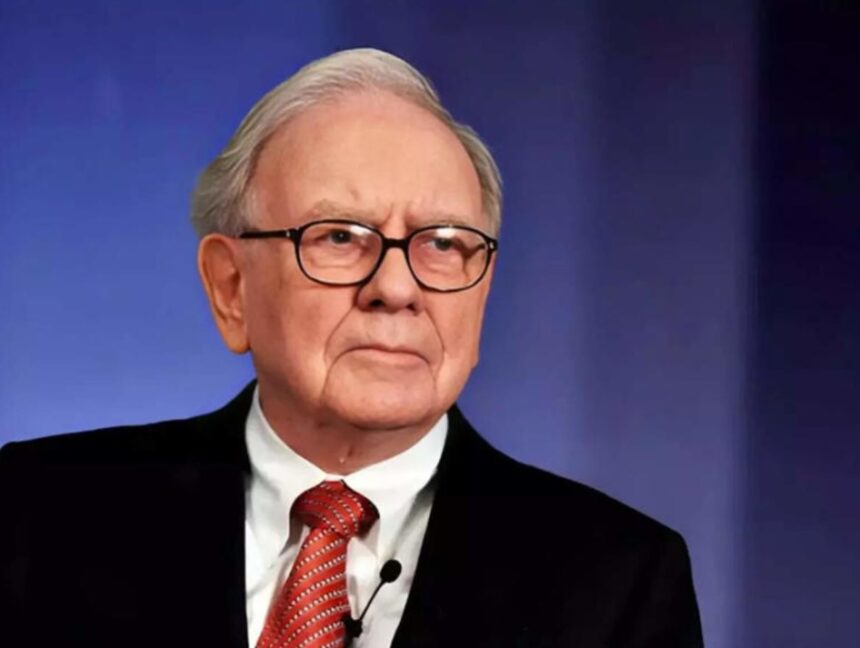
When an investor asked Warren Buffett how to replicate his financial success, his opening answer was just two words: “Start young.”
The exchange took place at Berkshire Hathaway’s 1999 annual shareholder meeting. An audience member asked what Buffett would do if he were beginning again in his early thirties, before jokingly asking how to make $30 billion.
Buffett’s response drew laughter, but the explanation that followed addressed a serious advantage: time. He compared compounding to a small snowball gathering sticky snow as it rolls down a long hill. Starting earlier gives that snowball a longer distance to travel.
Buffett bought his first shares at 11
Buffett’s own investing history began well before adulthood.
See more of our coverage in your search results.
Add INDYASTORY on GoogleIn his 2018 letter to Berkshire shareholders, he recalled making his first investment on March 11, 1942, when he was 11. He invested $114.75 that he had started accumulating at age six.
CNBC’s Buffett Archive identifies that purchase as three shares of Cities Service preferred stock, priced at approximately $38 each. The purchase came during World War II, decades before Buffett became internationally known for his investment record.
That early beginning gives his advice an important perspective. His investing experience was already more than two decades long by the time he reached his early thirties.
What the ‘snowball’ effect means
Compounding happens when returns remain invested and can themselves generate further returns. Over time, growth can come from both the original investment and the gains accumulated along the way.
Consider a purely illustrative example. A one-time investment of ₹10,000 growing at a constant hypothetical rate of 8% a year would reach approximately ₹21,589 after 10 years and ₹46,610 after 20 years, before taxes and fees.
See more of our coverage in your search results.
Add INDYASTORY on GoogleThe second decade adds more than the first because growth applies to a larger balance. Actual market returns fluctuate, losses are possible, and this calculation is not a forecast.
Buffett’s long-hill analogy highlights this relationship between time and accumulated growth. It does not promise that starting early will reproduce his wealth.
Why the lesson extends beyond choosing stocks
The practical value of Buffett’s message lies in thinking beyond immediate results.
See more of our coverage in your search results.
Add INDYASTORY on GoogleFor young readers, learning how investing works, understanding costs and recognising risk can be more useful than trying to copy an established billionaire’s portfolio. An investment suitable for a large company may not suit someone saving for education, housing or other near-term needs.
Starting early also need not mean committing money before understanding an investment. Building knowledge gives future decisions a stronger foundation.
Where Buffett stands at Berkshire today
Buffett’s leadership transition is separate from the much older shareholder-meeting remarks.
In a September 18, 2026 letter, he announced that he would become chairman emeritus while remaining a director. His son Howard would succeed him as chairman, while Greg Abel would continue running Berkshire as chief executive.
The distinction matters: Howard succeeded Buffett as chairman, while Abel holds the executive role. Buffett’s letter described Howard’s responsibility as protecting Berkshire’s culture and values.
For readers revisiting Buffett’s investing advice, the original message remains straightforward: time can be a powerful advantage, but it works alongside sound decisions, patience and an understanding of risk.