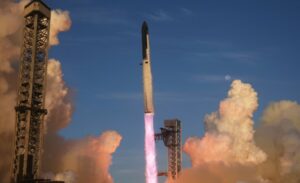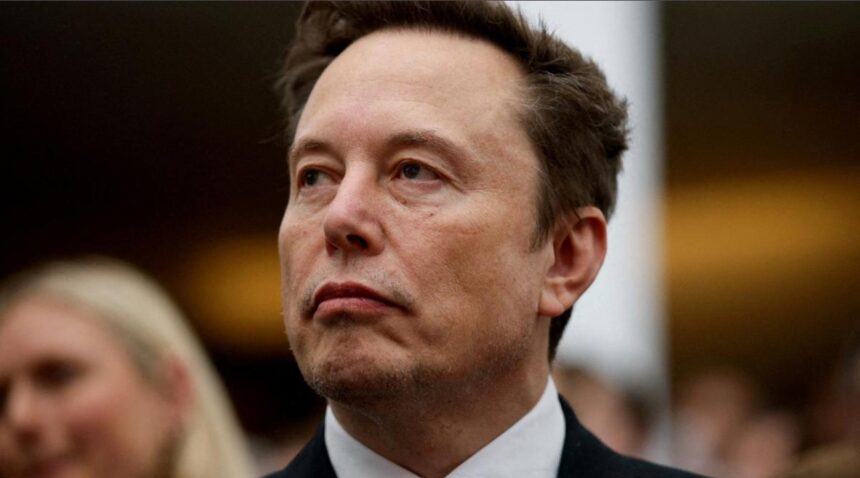
SpaceX returned to quarterly profitability in the third quarter of 2026, reporting earnings of $4.4 billion after recording a loss in the preceding quarter. The result marks an important financial development for Elon Musk’s aerospace and artificial intelligence business as it invests heavily in satellite internet and advanced computing infrastructure.
According to the company’s reported financial results, SpaceX generated the profit between July and September. The company had reported a $541 million loss for the previous quarter, highlighting the extent to which its financial performance changed over the period.
The latest results arrive as SpaceX seeks to expand its businesses beyond rocket launches. Its operations include Starlink, the satellite internet service, alongside artificial intelligence activities associated with the Grok chatbot and the social media platform X.
During the company’s earnings call, Musk outlined an exceptionally ambitious outlook for future growth, suggesting that annual recurring revenue could reach hundreds of billions of dollars by the end of 2027.
See more of our coverage in your search results.
Add INDYASTORY on GoogleHowever, the forecast represents a future target rather than revenue that SpaceX has already earned.
SpaceX returns to profitability after quarterly losses
The reported $4.4 billion profit represents a significant turnaround from SpaceX’s loss in the June quarter.
Quarterly earnings can fluctuate considerably at businesses that are investing in large infrastructure projects, particularly when spending on technology, equipment and expansion is substantial.
SpaceX operates in several capital-intensive markets. Its aerospace business requires rockets, spacecraft, launch infrastructure and ongoing engineering work. Starlink needs satellites, ground equipment and network capacity to support its internet customers. Its AI operations also require substantial computing resources.
These investments can weigh on earnings in the short term, even when a business is expanding its revenue base.
See more of our coverage in your search results.
Add INDYASTORY on GoogleThe latest reported profit suggests that SpaceX’s financial performance improved during the September quarter. To determine how sustainable the change is, investors will need to examine the company’s complete financial statements, segment-level results and cash flow.
It is also important to distinguish a quarterly profit from the company’s cumulative financial performance. A profitable quarter does not automatically offset all previous losses or establish that future quarters will produce similar results.
Elon Musk forecasts a dramatic increase in revenue
Musk reportedly told investors that SpaceX’s annual recurring revenue could reach between $500 billion and $1 trillion by the end of 2027.
See more of our coverage in your search results.
Add INDYASTORY on GoogleThe projection is striking given the company’s reported revenue of approximately $27 billion for 2026 to date, as described in the supplied report.
Annual recurring revenue, or ARR, is a measure used to estimate the annualised value of recurring income from subscriptions and other ongoing contracts. It is not necessarily equivalent to revenue recognised in audited financial statements over a particular year.
That distinction matters when comparing the forecast with historical financial results.
For SpaceX to achieve the projected scale, its recurring businesses would need to expand substantially. Starlink could contribute through additional customers, broader coverage and new connectivity services. AI-related operations could also become a source of revenue if demand for computing and associated services grows sufficiently.
Nevertheless, the forecast should be treated as Musk’s stated expectation, not as a guaranteed financial outcome.
Achieving such a target would depend on customer growth, pricing, operational capacity, competition and the costs associated with expanding the company’s infrastructure. Further disclosures would be needed to understand the assumptions behind the projection.
Starlink plays an important role in SpaceX’s growth strategy
Starlink has become a central part of SpaceX’s commercial operations by providing satellite-based internet access to customers across different markets.
Unlike a rocket launch, which typically generates revenue from an individual mission or contract, a subscription-based internet service can generate recurring income from customers over time.
That recurring business model can make Starlink strategically important as SpaceX seeks to grow its overall revenue.
The company must still invest in satellites, launches, ground infrastructure and network improvements. Service quality, customer acquisition costs and competition will also affect its financial performance.
Further expansion into new connectivity markets could create additional opportunities, but the scale of those opportunities will depend on the company’s ability to attract customers while managing operating costs.
For investors assessing SpaceX, Starlink’s customer growth, revenue contribution and operating margins will be important indicators of the business’s long-term potential.
AI investment brings opportunities and financial risks
SpaceX is also investing in artificial intelligence infrastructure, reflecting the broader technology industry’s growing demand for computing capacity.
Developing advanced AI systems can require specialised processors, data centres, electricity, cooling equipment and high-speed networking. These resources can be expensive to acquire and operate.
Musk has also discussed ambitious ideas involving computing infrastructure in space. Such projects could offer potential advantages in particular applications, but they face substantial engineering, launch-cost, maintenance and energy challenges.
Space-based data centres remain a developing concept rather than an established replacement for conventional terrestrial facilities.
The commercial value of SpaceX’s AI investments will depend on whether the company can turn its infrastructure into services that customers are willing to pay for at a scale sufficient to cover operating and capital costs.
AI demand could provide a growth opportunity, but competition and rapid technological change make long-term financial projections difficult to assess.
Mars ambitions remain a long-term challenge
Musk’s broader vision for SpaceX includes establishing a human settlement on Mars. The ambition has helped shape the company’s long-term focus on reusable rockets and lowering the cost of space transportation.
However, a sustained human presence on Mars would require substantial technological progress and investment. Challenges include life-support systems, radiation protection, reliable transportation, surface infrastructure and the supply of essential resources.
These objectives are distinct from the company’s near-term commercial activities, including launch services and satellite internet.
For investors, separating established revenue-generating operations from longer-term development projects is essential. The two may be connected strategically, but they have different timelines, risks and financial requirements.
The same principle applies to proposed space-based computing facilities: their potential should be assessed against technical feasibility, costs and evidence of commercial demand.
What SpaceX’s earnings mean for investors
SpaceX’s reported third-quarter profit indicates a meaningful improvement in its financial performance, while Musk’s revenue forecast signals the scale of growth he believes the company could achieve.
Starlink provides an established recurring-service business, while AI infrastructure represents an additional area of investment. Rocket launches and spacecraft development remain important to the company’s wider operations.
The challenge will be to expand these businesses without allowing infrastructure spending and operating costs to undermine profitability.
Investors should monitor revenue by business segment, recurring customer income, operating margins, capital expenditure and cash flow. These indicators can help establish whether the latest results represent a durable improvement rather than a temporary change.
The $500 billion to $1 trillion revenue projection is an ambitious statement of future intent. Its credibility will depend on the company’s subsequent performance and the financial detail supporting its growth strategy.
For now, SpaceX’s return to quarterly profitability is a notable development. Whether it can sustain that performance while pursuing its expansive AI and space ambitions will become clearer through future earnings reports.