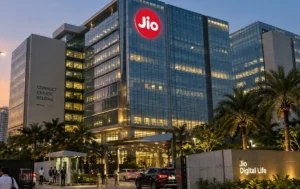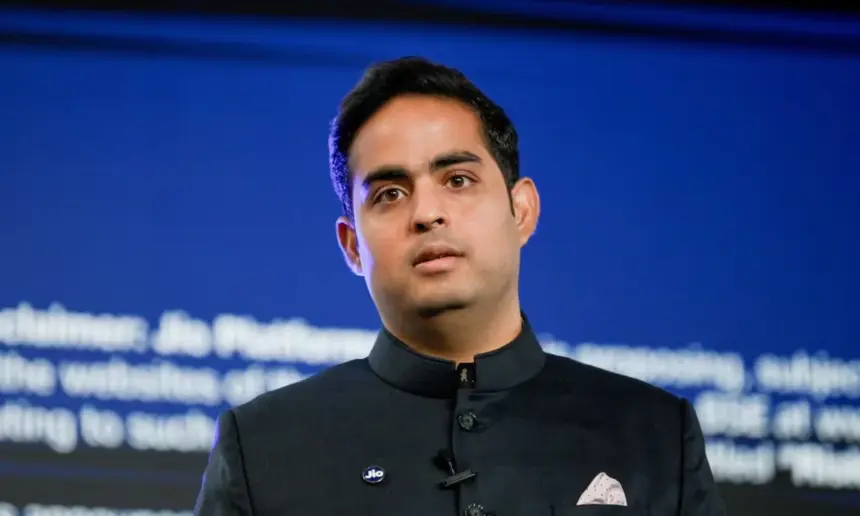
News highlights: Akash Ambani, the 34-year-old eldest son of Reliance Industries Chairman Mukesh Ambani, is emerging as a central figure in the conglomerate’s digital business as Jio Platforms prepares for its stock market debut. The $3.2 billion IPO has attracted substantial investor demand, putting greater attention on Akash’s leadership, Jio’s 533 million customers and the company’s ambitions beyond telecommunications.
Akash Ambani emerges as the face of Jio’s next chapter
As Reliance Industries prepares to take Jio Platforms public, Akash Ambani is stepping into a more visible leadership position within one of India’s most influential business families.
The planned listing represents a major financial milestone for Jio, but it also offers an important glimpse into the evolving leadership structure of the Reliance group.
Akash, who serves as managing director of Jio Platforms and chairman of its telecommunications business, has increasingly taken responsibility for communicating the company’s strategy to investors and technology partners.
See more of our coverage in your search results.
Add INDYASTORY on GoogleHis growing prominence comes as Reliance seeks to position Jio not simply as India’s largest mobile network operator, but as a broader technology platform with ambitions spanning artificial intelligence, digital services, broadband and connected devices.
The transition is particularly significant because Mukesh Ambani continues to chair Jio Platforms, while the next generation of the family assumes more visible operational and strategic responsibilities.
Jio IPO puts Akash Ambani in the investor spotlight
Jio Platforms’ $3.2 billion initial public offering has become a defining event for India’s capital markets in 2026.
The offering was fully subscribed within approximately two hours of opening for public bidding, according to the Reuters account supplied for this report.
Such early demand is notable for a transaction of this size, particularly because large Indian IPOs often receive a significant proportion of their applications toward the end of the subscription period.
See more of our coverage in your search results.
Add INDYASTORY on GoogleBy Thursday, October 22, the retail investor allocation had been fully subscribed.
The employee portion attracted bids approaching twice the available shares, while the quota reserved for existing Reliance shareholders reached approximately 2.58 times subscription.
The response reflects investor interest in Jio’s established telecommunications business and its longer-term digital expansion strategy.
See more of our coverage in your search results.
Add INDYASTORY on GoogleFor Akash, the IPO represents an opportunity to demonstrate his ability to lead a business operating at enormous scale while managing the expectations of public-market investors.
Akash leads Jio’s presentation to investors
At an IPO-related event held ahead of the public offering, Akash took a prominent role in explaining Jio’s business model, customer reach and financial performance.
The presentation highlighted the company’s reported 533 million customers and its operating margins.
His twin sister, Isha Ambani, also participated in the event, while Mukesh Ambani was absent.
That arrangement drew attention because it placed the younger generation of the Ambani family at the forefront of an important corporate milestone.
Akash’s public appearance also illustrated how Reliance’s leadership transition is becoming increasingly visible to investors and business partners.
While Mukesh Ambani remains the group’s dominant strategic figure, Akash is assuming a larger role in explaining Jio’s future direction.
Who is Akash Ambani?
| Profile | Details |
|---|---|
| Full name | Akash Mukesh Ambani |
| Age | 34, as reported October 2026 |
| Education | Bachelor’s degree in Economics, Brown University |
| Current roles | Managing Director, Jio Platforms; Chairman, Reliance Jio Infocomm |
| Father | Mukesh Ambani |
| Grandfather | Dhirubhai Ambani |
| Business interests | Telecommunications, digital services, technology and sports |
Akash graduated from Brown University in the United States, where he studied economics.
He has also been associated with the management of the Mumbai Indians, the Indian Premier League cricket franchise owned by the Reliance group.
His appointment as chairman of Reliance Jio Infocomm in 2022 was widely interpreted as an important step in the family’s long-term succession planning.
However, a greater leadership role at Jio should not be confused with a formal transfer of overall control of Reliance Industries.
Akash Ambani’s relationship with Meta and Silicon Valley
An important dimension of Akash’s responsibilities involves maintaining relationships with international technology companies.
Meta, the parent company of Facebook, Instagram and WhatsApp, is one of Jio Platforms’ most prominent strategic investors.
The company holds a stake approaching 10%, according to the supplied Reuters report.
In 2020, Meta, Google and other international investors collectively committed approximately ₹1.52 trillion to Jio Platforms, equivalent to around $20.5 billion at the time.
These investments helped reinforce Jio’s position as a major participant in India’s technology ecosystem.
Industry executives familiar with Akash’s work have described him as approachable, technologically engaged and involved in significant strategic decisions.
One executive cited by Reuters said Akash directly handles important relationships with technology investors, including senior leadership at Meta.
The reported division of responsibilities also suggests that Mukesh Ambani continues to maintain relationships with several major sovereign wealth funds, while Akash is increasingly associated with the group’s Silicon Valley connections.
These accounts offer insight into Reliance’s evolving management structure, although they do not establish that Akash independently controls all strategic investment decisions.
From Dhirubhai Ambani to Akash: Three generations of Reliance
The Jio listing also connects the Ambani family’s current technology ambitions with its corporate history.
Reliance founder Dhirubhai Ambani became known for cultivating a large base of individual shareholders, helping broaden retail participation in India’s equity markets.
During the 1980s, Reliance organised major shareholder gatherings in Mumbai that helped establish a distinctive relationship between the company and individual investors.
That legacy remains part of Reliance’s corporate identity.
At Jio’s recent investor presentation, images of Dhirubhai and historic shareholder meetings reportedly appeared alongside the company’s current business plans.
The symbolism was significant.
Dhirubhai built Reliance’s shareholder culture around industrial expansion and investment participation. Mukesh Ambani subsequently transformed the group through major investments in energy, retail and telecommunications.
Akash is now helping communicate the next phase of that transformation, centred on connectivity, digital infrastructure and emerging technology.
The family’s history may strengthen investor familiarity with the Reliance brand, but Jio’s long-term valuation will ultimately depend on its own financial performance.
Jio’s rise from telecom challenger to market leader
Jio’s commercial launch in 2016 fundamentally altered India’s telecommunications market.
Its initial strategy combined inexpensive mobile data with free domestic voice calls, putting pressure on established operators and accelerating mobile internet adoption.
The company quickly expanded its customer base and helped reshape how Indian consumers accessed online entertainment, digital payments and other internet services.
Today, Jio serves more than 500 million customers and ranks among the world’s largest mobile telecommunications businesses.
Its scale provides significant advantages, including a nationwide distribution network and an established customer base for additional digital services.
However, the telecommunications industry remains capital-intensive.
Maintaining network quality, expanding coverage and investing in new technologies require substantial expenditure.
Jio must balance those costs with competitive pricing and the need to increase revenue per customer.
Is Jio really a technology platform or primarily a telecom company?
One of the most important questions surrounding the IPO concerns how investors should classify Jio’s business.
The company has increasingly emphasised its identity as a technology platform rather than a conventional telecommunications operator.
Its services extend beyond mobile connectivity into home broadband, applications, digital entertainment, cloud-related offerings and connected devices.
Yet telecommunications continues to dominate its financial results.
Jio’s reported business mix
Based on financial figures cited in the supplied October 22 Reuters report
~90%
Revenue from telecom operations
~94%
Profit from telecom operations
Telecommunications accounts for approximately 90% of Jio’s reported $15.45 billion revenue. The figures highlight its dependence on the core connectivity business.
This creates an important distinction between Jio’s current earnings profile and its future ambitions.
The company may be developing a broader technology ecosystem, but its financial performance remains heavily tied to telecommunications.
For investors, that means Jio’s valuation should reflect both the profitability of its existing network business and the risks associated with expanding into newer technology markets.
Artificial intelligence becomes central to Akash Ambani’s strategy
Artificial intelligence is emerging as a prominent part of Jio’s next growth phase.
At the recent investor presentation, Akash highlighted plans for AI-enabled communication services, including automated call summaries and transcription capabilities supporting 12 Indian languages.
Such tools could help make AI applications accessible to a broader range of Indian consumers.
Language support is particularly relevant in a market where hundreds of millions of people communicate primarily in regional languages.
If successfully deployed, these services could improve accessibility and expand the practical use of AI-powered tools.
However, commercial success will depend on factors including accuracy, affordability, customer adoption, privacy protection and the cost of providing AI services at scale.
The ability to offer an AI feature to a large subscriber base does not automatically guarantee that customers will pay additional fees for it.
Jio will therefore need to demonstrate how its AI investments translate into measurable business value.
Five challenges facing Akash Ambani after the Jio listing
As Jio prepares to operate under greater public-market scrutiny, several issues will shape assessments of Akash’s leadership.
- Sustaining telecom profitability: Jio must protect margins while investing in network capacity and customer experience.
- Monetising AI and digital services: New products will need to generate meaningful revenue rather than simply expand the company’s technology portfolio.
- Managing competition: Bharti Airtel and Vodafone Idea remain important competitors in India’s telecommunications sector.
- Maintaining investor confidence: Public shareholders will expect transparent disclosures, disciplined capital allocation and consistent operating performance.
- Balancing family leadership and corporate governance: Clear responsibilities, independent oversight and accountability will become increasingly important as Jio operates as a listed company.
These challenges extend beyond succession planning. They concern whether Jio can convert its enormous operating scale into sustainable long-term growth.
Why Akash Ambani’s leadership matters for India’s technology industry
Jio occupies a central position in India’s digital infrastructure.
Its network connects consumers and businesses to services ranging from communication and entertainment to commerce and online applications.
Decisions about pricing, technology investments and digital partnerships can therefore influence other businesses across the technology ecosystem.
Akash’s leadership will be closely watched because Jio’s next phase may shape the development of India’s 5G services, consumer AI applications and digital infrastructure.
The public listing will also create a clearer market-based assessment of Jio’s performance as a distinct business within the Reliance group.
That increased visibility could provide investors with more information about the company’s financial results, investment priorities and strategic direction.
What comes next for Akash Ambani and Jio?
Jio Platforms is expected to begin stock market trading on October 28, 2026, according to the supplied report.
The listing will be a major milestone, but it will not be the final measure of the company’s success.
Investors will be watching its earnings, telecommunications margins, capital expenditure and progress in newer digital businesses.
For Akash Ambani, the transition creates an opportunity to establish a more independent leadership record while operating within the wider Reliance corporate structure.
The challenge is to build on Jio’s established telecommunications business while developing new sources of profitable growth.
The bottom line
Akash Ambani’s emergence as a leading public representative of Jio Platforms marks an important development in the Reliance group’s generational leadership transition.
The company’s $3.2 billion IPO has generated strong demand, reflecting its established customer base, telecommunications operations and ambitions in emerging technology.
But the next stage will require more than a successful market debut.
Akash and Jio’s management team will need to demonstrate that the business can maintain its telecommunications strength while expanding profitably into AI, broadband, cloud and digital services.