Philippine Airlines is reportedly preparing a major long-haul fleet expansion that would see the carrier order both Boeing 787 Dreamliners and Airbus A350s, giving the Philippine flag carrier a rare two-manufacturer strategy for its next generation of widebody aircraft.
Philippine Airlines (PAL) appears to be taking an unusual approach to its next long-haul fleet decision. Rather than choosing between Boeing and Airbus, the Manila-based carrier is reportedly preparing to add aircraft from both manufacturers.
Multiple industry reports have pointed to a potential order for approximately 20 widebody aircraft, divided roughly between 10 Boeing 787 Dreamliners and 10 Airbus A350s. The reported deal was expected to be associated with the Farnborough International Airshow on July 20, 2026, although the final aircraft mix and commercial details could still change.
If completed substantially along those lines, the agreement would represent a significant fleet decision for Philippine Airlines and would mark a return to Boeing widebody purchasing after a long gap.
See more of our coverage in your search results.
Add INDYASTORY on GooglePhilippine Airlines’ Reported Widebody Order at a Glance
- Airline: Philippine Airlines (PAL)
- Headquarters: Manila, Philippines
- Reported order: Around 20 widebody aircraft
- Reported Boeing component: Approximately 10 Boeing 787s
- Reported Airbus component: Approximately 10 Airbus A350s
- Aircraft families involved: Boeing 787 Dreamliner and Airbus A350
- Reported announcement timing: Farnborough International Airshow, July 20, 2026
- Current widebody fleet referenced in industry reports: Boeing 777-300ER, Airbus A350 and Airbus A330-300
- Reported strategic objective: Long-haul fleet renewal and network growth
- Status: Reported order; final configuration and formal confirmation should be verified against PAL’s official announcement
Why Would Philippine Airlines Buy Both Boeing and Airbus?
Airlines generally prefer fleet commonality because operating fewer aircraft types can reduce complexity.
A common aircraft family can simplify pilot training, maintenance planning, spare-parts inventories, engineering procedures and crew scheduling. For a carrier expanding its long-haul network, those efficiencies can be substantial.
That makes a split order between the Boeing 787 and Airbus A350 particularly interesting.
However, fleet commonality is not the only consideration in a major aircraft purchase. Airlines also evaluate aircraft economics, range, payload capability, delivery positions, financing, maintenance support, customer service, cabin configuration and the ability to match an aircraft with individual routes.
For Philippine Airlines, the reported strategy could provide flexibility at a time when long-haul demand and aircraft availability remain important considerations.
See more of our coverage in your search results.
Add INDYASTORY on GoogleThe Boeing 787 and Airbus A350 occupy a similar broad market category, but they are not identical aircraft. Their different capacities and operating characteristics allow an airline to select the aircraft that best fits a particular route.
That flexibility could be valuable for PAL as it develops its international network from Manila.
The Boeing 787 Would Be the Biggest Change
The reported Boeing component is arguably the most significant part of the proposed deal.
See more of our coverage in your search results.
Add INDYASTORY on GooglePhilippine Airlines already operates Boeing 777-300ER aircraft, but its modern widebody fleet has increasingly included Airbus aircraft, particularly the A330 and A350.
A new 787 order would therefore represent more than simply the acquisition of another long-haul aircraft. It would re-establish Boeing as a major part of PAL’s future widebody fleet strategy.
The 787 family is designed for long-range operations while offering airlines the ability to operate routes that may not require the capacity of larger aircraft.
That characteristic is particularly relevant to markets where an airline wants to connect cities directly but cannot consistently fill a larger widebody.
For PAL, the Dreamliner could potentially support new long-haul routes, frequency increases or network expansion where a larger aircraft would create too much capacity.
The 787’s operational flexibility could also complement the carrier’s existing Airbus widebody fleet rather than simply replacing it.
Airbus A350 Would Strengthen an Existing Relationship
The Airbus side of the reported order is less surprising.
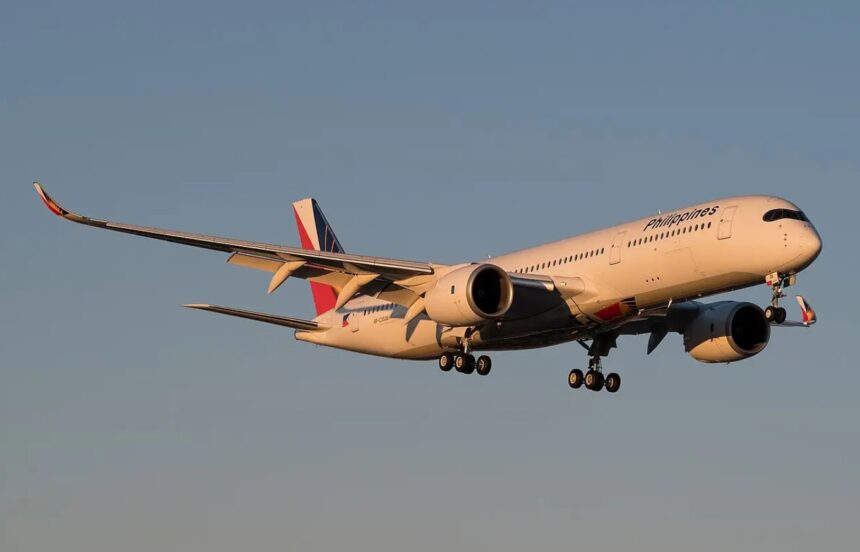
Philippine Airlines already operates the A350, making additional aircraft from the family a relatively logical step for its long-haul fleet.
The carrier has used its A350 fleet on long-distance international services, including routes linking Manila with major destinations in North America and elsewhere.
PAL also operates Airbus A330-300 aircraft, giving the airline considerable experience with Airbus widebody operations.
Adding approximately 10 more A350s would therefore deepen an aircraft relationship that is already established within the company.
The A350’s combination of range, capacity and fuel efficiency has made it a major player in the long-haul market. For an airline serving an island nation in Southeast Asia, long-range aircraft are particularly important because many strategic international destinations require substantial flying time.
The reported A350 purchase could consequently support both fleet renewal and long-term network growth.
Manila Makes Long-Range Aircraft Especially Important
Philippine Airlines’ geographical position is central to understanding the proposed fleet strategy.
Manila is located far from many of the carrier’s most important long-haul markets. Flights to North America, for example, involve substantial distances, while European services also require aircraft capable of sustained long-range operations.
At the same time, not every international market can support the capacity of a very large aircraft on every departure.
This is where aircraft such as the 787 and A350 become strategically useful.
Instead of treating every long-haul route in the same way, PAL can potentially build a fleet in which different aircraft are assigned according to demand, distance and frequency requirements.
A larger aircraft may be appropriate for a high-demand market, while a smaller long-range aircraft can make a lower-volume route economically viable.
That flexibility is increasingly important as airlines look for ways to grow international networks without taking unnecessary capacity risk.
PAL Could Be Using Competition to Its Advantage
There is another reason the reported two-manufacturer order deserves attention.
Airbus and Boeing compete aggressively for major airline contracts, particularly when an order involves long-range widebody aircraft.
An airline capable of seriously considering aircraft from both manufacturers can potentially strengthen its negotiating position.
The competition can extend beyond the headline aircraft price. Airlines negotiate over delivery schedules, maintenance support, training, spare parts, financing arrangements and other commercial conditions.
For Philippine Airlines, maintaining credible relationships with both manufacturers could therefore provide strategic value.
The downside is complexity.
Operating both the 787 and A350 means PAL would have to manage two separate aircraft families, including different training requirements, maintenance programs, technical documentation and operational procedures.
That cost is real. The question is whether the additional flexibility and commercial advantages outweigh it.
A New Chapter for PAL’s Widebody Fleet
Philippine Airlines has been balancing an established fleet with the need to prepare for the next stage of international growth.
Its existing widebody fleet includes 10 Boeing 777-300ERs, four Airbus A350s and 11 Airbus A330-300s, according to the fleet figures associated with the reported order.
Those aircraft perform different roles across the network, but the 777-300ERs are now an older generation compared with the latest long-haul aircraft.
A future fleet built around newer 787 and A350 aircraft could gradually give PAL greater fuel efficiency and operational flexibility as older aircraft leave the fleet.
The transition would not happen overnight. Aircraft deliveries are normally spread across several years, and fleet plans can change depending on market conditions, financing, manufacturer production schedules and airline strategy.
That means the reported order should be viewed as part of a longer-term fleet transformation rather than an immediate replacement of PAL’s existing aircraft.
What the Order Could Mean for Passengers
Fleet decisions ultimately affect passengers as well as airline balance sheets.
New-generation aircraft can give airlines the opportunity to introduce updated cabins, improved inflight entertainment systems, modern connectivity, quieter interiors and revised seating layouts.
The exact passenger experience, however, depends on the airline’s configuration rather than the aircraft type alone.
If PAL proceeds with both aircraft families, passengers could eventually see newer widebody aircraft across more of the airline’s international network.
The larger strategic benefit may be route availability.
Additional long-range aircraft could allow Philippine Airlines to increase frequencies on existing international markets or consider new destinations where demand supports nonstop service.
For Filipino travelers, that could mean more direct international options and better schedule flexibility.
The Final Aircraft Mix Still Matters
Although a roughly 10-and-10 split is the headline figure in current reports, aircraft orders can change significantly before a final announcement.
Airlines frequently adjust the number of aircraft, variants, delivery schedules and purchase rights during negotiations.
The difference between ordering the 787-9, for example, and selecting another 787 variant can materially affect seating capacity, range and the role of the aircraft within a fleet.
The same applies to the A350 family, where the A350-900 and A350-1000 serve somewhat different capacity requirements.
Consequently, the final configuration will be just as important as the headline order total.
Until Philippine Airlines formally confirms the agreement and provides its aircraft specifications, the reported figures should remain clearly identified as a reported fleet plan rather than a completed purchase.
Why This Could Become One of PAL’s Most Important Fleet Decisions
The significance of the reported order goes beyond the number of aircraft.
For Philippine Airlines, it could define the composition of its long-haul fleet for much of the next decade.
The airline would be gaining additional A350 capacity while simultaneously bringing the Boeing 787 into a new-generation fleet strategy.
That combination would give PAL access to two of the world’s most important modern long-haul aircraft families.
It would also demonstrate that the carrier is willing to accept the operational complexity of a mixed Boeing-Airbus widebody fleet in exchange for greater flexibility.
For Boeing, meanwhile, winning a substantial Philippine Airlines order would provide an important Southeast Asian customer for the 787.
For Airbus, securing additional A350 aircraft would strengthen an existing relationship with a carrier that already operates the type.
The Bottom Line
Philippine Airlines’ reported plan to order approximately 20 new widebody aircraft split between the Boeing 787 and Airbus A350 is one of the more intriguing fleet stories surrounding the carrier.
The strategy goes against the usual assumption that airlines should consolidate around one manufacturer. But PAL’s geographic position, long-haul ambitions and existing Airbus and Boeing experience could make a two-family strategy commercially attractive.
The Boeing 787 would bring a modern Dreamliner platform back into the center of PAL’s fleet planning, while additional A350s would expand an aircraft family the airline already knows well.
The key issue now is confirmation.
Until Philippine Airlines officially announces the order and publishes the final aircraft mix, delivery schedule and variants, the reported figures should be treated as provisional.
If the deal ultimately goes ahead close to the reported 10-787 and 10-A350 structure, Philippine Airlines will not simply be buying new aircraft. It will be making a strategic decision about how it intends to connect Manila with the world for the next generation of international aviation.