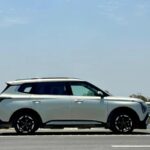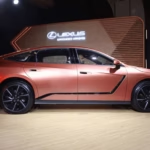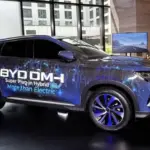
Most modern electric SUVs tend to follow a familiar design direction—sleek coupe-inspired roofs, aggressive styling, and futuristic proportions built to attract attention in showrooms.
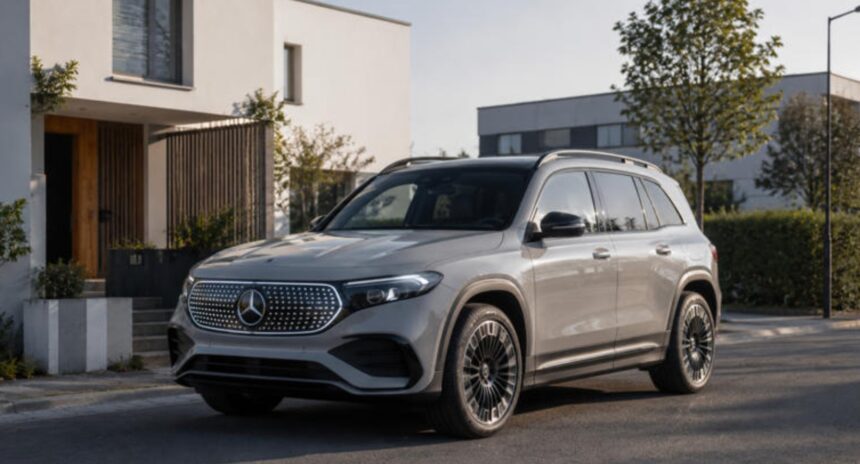
The upcoming Mercedes-Benz GLB Electric takes a noticeably different approach.
Instead of chasing aerodynamic drama, Mercedes appears to retain the GLB’s signature boxy silhouette, prioritizing interior space and usability over visual flair. In a rapidly expanding EV market, this focus on practicality could become a rare and valuable differentiator.
A Design Philosophy Focused on Usable Space
The GLB Electric continues Mercedes’ unconventional compact SUV formula.
See more of our coverage in your search results.
Add INDYASTORY on GoogleRather than adopting a sloping roofline like many rivals, it maintains a more upright and squared-off design. While less visually aggressive, this architecture directly benefits interior packaging.
Key advantages of this approach include:
- Improved headroom for all rows
- Easier entry and exit
- Better cargo efficiency
- More usable third-row space
In a segment increasingly driven by design trends, Mercedes is prioritizing functional space efficiency.
Seven-Seat Flexibility Remains a Key Advantage
One of the GLB’s strongest selling points is expected to continue in its electric version: optional third-row seating.
While the rear seats are best suited for children or short trips, they significantly increase the vehicle’s versatility. This is especially important in the compact luxury SUV category, where true seven-seat options are rare.
See more of our coverage in your search results.
Add INDYASTORY on GoogleFor families, this creates a meaningful use-case advantage:
- School runs with extra passengers
- Occasional group travel
- Flexible seating vs cargo trade-off
- Avoiding larger, more expensive SUVs
This positioning allows the GLB Electric to occupy a niche that many rivals overlook.
Built on Mercedes’ Next-Generation EV Architecture
Beyond practicality, the GLB Electric is expected to benefit from Mercedes-Benz’s evolving electric platform strategy.
See more of our coverage in your search results.
Add INDYASTORY on GoogleThe company is refining its EV systems with a strong focus on:
- Improved real-world range efficiency
- Faster charging performance
- Smarter energy management
- Advanced thermal optimization
Rather than focusing only on battery size, Mercedes is increasingly prioritizing efficiency per kilowatt-hour, which is becoming a key benchmark in modern EV evaluation.
This reflects a broader industry shift toward usability rather than headline specifications.
Why Practical EVs Are Becoming More Important
The luxury EV segment is rapidly maturing.
Early EV adoption was driven by performance enthusiasts and tech-forward buyers. The next phase is expected to be dominated by families and mainstream users who value everyday functionality over performance extremes.
For these buyers, key priorities include:
- Cabin space and comfort
- Ease of charging and range predictability
- Storage flexibility
- Long-term reliability
The GLB Electric appears specifically designed for this transition in buyer behavior.
The Compact Luxury EV Segment Is Intensely Competitive
The GLB Electric will enter one of the most competitive automotive categories.
Potential rivals include:
- BMW iX1 / upcoming compact EV SUVs
- Audi Q4 e-tron
- Volvo EX30 / EX40
- Tesla Model Y
- Emerging Chinese premium EV brands
Many of these competitors emphasize design innovation, performance, or technology ecosystems.
Mercedes’ challenge is to clearly define why a more practical, boxy SUV still matters in a market dominated by styling-led crossovers.
EV Architecture Turns the SUV Shape Into an Advantage
In traditional internal combustion vehicles, boxy designs were often penalized for aerodynamic inefficiency.
Electric vehicles change that equation.
Because EVs use flat floor battery packs and compact drivetrains, manufacturers can prioritize interior volume without being fully constrained by engine packaging. This allows upright designs like the GLB to maximize space more effectively.
In practical terms, the boxy silhouette supports:
- Better vertical cabin space
- Improved seating ergonomics
- Easier child-seat installation
- More usable luggage capacity
What was once a design compromise may now be an engineering advantage.
Mercedes Is Targeting Mainstream Family Buyers
The GLB Electric is not positioned as a performance flagship or a radical design experiment.
Instead, it is aimed at a broader, more practical audience.
This includes:
- Families transitioning from ICE SUVs
- Buyers seeking premium brand value with utility
- Users prioritizing space over acceleration figures
- Customers wanting a “do-it-all” compact EV
Mercedes appears to be reinforcing the idea that luxury EV adoption will not be driven only by performance benchmarks, but by everyday usability.
Final Verdict
The Mercedes-Benz GLB Electric is unlikely to dominate headlines with extreme performance or futuristic styling.
That is not its objective.
Its strength lies in something more grounded: space efficiency, flexibility, and real-world practicality. In a segment increasingly filled with stylish but compromised EV crossovers, the GLB Electric stands out by focusing on what many buyers still value most—usable space and family functionality.
If executed correctly, it could become one of the most logically designed compact luxury EVs on the market.