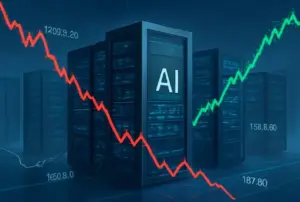
The global artificial intelligence investment wave shows few signs of slowing, according to Christopher Wood, Global Head of Equity Strategy at Jefferies, who believes the sector’s growth story remains intact despite rising concerns about valuations and future returns.
In the latest edition of Jefferies’ GREED & Fear newsletter, Wood reaffirmed his positive outlook on AI-driven infrastructure spending and increased the firm’s exposure to semiconductor and memory-related companies, citing strong demand trends and improving industry fundamentals.
At the same time, he identified a critical risk that could eventually challenge the ongoing rally in AI-related stocks.
AI Spending Continues to Accelerate
The rapid adoption of artificial intelligence has sparked an unprecedented investment cycle across technology infrastructure, with companies pouring billions of dollars into:
See more of our coverage in your search results.
Add INDYASTORY on Google- Data centres
- High-performance computing systems
- AI processors
- Cloud infrastructure
- Semiconductor manufacturing
- Advanced memory solutions
According to Wood, there is currently no meaningful evidence that AI capital expenditure is slowing, even as lower-cost AI models emerge from China and intensify competition in the sector.
This continued spending by technology giants has become one of the strongest drivers of growth across the global semiconductor industry.
Why Cheaper AI Could Increase Demand
A key element of Jefferies’ thesis is based on the economic concept known as the Jevons Paradox.
The theory suggests that when a technology becomes more efficient and affordable, overall consumption often increases rather than declines.
Applying this principle to artificial intelligence, Wood argues that falling AI token costs could encourage wider adoption of AI applications, ultimately increasing demand for computing power and supporting infrastructure investments.
See more of our coverage in your search results.
Add INDYASTORY on GoogleAs AI becomes cheaper to deploy, businesses may integrate the technology into more products, services and workflows, creating additional demand for:
- AI servers
- GPUs
- Memory chips
- Data storage
- Cloud computing resources
Memory Makers Among the Biggest Beneficiaries
Jefferies remains particularly optimistic about companies involved in the memory chip ecosystem.
The brokerage highlighted several industry leaders, including:
See more of our coverage in your search results.
Add INDYASTORY on GoogleSK Hynix
A major supplier of advanced memory solutions used in AI applications.
Samsung Electronics
One of the world’s largest semiconductor and memory manufacturers.
Micron Technology
A leading provider of DRAM and NAND memory products.
Wood noted that these companies continue to trade at earnings valuations that Jefferies considers attractive relative to their long-term growth potential.
Portfolio Changes Reflect Growing Confidence
To capitalize on the AI infrastructure theme, Jefferies has increased technology hardware exposure within its model investment portfolios.
Recent adjustments include:
- Adding SK Hynix
- Adding Kioxia
- Increasing exposure to Samsung Electronics
To fund these changes, the firm reduced or exited certain positions, including holdings linked to:
- Alphabet
- Alibaba
The reallocation reflects Jefferies’ belief that semiconductor and hardware suppliers may offer stronger upside potential within the current phase of the AI investment cycle.
One Risk That Could Change the Narrative
Despite the optimism, Wood identified what he considers the biggest long-term threat to the AI rally.
The concern centers on whether the companies making enormous AI investments will eventually generate sufficient financial returns.
Major technology firms and AI developers have committed vast amounts of capital toward:
- AI model development
- Computing infrastructure
- Data centre expansion
- Advanced hardware procurement
According to Wood, investor sentiment could shift if doubts emerge about the profitability of these investments.
“The main risk to the picks-and-shovels story remains a sudden realisation by investors that the hyperscalers and the likes of OpenAI and Anthropic will not be able to make a return on their investment,” he wrote.
For now, however, Jefferies views this concern as largely theoretical because spending activity remains robust.
DRAM Market Fundamentals Continue to Improve
The brokerage also highlighted structural improvements within the DRAM memory industry.
Several factors are supporting the sector:
Long-Term Supply Agreements
Manufacturers are increasingly securing multi-year contracts, reducing earnings volatility.
Strong AI Demand
AI workloads require large amounts of high-bandwidth memory, boosting demand.
Controlled Supply Growth
Building new semiconductor capacity requires significant capital and long development timelines.
Pricing Power
Tighter supply conditions and growing demand have helped support memory pricing trends.
These dynamics are contributing to improved profitability prospects across the memory ecosystem.
Taiwan’s AI Boom Strengthens the Outlook
Wood also pointed to Taiwan as evidence that the AI infrastructure cycle remains firmly established.
The island’s economy has benefited significantly from growing AI demand, particularly through the success of semiconductor manufacturers and related technology suppliers.
Key drivers include:
- Expanding AI data centres
- Increased semiconductor production
- Rising capital expenditure by chipmakers
- Growing global demand for advanced processors
Taiwan Semiconductor Manufacturing Company (TSMC), widely regarded as the world’s leading contract chipmaker, continues to expand investment plans to meet demand from AI-focused customers.
Why Investors Are Watching the AI Infrastructure Theme
The AI revolution has become one of the most influential investment trends in global markets.
Unlike previous technology cycles that focused primarily on software, the current wave is driving substantial spending across physical infrastructure.
This has created opportunities for companies involved in:
- Semiconductor manufacturing
- Memory production
- Data centre equipment
- Networking hardware
- Cloud infrastructure
As a result, many investors view the sector as a long-term structural growth opportunity.
Conclusion
Jefferies remains firmly bullish on the artificial intelligence infrastructure cycle, arguing that capital expenditure continues to accelerate despite concerns over competition and valuation. By increasing exposure to semiconductor and memory companies, the brokerage is positioning itself for what it believes will be sustained demand for AI-related hardware.
However, Christopher Wood also warns that the industry’s biggest challenge may eventually be proving that the enormous investments being made today can generate meaningful financial returns tomorrow. Until that question becomes more pressing, Jefferies expects AI infrastructure spending to remain one of the dominant forces shaping global technology markets.