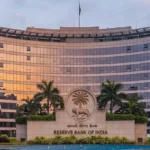
Indian stock markets are closed on Friday, October 2, 2026, for Mahatma Gandhi Jayanti. NSE and BSE will not conduct regular equity or equity-derivatives trading, while MCX has also scheduled a full-day trading holiday.
Investors in India will get a break from domestic market trading on Friday, October 2, 2026, as exchanges observe Mahatma Gandhi Jayanti.
The annual national holiday is included in the 2026 trading calendars, meaning both the National Stock Exchange (NSE) and the Bombay Stock Exchange (BSE) are closed for regular trading.
The Multi Commodity Exchange of India (MCX) is also closed for the day, with both its morning and evening trading sessions suspended.
See more of our coverage in your search results.
Add INDYASTORY on GoogleFor investors planning transactions around the holiday, the key point is simple: regular trading will resume when the exchanges reopen on the next scheduled trading day.
More Read

Are NSE and BSE closed on October 2?
Yes.
The 2026 market holiday calendar lists October 2, 2026, as a trading holiday for Mahatma Gandhi Jayanti.
That means investors cannot carry out normal buy and sell transactions on the NSE or BSE during the regular market session on Friday.
More Read

The holiday also applies to equity derivatives trading under the exchange holiday schedule.
See more of our coverage in your search results.
Add INDYASTORY on GoogleInvestors should therefore account for the one-day interruption when planning trades, settlement-related activities and market-sensitive transactions.
Is MCX open or closed on Gandhi Jayanti?
MCX will also remain closed on Friday, October 2.
Both of its scheduled sessions—the morning session and evening session—are closed for the holiday.
See more of our coverage in your search results.
Add INDYASTORY on GoogleCommodity traders will therefore have to wait until the next trading session listed by the exchange.
Why October 2 is a market holiday
October 2 marks the birth anniversary of Mahatma Gandhi and is observed as a national holiday in India.
More Read

Stock exchanges incorporate major national holidays and important festivals into their annual trading calendars.
The holiday can affect several parts of India’s financial market, including equities, equity derivatives and commodity trading.
Investors should therefore check the relevant exchange calendar rather than assuming that all financial products trade every weekday.
Other Indian stock market holidays in 2026
October 2 is one of several holidays scheduled for the final months of 2026.
According to the holiday schedule supplied for this report, the remaining listed holidays include:
| Date | Day | Holiday |
|---|---|---|
| October 2, 2026 | Friday | Mahatma Gandhi Jayanti |
| October 20, 2026 | Tuesday | Dussehra |
| November 10, 2026 | Tuesday | Diwali-Balipratipada |
| November 24, 2026 | Tuesday | Prakash Gurpurb Sri Guru Nanak Dev |
| December 25, 2026 | Friday | Christmas |
Investors should note that different market segments can sometimes have different trading schedules, so the relevant exchange calendar should always be checked before placing an order around a holiday.
How did the stock market perform before the holiday?
The Gandhi Jayanti holiday comes after a weak session on Thursday, October 1.
Both major domestic benchmarks extended their losing streak to four consecutive sessions, according to the figures supplied.
The BSE Sensex finished at 71,909.70, declining 570.59 points, or 0.79%.
The index had fallen more sharply during the session, touching an intraday low of 71,292.88, down 1,187.41 points, or 1.63% from the previous close.
The NSE Nifty 50 ended at 22,421.95, lower by 198.50 points, or 0.88%.
Foreign selling and crude prices weigh on sentiment
The Thursday decline came amid several concerns affecting market sentiment.
The supplied market report cited continued foreign-fund selling, elevated bond yields and higher crude-oil prices among the factors weighing on Indian equities.
Rising crude prices can be particularly relevant to India because the country is heavily dependent on imported oil.
A sustained increase in energy costs can affect corporate expenses, inflation expectations and the country’s import bill.
Higher global and domestic bond yields can also affect equity-market valuations and investor allocation decisions.
Which stocks fell and which gained?
Several major companies were among the Sensex’s biggest decliners during Thursday’s session.
The laggards listed in the supplied report included:
Maruti Suzuki, Mahindra & Mahindra, Tata Steel, Adani Ports, ITC, Power Grid, Hindustan Unilever and Eternal.
Not every large-cap stock declined, however.
Infosys, Tata Consultancy Services, HCL Technologies and HDFC Bank were among the stocks that recorded gains during the session.
The mixed performance showed that the pressure was broad enough to weigh on the headline indices while individual stocks continued to move according to company-specific factors.
What does the market holiday mean for investors?
A full trading holiday means that investors cannot execute ordinary exchange-based equity trades during the closed session.
That does not mean all financial activity stops.
Investors can still review portfolios, analyse earnings and market developments, prepare watchlists and place certain orders depending on the facilities offered by their broker. Whether an order is accepted, queued or executed later depends on the broker and exchange rules.
The exchange closure also affects the timing of market-linked transactions and settlements, so investors should not assume that a Friday holiday is equivalent to a normal trading day.
When will trading resume?
After the Gandhi Jayanti holiday, trading will resume according to the next scheduled NSE, BSE and MCX trading session.
Investors planning to react to overnight developments should therefore be aware that Indian markets will not respond to those developments during the October 2 regular trading session.
Global markets, however, continue to operate according to their own local calendars.
That means international developments in currencies, crude oil, interest rates, geopolitical events and overseas equities can still change while Indian exchanges are closed.
What to watch when the Indian market reopens
The next trading session could be influenced by developments in several areas.
Crude oil: Further movement in global oil prices could affect expectations for inflation and corporate costs.
Foreign institutional activity: Investors will watch whether overseas selling continues or begins to ease.
Bond yields: Changes in domestic and global yields can influence equity valuations and capital flows.
Global markets: Movements in US, Asian and European markets during India’s holiday could shape the next domestic session.
Corporate news: Company announcements released during the closure may also affect individual stocks when trading resumes.
Gandhi Jayanti creates a pause after four days of losses
The October 2 holiday arrives after the Sensex and Nifty recorded their fourth straight session of declines.
That makes the next trading session particularly important for investors watching whether the recent weakness continues or whether the market finds support.
Still, a single holiday does not change the underlying market factors.
Investors will continue to track crude prices, foreign capital flows, interest rates, corporate earnings and global risk sentiment when trading resumes.
NSE, BSE and MCX holiday on October 2: At a glance
Date: October 2, 2026
Occasion: Mahatma Gandhi Jayanti
NSE: Closed
BSE: Closed
Equity trading: Closed
Equity derivatives: Closed
MCX: Closed
MCX morning session: Closed
MCX evening session: Closed
Market status: Full trading holiday
The takeaway for investors: Indian exchanges are shut on October 2 for Gandhi Jayanti. After four consecutive sessions of losses, traders will now have to wait for the next scheduled session to assess how the market responds to crude prices, foreign flows, bond yields and global developments.