The Indian rupee slipped below ₹96 per US dollar on Tuesday to touch a two-month low before recovering most of its losses. The currency closed at ₹95.98 per dollar, down just 1 paisa from the previous session.
The Indian rupee came under pressure during Tuesday’s trading session, briefly weakening beyond the ₹96 per US dollar level as elevated crude oil prices and broader global market conditions weighed on the currency.
The rupee subsequently recovered from its intraday low and ended almost unchanged.
According to provisional data, the currency settled at ₹95.98 per US dollar, compared with its previous close of ₹95.97.
See more of our coverage in your search results.
Add INDYASTORY on GoogleThe session highlighted the competing forces currently affecting the currency market, including crude oil prices, dollar demand, foreign portfolio flows and global risk sentiment.
More Read

Rupee recovers after falling below ₹96
Dilip Parmar, Research Analyst at HDFC Securities, said the rupee began the session under pressure and moved below the ₹96 level before recovering some of its losses.
He attributed the subsequent stabilisation partly to RBI action, a pullback in global crude prices and foreign inflows associated with equity-index rebalancing.
“The Indian Rupee started the day under pressure, cracking below 96 level before clawing back some lost ground,” Parmar said.
More Read
He added that the direction of the USD-INR pair would remain closely linked to crude oil prices and broader global risk conditions.
See more of our coverage in your search results.
Add INDYASTORY on GoogleOn the technical front, Parmar identified 96.30 as resistance for spot USD-INR, while 95.80 was identified as a support level.
Analysts see oil as a key rupee driver
Jateen Trivedi, Vice President, Research Analyst – Commodity and Currency at LKP Securities, said the rupee remained largely stable as crude prices experienced some profit booking after their recent gains.
Trivedi said the currency appeared oversold around the ₹96 level and could find support if positive domestic or international developments emerge.
See more of our coverage in your search results.
Add INDYASTORY on GoogleHe placed the near-term trading range at approximately ₹95.65-₹96.15 per US dollar.
Crude oil remains particularly important for the Indian currency because India relies substantially on imported crude to meet its energy requirements.
More Read

When international oil prices rise, India’s import bill can increase, potentially raising demand for US dollars from oil importers and putting pressure on the rupee.
Trivedi also pointed to elevated global bond yields and the strength of the US dollar as factors affecting currency markets.
Geopolitical developments add to oil-market volatility
Amit Pabari, Managing Director at CR Forex Advisors, said the rupee’s recent weakness had been influenced by higher crude oil prices and renewed geopolitical concerns.
He said the currency’s broader movement did not yet indicate a one-way trend because supportive and negative factors were continuing to offset one another.
Oil-market volatility has been particularly important in recent sessions.
According to Pabari, developments surrounding the Strait of Hormuz have contributed to renewed uncertainty in crude markets. He also said concerns about the impact of elevated oil prices on India’s import bill could increase dollar demand from oil companies.
Higher demand for dollars to pay for crude imports can create additional pressure on the rupee when other factors are unchanged.
Brent crude remains above $100
At the latest available check cited in the market commentary, Brent crude futures were down 0.94% at $104.29 a barrel.
The benchmark had climbed above $108 a barrel on Monday before giving back some of those gains.
The movement in crude prices remains an important variable for Indian currency markets because a sustained increase in energy costs can affect the country’s trade balance and foreign-exchange demand.
For the rupee, the key question is whether the recent increase in oil prices persists or reverses.
RBI policy also in focus
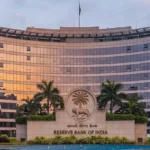
Market participants are also watching signals from the Reserve Bank of India (RBI) for the currency’s next directional trigger.
The central bank can influence currency-market conditions through its foreign-exchange operations and monetary-policy framework, although the rupee is determined by market forces and a range of domestic and international factors.
Pabari said the rupee could remain range-bound in the near term as opposing market forces offset one another.
He identified crude prices, developments around the Strait of Hormuz and signals from the upcoming RBI policy meeting as factors that could influence the next major move.
Key levels to watch for USD-INR
Based on the technical levels cited by the analysts:
| Indicator | Level |
|---|---|
| Tuesday’s rupee close | ₹95.98/$ |
| Previous close | ₹95.97/$ |
| HDFC Securities resistance | ₹96.30 |
| HDFC Securities support | ₹95.80 |
| LKP Securities near-term range | ₹95.65-₹96.15 |
| Brent crude | $104.29/barrel |
| Brent session move | -0.94% |
These levels represent analyst views for the cited trading period and can change as market conditions evolve.
What could influence the rupee next?
The rupee is likely to remain sensitive to movements in crude oil, the US dollar and global financial-market sentiment.
A sustained decline in oil prices could ease some pressure on India’s import bill, while a renewed increase could raise demand for dollars from energy importers.
Foreign investment flows and domestic equity-market movements can also influence the supply and demand for dollars.
Investors will additionally monitor global bond yields, US dollar movements, geopolitical developments and upcoming RBI communication.
For now, Tuesday’s session showed that although the rupee briefly breached the ₹96 mark, it recovered significantly before the close.
The currency ended at ₹95.98 per US dollar, leaving the market focused on whether crude prices and global risk conditions will push USD-INR through the recent trading range in the sessions ahead.