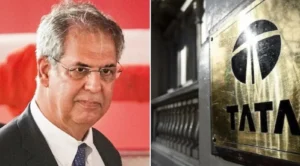
India’s economic resilience has been built over years through a series of reforms that strengthened macroeconomic stability, institutions and productive capacity, Shaktikanta Das said on October 4.
Speaking at the Kautilya Economic Conclave, Das argued that India’s ability to absorb global shocks was not the result of a single policy intervention. Instead, he described it as the outcome of reforms introduced over the past decade that increasingly worked together to create buffers against external disruptions.
Among the measures he highlighted were flexible inflation targeting, the Goods and Services Tax (GST), digital payments, banking-sector reforms, fiscal consolidation and large-scale infrastructure investment.
“India’s resilience is not accidental. It is the outcome of broad and mutually reinforcing reforms.”
Das said the country’s development approach over the last 12 years had focused on strengthening governance and economic foundations before major crises emerged.
See more of our coverage in your search results.
Add INDYASTORY on GoogleReforms created buffers before shocks arrived
According to Das, many of India’s reforms were designed as structural changes rather than short-term responses to individual economic disruptions.
More Read

He said this approach helped the economy deal with a succession of shocks, including the Covid-19 pandemic, the Russia-Ukraine war and conflicts in West Asia.
The broader objective, in his assessment, was to create institutional and macroeconomic capacity that could help the economy absorb disruptions while supporting recovery.
Das identified stronger institutions, improved macroeconomic management and investment in productive assets as central elements of that framework.
More Read

India remains resilient despite global uncertainty
Das pointed to a challenging international environment marked by geopolitical tensions, trade fragmentation, technological restrictions, energy-price volatility and high public debt in advanced economies.
See more of our coverage in your search results.
Add INDYASTORY on GoogleAgainst that backdrop, he said India’s domestic economy had continued to show strength.
He cited real GDP growth of 7.8% in the first quarter of FY27, attributing the performance in part to firm domestic demand and investment conditions.
Das also repeated his earlier assessment that India is within “striking distance” of 8% economic growth.
See more of our coverage in your search results.
Add INDYASTORY on GoogleAccording to his remarks, average growth across the four quarters from July-September 2025 through April-June 2026 was slightly above 8%.
The figures and the interpretation are part of Das’s assessment and should be distinguished from forecasts or subsequently revised official national-accounts data.
More Read

Inflation targeting strengthened macroeconomic stability
Das identified macroeconomic stability as another major pillar of India’s resilience.
He pointed to the flexible inflation-targeting framework introduced in 2016, arguing that it helped the economy navigate a series of external shocks while keeping price stability at the centre of monetary policy.
Fiscal policy was another part of the framework.
Das said fiscal consolidation had remained an important objective while still allowing expenditure on areas capable of supporting economic growth.
The combination of monetary and fiscal discipline, in his view, helped strengthen India’s ability to respond when global conditions deteriorated.
GST helped create a more integrated domestic market
Das also highlighted tax reform, particularly the introduction of the Goods and Services Tax.
He said GST helped create a more integrated national market, reduced the cascading effect of multiple indirect taxes and contributed to greater formalisation of economic activity.
Alongside tax reform, the rapid expansion of digital payments has changed the way households and businesses conduct transactions.
Das included the growth of India’s digital-payment ecosystem among the structural changes that have strengthened the country’s economic architecture.
Banking-sector reforms improved financial stability
The restoration of health in the financial sector was described by Das as another defining element of India’s economic resilience.
Banking-sector reforms, combined with efforts to improve financial institutions’ balance sheets and strengthen regulation, helped create a more stable foundation for credit and investment, according to his assessment.
A stronger financial system can act as a buffer during economic shocks by improving the ability of banks and other institutions to support productive activity when external conditions become more difficult.
Infrastructure investment is building long-term capacity
Das identified investment in productive capacity and infrastructure as a third major pillar of India’s resilience.
Large-scale investment in transport and logistics has been supported by programmes such as PM Gati Shakti, the National Logistics Policy, Sagarmala and UDAN.
According to Das, such initiatives help reduce logistical friction, improve connectivity and create an environment more conducive to investment-led growth.
The emphasis, he said, is not simply on short-term demand creation but on building infrastructure that can raise the economy’s productive potential over time.
Energy diversification offers protection against external shocks
Energy security was another area highlighted in Das’s remarks.
India has been diversifying its energy mix across fossil fuels, renewable energy, biofuels and nuclear power, he said.
A broader energy base can reduce vulnerability to individual sources of supply and help the economy manage periods of international energy-price volatility.
Given India’s exposure to global commodity markets, energy diversification can also play a role in reducing the impact of external shocks on inflation, trade and economic activity.
Manufacturing is becoming a bigger part of the growth strategy
Das also pointed to what he described as a “manufacturing resurgence” in India.
He linked the trend to initiatives such as production-linked incentives, semiconductor investments, automation and Industry 4.0 technologies.
The objective is to expand India’s manufacturing capabilities while increasing productivity and integrating more deeply into global production networks.
The shift is also connected to the changing structure of global supply chains, as companies seek to diversify manufacturing and sourcing across different markets.
AI could shape India’s next growth phase
Looking ahead, Das identified artificial intelligence as one of the areas likely to influence India’s next stage of development.
He described India’s AI strategy as having two broad objectives: building domestic foundation models and related technological capabilities while expanding access through an “AI for all” approach.
That approach aims to combine domestic technological development with widespread adoption of AI across sectors.
For India, the challenge will be turning AI capabilities into productivity gains, new businesses, skilled employment and scalable technology infrastructure.
Deeper financial markets will also be important
Das said India’s expanding economic size would require deeper and more diversified financial markets.
He highlighted the importance of strengthening areas including corporate bonds, pension and insurance funds, municipal finance, and green and transition finance.
Deeper capital markets can broaden financing options for businesses and infrastructure projects while reducing excessive dependence on traditional sources of bank credit.
The development of green and transition finance is particularly relevant as India balances rapid economic expansion with longer-term sustainability goals.
Self-reliance does not mean economic isolation
Das also addressed the role of Atmanirbharta, or self-reliance, in India’s economic strategy.
He stressed that greater domestic capability should not translate into isolation from the global economy.
“Atmanirbharta does not imply isolation.”
The approach, according to Das, should involve strengthening domestic capabilities while continuing to participate in international trade, investment and technology networks.
That balance is increasingly important as countries seek greater supply-chain resilience while remaining connected to global markets.
Human capital and sustainable growth are next priorities
Beyond technology and finance, Das identified human capital and sustainable development among the key areas that could shape India’s future growth.
Building a larger and more skilled workforce will be critical as the economy moves towards more technology-intensive and higher-value industries.
At the same time, sustainable infrastructure, energy transition and climate-oriented financing are likely to become more important as investment needs expand.
Reform momentum remains critical
Das’s central message was that India’s resilience has been built progressively rather than through a single policy response.
The challenge now is to maintain that reform momentum while responding to new sources of uncertainty, including geopolitical fragmentation, technological competition, energy shocks and changing global supply chains.
He argued that India should not measure success solely by the speed of GDP expansion.
“Sustaining the reform momentum will be very critical.”
The longer-term objective, he said, is not simply rapid economic growth but growth that remains sustainable and resilient over time.
That puts the next phase of India’s economic strategy on a broader footing—combining macroeconomic stability with infrastructure, manufacturing, technology, deeper financial markets and investment in people.