Tata Trusts Chairman Noel Tata has argued that Tata Sons should remain unlisted, saying a public listing could change the way the holding company supports group businesses and balances commercial objectives with its broader social-development mandate.
Tata Trusts Chairman Noel Tata has raised concerns over a potential listing of Tata Sons, arguing that bringing the group’s principal holding company into the public markets could alter the way the Tata group has operated for decades.
Speaking at the Republic Summit 2026, Noel said Tata Sons has historically had a role that goes beyond generating returns for shareholders, including supporting the group’s broader social-development objectives.
He said this model could become more difficult to maintain if Tata Sons had to respond to public-market investors seeking consistent growth in their investments.
See more of our coverage in your search results.
Add INDYASTORY on GoogleWhy Noel Tata Opposes a Tata Sons Listing
Noel said the Tata group has traditionally followed the principle associated with former Tata Group chairman JRD Tata, who, when asked about the group’s strategic direction, is said to have responded: “What India needs.”
More Read

According to Noel, Tata Sons’ current structure allows the group to balance commercial interests with this broader purpose.
He argued that a listed Tata Sons would introduce shareholders whose expectations could be more closely linked to financial performance and periodic returns.
“How do you translate these two when you have investors, and they could be investors from abroad who are there to seek profit, who want to come in and make sure that their investment grows quarter by quarter. How do we manage these two contradictions in a way?” Noel said.
He added that the group’s operating companies already deal with the expectations of public shareholders because many of them are listed entities.
More Read
Tata Sons’ Role as a Backstop
A central part of Noel’s argument concerns Tata Sons’ historical role in supporting group companies facing financial or operational difficulties.
See more of our coverage in your search results.
Add INDYASTORY on GoogleHe said Tata Sons has acted as a backstop for companies within the group when they encountered problems.
According to Noel, there have been instances over the past five decades in which Tata Sons intervened when group businesses faced difficulties.
He said banks, lending institutions, shareholders and suppliers have also derived confidence from the presence of Tata Sons behind the group companies.
See more of our coverage in your search results.
Add INDYASTORY on GoogleThe potential concern with a listed Tata Sons, he said, is whether individual shareholders would support using capital to assist a group company that is experiencing financial difficulties.
“Now the worry is that when you have individual shareholders, would they agree to it? Would they be willing to allow us to invest in companies that are in trouble?” Noel said.
Difference Between Tata Sons and Operating Companies
Noel distinguished Tata Sons from the group’s operating companies.
More Read

The operating companies, many of which are publicly listed, are required to balance the interests of their shareholders while pursuing their individual business objectives.
Tata Sons, by contrast, sits at the holding-company level and receives dividends from operating businesses.
Noel’s argument is that keeping Tata Sons outside the public markets gives it greater flexibility to make decisions that may not necessarily be aligned with short-term shareholder-return expectations.
He said this distinction is central to the Tata Trusts’ position on the company’s proposed structure.
Tata Trusts Seek to Preserve Existing Structure
Noel said the Tata Trusts want to preserve what they view as the fundamental structure through which the group has operated for around 150 years.
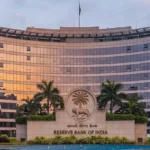
He said this was also the message being conveyed to the Reserve Bank of India (RBI).
The issue is significant because Tata Sons’ ownership and structure have implications for the governance and functioning of one of India’s largest business groups.
Proposed Tata Sons Restructuring
The debate over Tata Sons’ listing comes as the Tata Trusts have proposed a restructuring involving two unlisted group entities.
On Monday, Tata Trusts proposed that Tata Sons merge with Tata Electronics Systems Solutions Pvt. Ltd. and Tata Consulting Engineers, both unlisted entities.
The stated objective of the proposal is to enable Tata Sons to avoid a listing requirement by changing its corporate structure.
Noel said the proposed restructuring would return Tata Sons to a structure containing both operating and financial businesses within the same entity.
He described this type of structure as common among other Indian holding companies that operate across both areas.
Proposal Still Requires Regulatory Approval
The proposed restructuring is not yet final.
It requires approval from the Tata Sons board as well as the RBI.
The outcome will determine how Tata Sons is structured and whether the company ultimately remains outside the public markets under the proposed arrangement.
For the Tata group, the issue goes beyond a conventional corporate restructuring because Tata Sons occupies a central position within the group’s ownership and governance framework.