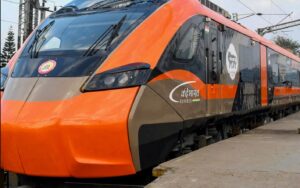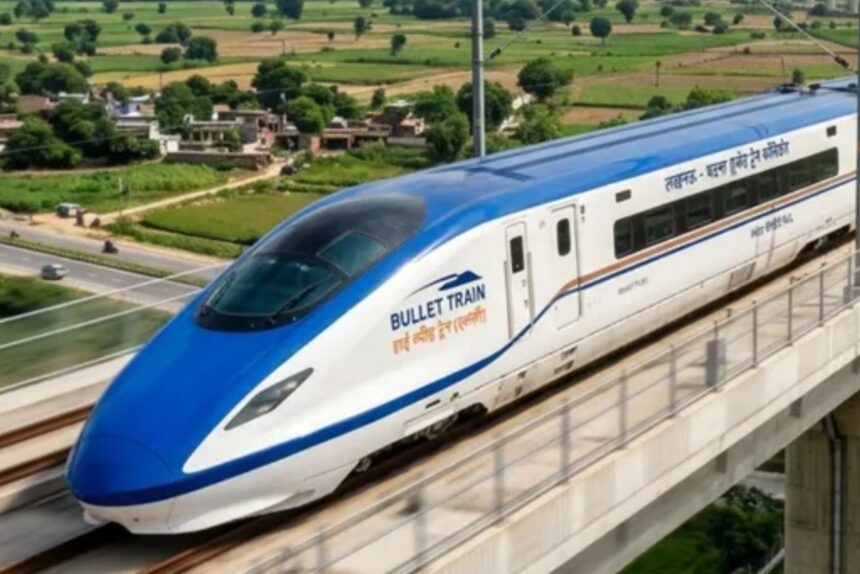
The proposed Delhi-Siliguri bullet train corridor via Lucknow is moving into a new phase of planning, with the National High Speed Rail Corporation Limited (NHSRCL) stepping up preparations for the ambitious high-speed rail project.
NHSRCL is set to appoint a consultancy agency to undertake detailed design and technical work for the corridor. The consultant is expected to be selected through a Request for Proposal (RFP) process, with the selection targeted for the first week of the following month, according to the source report.
The consultancy assignment is expected to run for six years and will use survey findings to assess civil construction requirements, estimate costs and assist with preparation of the Detailed Project Report (DPR).
Consultant to Design Tracks, Bridges and Stations
The selected agency will be responsible for preparing designs for major civil structures along the proposed high-speed rail corridor.
See more of our coverage in your search results.
Add INDYASTORY on GoogleIts scope will include the design of:
- Mainline railway infrastructure
- Bridges and crossing structures
- Steel bridges
- Depots and maintenance depots
- Approach lines and feeder sections
- Station buildings
- Track-related structures and spans
- Other civil infrastructure along the alignment
The consultant will also prepare a Design Basis Report covering the proposed corridor.
The designs will be based partly on the ground survey undertaken for the proposed alignment and technical parameters developed from the Mumbai-Ahmedabad High Speed Rail project.
Trains Could Run at Up to 350 Kmph
According to the project details cited in the source report, the Delhi-Siliguri corridor is being planned as a double-line high-speed rail corridor capable of supporting train speeds of approximately 320 to 350 kmph.
The proposed technical framework is intended to follow international high-speed railway standards, with references to standards and practices from countries including Japan, China, the United States and European nations.
See more of our coverage in your search results.
Add INDYASTORY on GoogleThe objective is to develop infrastructure capable of supporting high-speed, safe and comfortable passenger travel.
415-Metre Platforms Planned
The proposed stations are expected to feature platforms measuring approximately 415 metres.
The plan includes an island platform arrangement at stations, allowing passengers to board and alight from either side of the platform.
See more of our coverage in your search results.
Add INDYASTORY on GoogleThe station building block is expected to extend around 425 metres.
Underground infrastructure will also be designed to accommodate high-speed trains. According to the supplied project details, the proposed tunnel design would allow trains to travel at speeds of up to 350 kmph.
Detailed Designs to Be Prepared in Stages
The consultancy work is expected to progress through several stages.
According to the project timeline cited in the source report:
- Underground tunnel design: within three months of consultant selection
- Design Basis Report: within four months
- Underground stations, tunnels and earth structures: within five months
- Technical specifications: within six months
- General arrangement and final design: within 12 months
These stages would provide the technical foundation required for subsequent project planning and construction activities.
Delhi-Siliguri Corridor Planned in Two Phases
NHSRCL has reportedly conducted a ground survey of the proposed alignment, with a preliminary survey report submitted to the corporation.
The Delhi-Siliguri high-speed rail corridor is proposed to be developed in two phases.
The first phase would connect Delhi and Varanasi via Lucknow, covering approximately 756 km.
The second phase would extend from Varanasi to Siliguri, covering around 744 km.
Together, the proposed corridor would span approximately 1,500 km.
Route to Pass Through Lucknow
The proposed first phase would begin at Sarai Kale Khan in Delhi and pass through several major cities and regions before reaching Varanasi.
The route cited in the source material includes:
Delhi → Noida → Jewar → Mathura → Agra → Etawah → Kanpur → Lucknow → Rae Bareli → Prayagraj → Bhadohi → Varanasi
The proposed alignment would therefore connect major urban and economic centres across Uttar Pradesh while forming part of the longer Delhi-Siliguri high-speed rail network.
Delhi-Siliguri Journey Could Take Around 6 Hours 45 Minutes
The proposed high-speed rail system could significantly reduce travel times between cities along the corridor.
The journey-time estimates cited in the source report are:
| Route | Estimated Travel Time |
|---|---|
| Delhi to Lucknow | 2 hours 12 minutes |
| Delhi to Varanasi | 3 hours 50 minutes |
| Varanasi to Siliguri | 2 hours 55 minutes |
| Patna to Siliguri | 2 hours |
| Delhi to Patna | 4 hours 41 minutes |
| Delhi to Siliguri | 6 hours 45 minutes |
These are projected travel times, rather than current operational schedules.
Lucknow Proposed as a Bullet Train Junction
One of the notable features of the proposed network is the plan to develop Lucknow as a high-speed rail junction.
According to the source report, the Delhi-Siliguri corridor would pass through Lucknow, while a separate proposed connection would link Lucknow with Ayodhya.
If implemented as described, Lucknow would consequently serve as an important interchange point within the planned high-speed rail network.
Delhi-Siliguri Project Follows Mumbai-Ahmedabad Bullet Train
The Delhi-Siliguri project is being planned as NHSRCL continues work on India’s first high-speed rail corridor between Mumbai and Ahmedabad.
The experience and technical parameters from that project are being used as a reference for planning the proposed Delhi-Siliguri corridor.
The latest RFP process represents a further step in the detailed planning of the project, with surveys, technical designs, cost assessments and the DPR forming key elements before construction can proceed.
The proposed corridor, once developed, would create a high-speed rail link connecting Delhi, Lucknow, Varanasi and Siliguri, with additional connectivity planned toward Ayodhya from Lucknow.