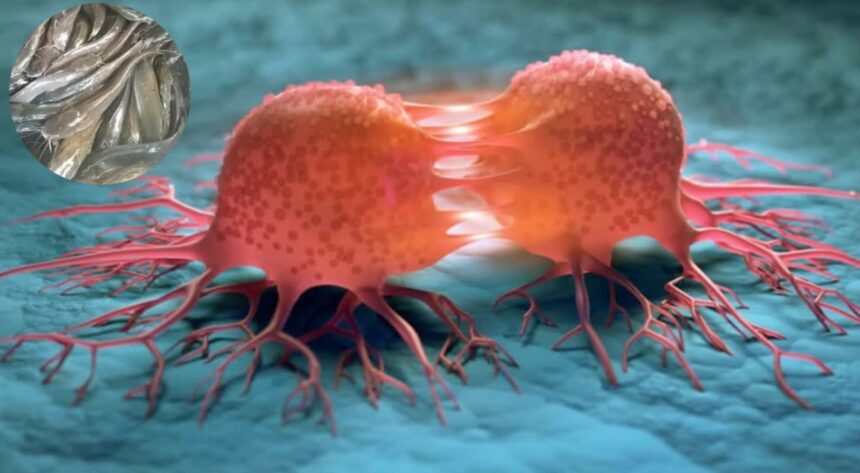
Scientists have identified an exceptionally rare form of cancer that can move naturally from one animal to another, this time in brown bullhead catfish. The finding is drawing attention because transmissible cancers are extraordinarily uncommon in nature and have previously been documented in only a handful of animal groups.
The discovery raises an obvious question for the public: Can a cancer that spreads between fish also spread to humans?
Based on current scientific understanding, there is no evidence that this fish cancer poses a contagious cancer risk to people.
The research is nevertheless significant because it provides scientists with another opportunity to study how cancer cells can survive outside their original host, evade immune defenses and establish themselves in a new individual.
See more of our coverage in your search results.
Add INDYASTORY on GoogleScientists Discover Transmissible Cancer in Wild Fish
Researchers studying brown bullhead catfish identified a melanoma that appears to be transmitted directly between fish.
This is fundamentally different from the way most cancers develop.
In an ordinary cancer, cells from a person’s own body acquire genetic changes that allow them to grow uncontrollably. Those cancer cells normally remain within that individual.
A transmissible cancer is different. Cancer cells themselves can move from one host to another and continue growing in the new host.
Scientists have previously identified naturally occurring transmissible cancers in Tasmanian devils, dogs and several shellfish species. The discovery in brown bullhead catfish adds an important example from a freshwater ecosystem.
See more of our coverage in your search results.
Add INDYASTORY on GoogleWhat Makes a Transmissible Cancer Different?
Cancer is generally considered a disease of an individual organism. A tumor develops after cells accumulate changes that disrupt normal mechanisms controlling growth and survival.
Transmissible cancers take this process a step further.
Instead of dying when they leave the original animal, the cancer cells can survive and establish a new tumor in another member of the same species.
See more of our coverage in your search results.
Add INDYASTORY on GoogleIn that sense, researchers sometimes compare transmissible cancer cells to a biological parasite. However, they remain cancer cells rather than becoming an infectious organism such as a bacterium or virus.
The ability to cross between hosts requires extraordinary biological circumstances. The cancer cells must survive transmission, enter a new animal, avoid or overcome the recipient’s immune response and continue multiplying.
That is why naturally transmissible cancers are so rare.
Can Fish Cancer Spread to Humans?
There is currently no evidence that the transmissible cancer identified in brown bullhead catfish can infect humans.
The biological differences between fish and humans create major barriers to such transmission. A cancer cell adapted to survive in a particular fish species would face substantial obstacles in a human body, including differences in physiology, temperature, immune defenses and cellular biology.
This is also not comparable to catching cancer from another person.
People do not ordinarily develop cancer because they hug, touch, live with, share food with or care for someone who has cancer.
Cancer cells from another person are generally recognized as foreign by the recipient’s immune system and cannot establish a growing tumor.
Cancer Is Not the Same as a Cancer-Causing Infection
Another source of confusion is the relationship between certain infections and cancer.
Some infectious agents can increase a person’s risk of developing cancer. Human papillomavirus (HPV), for example, is associated with several cancers, including cervical cancer and some cancers of the anus, penis and head and neck.
Hepatitis B and hepatitis C viruses can also contribute to liver cancer by causing chronic infection and inflammation.
But this does not mean that the cancer itself is contagious.
The distinction is important: an infectious agent can be transmitted between people and subsequently increase cancer risk, while the resulting tumor does not ordinarily spread from one person to another through casual contact.
Why Scientists Are Studying This Discovery
The importance of the catfish finding goes beyond the animals themselves.
Transmissible cancers give researchers a rare natural model for investigating one of cancer biology’s most difficult problems: how malignant cells survive and evade the immune system.
Normally, an immune system should recognize cells that do not belong to the body and attempt to eliminate them.
Transmissible cancer cells present a much more complicated challenge. They originate in another individual but can sometimes establish themselves in a genetically similar host.
Studying these cancers could therefore help scientists understand mechanisms involving immune recognition, tumor evolution and cancer-cell survival.
The discovery may also provide insights into how cancers adapt to their environments and overcome biological barriers.
Should People Be Worried About Eating or Touching Fish?
The discovery itself does not establish that people are at risk of catching cancer from brown bullhead catfish.
A transmissible cancer occurring naturally in fish should not be interpreted as evidence that cancer has suddenly become a contagious disease in humans.
As with any food, people should continue to follow established food-safety recommendations when handling and preparing fish.
The presence of a transmissible cancer in an animal population is primarily a scientific and ecological finding, rather than evidence of a new human cancer epidemic.
What About Cancer in India?
The discovery also highlights the importance of separating scientific facts from longstanding misconceptions about cancer.
Cancer remains a major health concern in India, but everyday social contact with a cancer patient does not cause cancer.
People should instead focus on established risk factors and preventive measures. These include avoiding tobacco, maintaining a healthy body weight, limiting harmful alcohol consumption, protecting against relevant infections and following recommended cancer-screening programs.
Vaccination against HPV and hepatitis B can also play an important role in preventing infections associated with certain cancers.
Early detection is another major part of cancer control because some cancers can be treated more effectively when identified at an earlier stage.
A Rare Discovery, Not a New Human Threat
The discovery of transmissible melanoma in brown bullhead catfish is scientifically unusual, but it should not be confused with evidence that human cancer has become contagious.
Transmissible cancers are extraordinarily rare and have been observed in only a small number of animal species. Their existence gives scientists a valuable opportunity to investigate cancer evolution, immune evasion and the remarkable ability of some tumor cells to survive outside their original host.
For the public, the key message is straightforward: there is no current evidence that the transmissible cancer found in these fish can spread to humans through ordinary contact or cause contagious cancer in people.
Rather than creating unnecessary fear, researchers say the finding offers a new window into one of biology’s most complex diseases.
Medical perspective
Dr. Asma Pathan, Medical Oncologist at M.O.C. Cancer Care, said the phrase “contagious cancer” can sound alarming but should be understood in the context of how exceptionally rare these cases are.
In humans, ordinary cancer does not spread from one person to another through everyday activities such as touching, hugging, eating together or caring for a cancer patient.
The discovery in fish is scientifically valuable because it may help researchers understand how cancer cells develop, survive and evade immune defenses.
For people in India, the practical priorities remain prevention and early detection: avoiding tobacco, addressing obesity, protecting against cancer-associated infections such as HPV and hepatitis B, and following appropriate screening recommendations.
Disclaimer
This article is intended for general educational and informational purposes and is not a substitute for professional medical advice, diagnosis or treatment. Scientific understanding can change as new research becomes available. Readers with specific health concerns should consult a qualified healthcare professional.