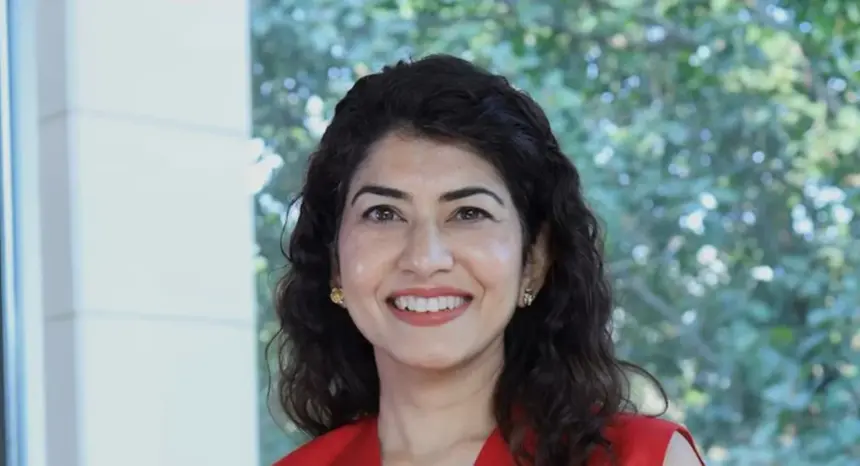
CashKaro and EarnKaro co-founder Swati Bhargava has shared the extraordinary personal challenges behind her entrepreneurial journey, revealing that she continued leading her business while living with severely reduced kidney function. Her story has drawn attention from Paytm founder Vijay Shekhar Sharma and sparked a wider conversation about health, ambition and the pressures faced by startup founders.
The success of a startup is often measured through funding rounds, revenue growth and business expansion. Yet behind those milestones can be personal struggles that rarely appear in company announcements or investor presentations.
For CashKaro and EarnKaro co-founder Swati Bhargava, building a business involved confronting a serious health challenge while navigating the demanding world of entrepreneurship.
Bhargava recently shared details of her professional and personal journey in a video posted on X, describing her transition from investment banking to entrepreneurship alongside her husband and business partner, Rohan Bhargava.
See more of our coverage in your search results.
Add INDYASTORY on GoogleOne revelation stood out: she said she had continued working and raising funds during a period when her kidney function had fallen to approximately 3–4%.
She later underwent a kidney transplant, with her mother donating a kidney.
Her account highlights a side of entrepreneurship that is rarely visible in the familiar narratives of investment deals, business growth and startup success.
Swati Bhargava’s Kidney Disease Began During Her University Years
Bhargava’s health challenges reportedly began long before she established herself as a technology entrepreneur.
In an earlier social media post, she revealed that she had been diagnosed with a kidney condition approximately two decades ago, during her first year at the London School of Economics (LSE).
See more of our coverage in your search results.
Add INDYASTORY on GoogleFor a student beginning higher education, such a diagnosis can introduce uncertainty about treatment, future health and everyday life.
Despite the condition, Bhargava continued pursuing her education and professional ambitions.
She subsequently entered the financial services industry, joining Goldman Sachs in London, where she worked for approximately five years.
See more of our coverage in your search results.
Add INDYASTORY on GoogleHer career in investment banking provided experience in finance and business before she and her husband decided to pursue entrepreneurship.
However, her kidney condition remained an important part of her life, even as her professional responsibilities expanded.
From Goldman Sachs to Building CashKaro With Rohan Bhargava
Before becoming a recognised figure in India’s startup ecosystem, Bhargava worked in investment banking.
Following her five-year stint at Goldman Sachs, she and Rohan Bhargava began their entrepreneurial journey in the United Kingdom.
The couple later became known for building CashKaro, an Indian cashback and online shopping rewards platform, and EarnKaro, which operates in the affiliate-commerce space.
CashKaro’s business model connects online shoppers with merchant offers, cashback opportunities and rewards associated with eligible purchases.
EarnKaro enables users to share affiliate shopping links and potentially earn commissions on qualifying transactions.
Both businesses participate in the wider digital-commerce ecosystem, where online retailers, affiliate platforms and consumers interact.
The couple’s journey reflects a transition from established corporate careers to the uncertainties of operating and growing new businesses.
But behind the visible entrepreneurial milestones, Bhargava was also dealing with a long-standing medical condition.
‘Kidney Function Was Just 3–4%’: The Health Crisis Behind the Funding Journey
One of the most striking details in Bhargava’s account concerned the severity of her kidney disease.
She revealed that she had continued working during a period when her kidney function had declined below 10%.
At another stage, she said her kidney function was only around 3–4%, an indication of extremely severe kidney impairment.
A level this low is medically serious and requires specialist assessment and treatment. Depending on the patient’s circumstances, kidney replacement therapy, including dialysis or transplantation, may be necessary.
For Bhargava, the medical challenge coincided with professional responsibilities that included fundraising and business leadership.
Running a startup can involve discussions with investors, financial planning, recruiting, managing employees and responding to operational problems.
These responsibilities can be demanding even without a major health condition.
Her experience illustrates how personal circumstances and professional obligations can intersect in ways that are not apparent from public business achievements.
However, her decision to continue working should not be interpreted as medical advice or as a standard others should feel compelled to follow. People with severe kidney disease need individualised medical care, and protecting health must remain a priority.

CashKaro’s ₹130-Crore Funding Milestone Came Shortly Before Transplant
In an earlier account of her health journey, Bhargava disclosed that she had closed a ₹130-crore Series C funding round shortly before undergoing a kidney transplant.
For an entrepreneur, securing a major investment round is typically a demanding process involving business presentations, financial evaluations, due diligence and negotiations.
The funding milestone was particularly significant in the context of her medical circumstances.
It illustrated the simultaneous pressures of running a company and preparing for major treatment.
A Series C funding round generally involves raising growth capital from investors after a startup has already progressed through earlier financing stages.
Such funds may be directed towards business expansion, product development, customer acquisition and other corporate objectives, depending on the terms of the investment.
The ₹130-crore figure is a reported financing milestone associated with CashKaro’s fundraising journey. It should not be confused with the company’s annual revenue, profit or current valuation.
Bhargava’s account brings attention to the human experiences behind these financial announcements.
Her Mother Donated a Kidney: A Life-Changing Moment
Bhargava eventually underwent a kidney transplant, with her mother serving as the donor.
She later described the experience as life-changing and expressed gratitude to her family, colleagues and others who had supported her throughout the process.
A living-donor kidney transplant involves surgically placing a healthy kidney from an eligible donor into a recipient whose kidneys can no longer function adequately.
Before surgery, both donor and recipient undergo medical evaluations to assess compatibility, suitability and potential risks.
Transplantation can substantially improve quality of life for eligible patients with kidney failure, although it also involves major surgery, follow-up care and ongoing medication.
For recipients, recovery and long-term health management require continued medical supervision.
Bhargava’s account is especially personal because her mother became directly involved in her treatment as a living organ donor.
The family’s involvement illustrates the vital role that practical and emotional support can play during serious illness.
Paytm Founder Vijay Shekhar Sharma Reacts to Swati Bhargava’s Story
Bhargava’s experience also attracted the attention of Vijay Shekhar Sharma, founder of digital payments company Paytm.
Reacting to her account on X, Sharma highlighted the unusual circumstances under which she had been raising funds.
“She was raising funds for her startup, while her kidney was functioning at just 3-4%.”
His reaction brought further visibility to Bhargava’s story and the personal challenges that can accompany entrepreneurship.
The response also reflects how business founders often recognise experiences beyond conventional measures of success.
While major funding announcements can attract industry attention, they do not necessarily reveal the circumstances under which entrepreneurs make difficult decisions.
In this case, the public discussion shifted attention from business financing to the person behind the milestone.
The Hidden Health Pressures Faced by Startup Founders
Entrepreneurship is frequently associated with persistence, long working hours, competition and financial risk.
Founders may feel responsible for employees, investors, customers and the continued operation of their companies.
For someone managing a serious medical condition, those responsibilities can introduce additional complications.
Treatment schedules, medical uncertainty and recovery periods may affect everyday professional commitments.
Some entrepreneurs can continue participating in business activities with suitable medical guidance and support, while others may need extended leave or substantial changes to their responsibilities.
There is no single model for balancing severe illness with professional life.
Bhargava’s story demonstrates the importance of understanding the personal circumstances behind public achievements without turning serious medical hardship into an expectation of uninterrupted productivity.
Business success and appropriate medical treatment should not be viewed as competing priorities.
What Is Severe Kidney Disease, and Why Is a Transplant Sometimes Needed?
The kidneys help remove waste products and excess fluid from the blood. They also contribute to blood pressure regulation, electrolyte balance and several other essential bodily functions.
When kidney function declines severely, waste products and fluid can accumulate, creating potentially life-threatening complications.
Kidney function is commonly assessed using measures such as estimated glomerular filtration rate (eGFR), alongside other clinical tests.
Advanced chronic kidney disease may require kidney replacement therapy, depending on symptoms, laboratory results and the patient’s overall medical condition.
A kidney transplant may be recommended for suitable patients because it can provide significant long-term benefits compared with remaining on dialysis.
However, transplantation is not a cure for every underlying cause of kidney disease, and recipients generally require ongoing immunosuppressive medication and follow-up care.
Bhargava’s publicly described experience does not provide enough clinical information to determine the precise diagnosis, treatment timeline or medical decisions involved.
Her reported kidney function figures should therefore be understood as part of her personal account rather than a complete medical record.
CashKaro and EarnKaro: The Businesses Behind Swati Bhargava’s Journey
CashKaro and EarnKaro operate in India’s online shopping and affiliate-marketing ecosystem.
CashKaro is known for helping consumers discover cashback offers and shopping deals when purchasing from participating online merchants.
EarnKaro focuses on enabling users to earn commissions through eligible affiliate-linked purchases.
Such platforms depend on partnerships with merchants, digital customer acquisition and effective transaction tracking.
The businesses also illustrate how technology startups can develop around changing consumer habits rather than traditional physical retail infrastructure.
Swati Bhargava’s career, from investment banking to building digital-commerce ventures, forms an important part of the story.
Yet her recent account has brought wider attention to an equally significant part of her journey: navigating a serious health challenge while remaining involved in the business she helped establish.
What Swati Bhargava’s Journey Teaches About Leadership and Support
There are several broader lessons to draw from Bhargava’s experience, without romanticising the medical hardship involved.
The importance of support systems: Family members, colleagues and business partners can help individuals navigate periods of serious illness and professional uncertainty.
Recognising the person behind the founder: Funding announcements and business milestones rarely capture the complete circumstances in which decisions are made.
Building organisations that can share responsibility: Strong leadership teams and effective delegation can provide continuity when founders need to prioritise medical treatment or recovery.
Taking health seriously: Severe kidney disease requires professional medical care. Working through a health crisis is not an appropriate benchmark for personal determination or professional commitment.
Understanding different definitions of success: Business growth matters, but personal recovery, family relationships and long-term well-being are also significant achievements.
Bhargava’s story offers an opportunity to discuss entrepreneurship in a more realistic and compassionate way.
Beyond Funding and Valuations: The Human Side of Entrepreneurship
Swati Bhargava’s journey from the London School of Economics and Goldman Sachs to building CashKaro and EarnKaro already represents a significant professional transition.
Her public account of living with severe kidney disease adds a deeper dimension to that story.
The reported ₹130-crore funding milestone, her subsequent kidney transplant and her mother’s decision to become a living donor show how profoundly personal experiences can unfold alongside public business achievements.
Paytm founder Vijay Shekhar Sharma’s reaction helped bring attention to circumstances that might otherwise have remained outside the usual startup conversation.
Ultimately, Bhargava’s story is not simply about raising capital while seriously ill.
It is also about medical treatment, family support, recovery and the challenges of managing professional responsibilities during a life-altering period.
It serves as a reminder that the people behind successful businesses have lives and vulnerabilities that cannot be measured through funding rounds or financial valuations alone.