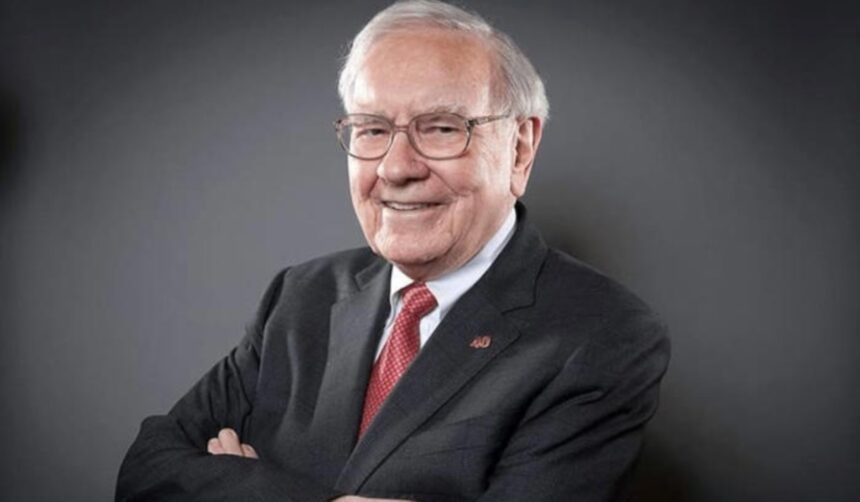
A widely attributed observation about success offers a useful way to examine priorities, commitments and the cost of an overcrowded schedule.
“The difference between successful people and really successful people is that really successful people say no to almost everything.”
The quotation is widely attributed to Warren Buffett. It appears in publications including a 2017 student account published by Northwestern University’s Kellogg School of Management, although its original source was not established for this article.
Its appeal lies in a familiar problem: an opportunity can be worthwhile and still be the wrong commitment at a particular time.
See more of our coverage in your search results.
Add INDYASTORY on GoogleWhat does the quote mean?
The most useful reading is about selectivity, rather than refusing requests indiscriminately.
Every commitment uses something finite: time, attention, money or energy. Accepting another project may leave less room to complete an existing one. A meeting can be useful while still displacing work that matters more.
Saying no makes that trade-off explicit. It creates space for a considered decision about what deserves attention.
The quotation should not be treated as a formula proving that declining more requests will produce greater success. The quality of the choices matters more than the number of refusals.
Buffett’s documented approach to requests
There is a documented parallel in Buffett’s communications with Berkshire Hathaway managers.
See more of our coverage in your search results.
Add INDYASTORY on GoogleAs reported by Inc., shareholder letters reproduced a request that managers decline proposals seeking his involvement in speaking engagements, contributions and similar matters. His explanation was practical: apparently small requests, multiplied across many businesses, could become a substantial burden.
That example supports the broader theme of protecting limited attention. It does not, however, establish the original source of the quotation above.
How to make a more deliberate decision
Before accepting a new commitment, consider what it would require and what would need to move.
See more of our coverage in your search results.
Add INDYASTORY on Google| Question | What it helps clarify |
|---|---|
| Does this support a current priority? | Whether the commitment fits your goals |
| What must I postpone to do it? | The practical cost of accepting |
| Can I complete it to a reasonable standard? | Whether sufficient capacity exists |
| Is a smaller contribution possible? | Whether the scope can be reduced |
| Does this need an answer immediately? | Whether there is time to assess it |
These questions are an editorial framework, not a method issued by Buffett.
For example, someone already completing an important qualification might postpone an optional side project. A business owner could test a new service with a small pilot instead of immediately committing to a full launch.
Saying no can still be constructive
A refusal works best when it is clear and respectful.
It may be enough to explain that existing commitments prevent taking on the task. Where appropriate, someone can suggest a later date or a narrower contribution—provided that alternative is realistic.
This approach avoids agreeing first and discovering later that the work cannot be delivered.
Leave room for worthwhile surprises
Selectivity also needs flexibility. An unfamiliar project, conversation or collaboration may provide learning that was absent from the original plan.
The aim is to distinguish a deliberate exception from an automatic yes. Responsibilities to colleagues, family and others also deserve consideration; they cannot always be judged solely by personal productivity.
About Warren Buffett
Buffett is Berkshire Hathaway’s chairman emeritus and remains a director, following the company’s September 2026 leadership announcement. Greg Abel became CEO in January 2026.
The practical challenge raised by the quotation is straightforward: before adding another commitment, identify what it will displace. A useful refusal protects the time needed to honour the commitments already made.