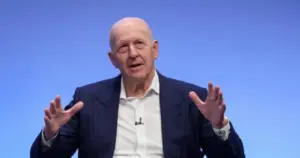
The Amazon founder’s observation about experimentation offers a useful distinction between avoiding uncertainty and managing it.
“If you decide that you’re going to do only the things you know are going to work, you’re going to leave a lot of opportunity on the table.”
Jeff Bezos made the observation while answering a question about Amazon’s A9 search initiative in an interview published by WIRED in May 2008. The context was business experimentation—including projects that disappoint—rather than a promise that taking risks inevitably produces success.
What does the quote mean?
One way to read the remark is that certainty carries a hidden cost.
See more of our coverage in your search results.
Add INDYASTORY on GoogleEstablished ideas have evidence behind them. New ideas often require someone to test them before comparable evidence exists. If proof of success becomes a requirement for every decision, promising possibilities may never receive that first test.
This does not make an uncertain idea a good idea. It means uncertainty is a question to investigate, rather than an automatic reason to stop.
For a small business, that distinction might separate rejecting a new service immediately from offering a limited pilot to discover whether customers want it.
A failed experiment and a bad decision are different
An experiment can produce a disappointing outcome even when the original decision was reasonable.
Suppose a business tests a weekend workshop with a fixed budget and a minimum booking target. If demand falls short, the test may reveal that the price, timing or subject needs changing. That information can help prevent a larger commitment.
See more of our coverage in your search results.
Add INDYASTORY on GoogleHowever, failure is not automatically valuable. Repeating an unsuccessful approach without examining the evidence does little to improve the next decision.
The useful question is what the test established and whether that finding changes the plan.
Reversible decisions allow a different approach
Bezos later developed a related distinction in his shareholder letters: some decisions are difficult to reverse, while others allow a change of course.
See more of our coverage in your search results.
Add INDYASTORY on GoogleIn Amazon’s 2016 shareholder letter, he argued that many reversible decisions do not need the same process as consequential, lasting commitments. He also stressed the importance of recognising and correcting poor decisions quickly.
That provides a practical qualification to the earlier quote. A small trial and a major financial commitment should not face identical approval thresholds.
| Before testing an idea | Question to answer |
|---|---|
| Purpose | What uncertainty will this test resolve? |
| Cost | How much time and money can reasonably be committed? |
| Evidence | What result would justify continuing? |
| Reversibility | Can the activity be stopped or changed? |
| Review | When will the outcome be assessed? |
These questions are an editorial framework for applying the idea, rather than a checklist issued by Bezos.
How the lesson applies beyond business
Someone considering a different career could complete a short project before committing to extensive retraining. A person interested in teaching could run one introductory session before developing a full course.
Neither trial guarantees that the larger plan will work. Each can provide more useful evidence than speculation alone.
The scale matters. An experiment should be small enough that an unsuccessful result remains manageable, while still being realistic enough to teach something.
What readers should take from the quote
Bezos’s remark invites readers to consider the opportunities excluded by demanding certainty too early.
It does not justify ignoring evidence, taking unaffordable risks or assuming that persistence will rescue every idea. A more useful application is to identify an unanswered question, design a proportionate test and let the result influence what happens next.
Some opportunities become clearer only after a first attempt. Good judgment includes deciding which attempts are worth making—and which results mean it is time to stop.