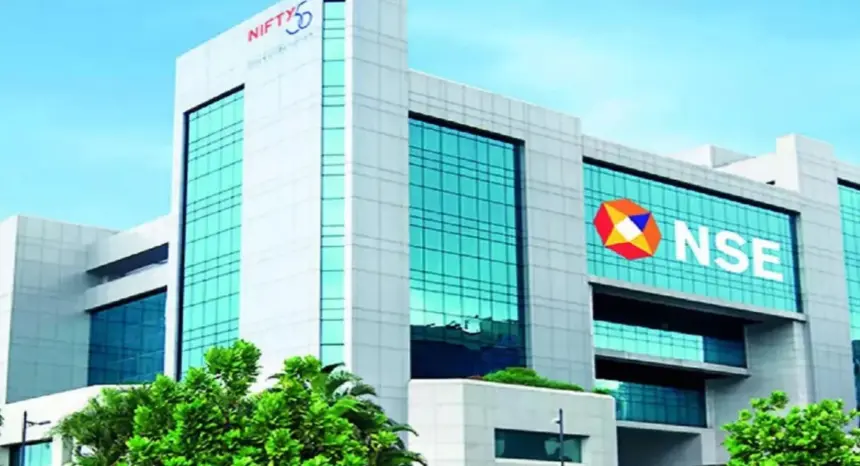
NSE International Exchange in GIFT City has reportedly introduced a 23-hour-and-30-minute daily trading window from November 2, 2026. Here’s how the new schedule works, which markets it covers and what investors should understand.
NSE International Exchange (NSEIX), based in Gujarat’s GIFT City, has reportedly extended its daily trading window to 23 hours and 30 minutes, marking a significant development in India’s international financial market infrastructure.
The revised schedule came into effect on Monday, November 2, 2026, according to the exchange announcement described in the report.
Under the new arrangement, trading begins at 3:15 am Indian Standard Time (IST) and continues until 2:45 am IST the following day.
See more of our coverage in your search results.
Add INDYASTORY on GoogleThe extended schedule is intended to accommodate participants operating across Asian, European and American time zones, making it easier to respond to overseas market developments.
However, the change applies to NSE International Exchange and its eligible trading segments. It does not mean that the National Stock Exchange’s regular domestic equity market will remain open for 23.5 hours.
For investors, the distinction is important because NSEIX operates within the International Financial Services Centre framework, with its own products, access requirements and trading arrangements.
NSEIX New Trading Timings From November 2, 2026
The revised schedule allows NSE International Exchange to operate for almost the entire trading day.
According to the supplied announcement, the exchange opens at 3:15 am IST and continues trading until 2:45 am IST on the next calendar day.
See more of our coverage in your search results.
Add INDYASTORY on GoogleThis provides a total scheduled trading window of 23 hours and 30 minutes.
NSE International Exchange Trading Hours
| Particulars | Reported schedule |
|---|---|
| Exchange | NSE International Exchange |
| Location | GIFT City, Gujarat |
| Effective date | November 2, 2026 |
| Trading session begins | 3:15 am IST |
| Trading session ends | 2:45 am IST next day |
| Total scheduled window | 23 hours, 30 minutes |
| Interval between daily sessions | 30 minutes |
| Operating framework | International Financial Services Centre |
Source: NSEIX schedule described in the supplied report. Product-specific session details, holidays and maintenance interruptions require confirmation from the official exchange circular.
The 30-minute difference between the session’s closing time and the following session’s opening time provides an interval outside the stated trading window.
See more of our coverage in your search results.
Add INDYASTORY on GoogleHowever, it should not be assumed that all products trade continuously throughout the entire 23.5-hour period.
Different contract categories may be subject to specific operating hours, trading phases or restrictions.
Why Has NSE International Exchange Extended Trading Hours?
The central objective of the extended schedule is to provide greater access to international financial markets across time zones.
Financial markets in Asia, Europe and the United States operate at different hours.
A shorter exchange session can restrict how quickly market participants respond to overseas developments.
By remaining operational for nearly 24 hours, NSEIX aims to provide more flexibility for eligible investors and trading members.
This may be particularly useful for participants managing positions linked to international financial markets.
The schedule could also help market participants respond to economic data releases, central bank announcements and developments in overseas markets that occur outside conventional Indian exchange hours.
However, longer trading hours do not eliminate market risk.
Price volatility, order-book liquidity and trading costs can vary significantly across different parts of an extended session.
NSEIX Says New Schedule Supports Near-Continuous Trading
In the statement supplied with the announcement, NSE International Exchange described the extended schedule as a step towards providing a nearly continuous marketplace during the trading week.
The exchange stated that the initiative was designed to provide access for almost 24 hours across the five-day trading cycle.
The development is intended to improve accessibility for participants operating in different geographical regions.
However, a schedule approaching 24 hours a day should not be confused with uninterrupted seven-day trading.
Trading remains subject to the exchange’s operating calendar, applicable holidays, product availability and market rules.
The exact implementation of overnight sessions should be checked against the official market timetable.
How Will the New Trading Hours Help Global Investors?
The principal benefit of an extended exchange session is greater flexibility in when eligible market participants can place and manage trades.
Better Alignment With Asian Markets
The early opening time may provide access during market activity across several Asian financial centres.
This can be relevant for participants whose positions are affected by regional economic announcements and market movements.
Greater Overlap With European Trading Hours
The longer operating window also extends into the period when major European financial markets are active.
That can help participants monitor international developments without waiting for the next conventional Indian trading session.
Access During US Market Hours
The overnight Indian trading window overlaps with substantial portions of the US trading day.
This may provide opportunities to respond to developments in American financial markets, depending on the contracts available through NSEIX.
The benefit is particularly relevant when major US economic releases, company announcements or market events influence internationally linked financial instruments.
However, global market overlap does not guarantee that every relevant product will have sufficient liquidity throughout the session.
NSEIX vs NSE: Does This Mean Indian Stocks Can Trade for 23.5 Hours?
No. The change described in the announcement concerns NSE International Exchange, not the ordinary domestic cash equity trading session of the National Stock Exchange.
The distinction matters because the two venues operate under different frameworks.
NSEIX and Domestic NSE: Key Differences
| Feature | NSE International Exchange | Domestic NSE |
|---|---|---|
| Location | GIFT City, Gujarat | India |
| Regulatory framework | IFSCA framework | Indian domestic securities regulations |
| Market orientation | International financial services | Domestic securities market |
| Reported new window | 23.5 hours | Not changed by this NSEIX announcement |
| Products | Eligible international exchange instruments | Domestic equities, derivatives and other approved instruments |
| Investor access | Subject to IFSC eligibility and intermediary requirements | Subject to applicable domestic market rules |
Retail investors should not assume that a regular domestic trading account automatically provides access to all NSEIX products.
Eligibility, account requirements, currency arrangements and product availability may differ.
The specific procedures depend on the investor category and the services offered by the relevant authorised intermediary.
What Financial Products Are Available on NSE International Exchange?
NSE International Exchange operates as a multi-asset trading venue within GIFT City’s International Financial Services Centre.
Its product offerings have included eligible equity-linked derivatives, index derivatives, currency derivatives and other internationally oriented securities and financial instruments.
The supplied report also refers to depository receipts and global-stock-related products.
However, the availability of specific contracts can change over time.
Investors should consult the exchange’s current approved contract list rather than assume that every international stock, index or derivative is available.
Trading access may also vary according to the investor’s regulatory status and intermediary arrangements.
For derivatives, investors should examine contract size, margin obligations, settlement currency, expiry dates and potential losses before participating.
What Is NSE International Exchange?
NSE International Exchange operates from Gujarat International Finance Tec-City, commonly known as GIFT City.
The exchange was established in June 2017 and functions within India’s International Financial Services Centre ecosystem.
It is recognised under the applicable framework administered by the International Financial Services Centres Authority (IFSCA).
NSEIX provides a platform for eligible participants to trade approved financial instruments in an internationally oriented regulatory environment.
The development of such infrastructure is part of India’s broader effort to expand financial services activity within GIFT City.
A longer operating window could make the exchange more accessible to global participants.
However, the commercial impact will depend on factors such as trading volumes, product depth, transaction costs and investor participation.
What Is GIFT City and Why Does It Matter?
GIFT City is a financial and technology-oriented development in Gujarat that includes an International Financial Services Centre.
The IFSC framework is intended to facilitate certain international financial services activities within India.
It includes regulated financial businesses and market infrastructure designed to serve cross-border and international transactions.
Exchange trading is one component of this ecosystem.
Banks, investment service providers, insurance-related entities and other eligible financial institutions may also operate within the regulatory framework.
By extending trading hours, NSEIX seeks to strengthen the accessibility of market infrastructure operating from GIFT City.
For market participants, the practical benefits will depend on the availability of relevant financial products and the efficiency of trading and settlement systems.
How NSEIX Plans to Support 23.5-Hour Trading
Operating an exchange for nearly an entire day requires reliable trading technology and carefully managed operational processes.
A conventional exchange schedule provides longer intervals for maintenance, system updates and reconciliation activities.
A 23.5-hour trading window reduces the amount of time available between sessions.
According to NSEIX’s statements in the supplied report, its technology infrastructure has been designed to support the longer schedule.
The exchange indicated that certain maintenance activities between sessions can be completed within approximately three minutes.
It also stated that end-of-day maintenance requirements can be handled within a period of less than 15 minutes.
These operational capabilities are intended to support the extended timetable.
However, such claims should be verified against the exchange’s official technical communication.
Longer operating hours also require appropriate risk controls, operational monitoring, incident management and continuity arrangements.
System performance and market reliability will remain important considerations as trading activity evolves.
Will Longer Trading Hours Increase Market Liquidity?
An extended session creates additional opportunities for trading, but it does not automatically guarantee higher liquidity.
Liquidity depends on how many participants are active, the quantity of orders available and the willingness of market makers or other traders to provide prices.
Some periods may experience relatively high activity because they overlap with major overseas market sessions.
Other periods may have lower trading volumes.
When liquidity is limited, bid-ask spreads may widen, making it more expensive to enter or exit a position.
This can be particularly important for derivatives and less actively traded contracts.
Investors should assess actual market depth, transaction costs and price volatility rather than relying only on the length of the trading window.
What Risks Should Investors Consider During Extended Trading Hours?
Longer market access can improve flexibility, but it also introduces practical considerations.
Overnight volatility: International economic announcements and unexpected global developments can trigger significant price changes.
Liquidity differences: Trading activity may vary across time zones, potentially affecting execution prices.
Bid-ask spreads: Some contracts may have wider spreads during less active periods.
Operational requirements: Traders managing positions across long sessions need appropriate monitoring and risk management.
Derivative exposure: Leveraged products can produce losses that exceed initial margins or capital committed, depending on product design and applicable rules.
Market interruptions: Scheduled maintenance, exchange holidays or unexpected operational incidents can still affect trading availability.
For individual investors, the ability to trade at more times of the day should not be confused with a need to trade more frequently.
What Does the Change Mean for India’s Financial Markets?
The introduction of a near-continuous trading window represents a development in India’s international market infrastructure.
It may help NSEIX serve participants who require access across multiple global time zones.
The change could also support GIFT City’s broader ambitions as a destination for international financial services.
However, the long-term significance will depend on whether extended access attracts sustained trading participation and supports efficient price discovery.
Relevant indicators will include trading volumes, bid-ask spreads, active participants, product adoption and system reliability.
A longer trading schedule is an infrastructure improvement; its eventual impact must be assessed through actual market activity.
Frequently Asked Questions About NSEIX Trading Hours
What are the new NSE International Exchange trading timings?
According to the supplied announcement, the new schedule runs from 3:15 am IST to 2:45 am IST the following day, providing a 23.5-hour trading window.
When did the new NSEIX trading hours begin?
The reported effective date is November 2, 2026.
Can investors trade regular NSE-listed shares for 23.5 hours?
No. The announcement concerns NSE International Exchange in GIFT City. It does not independently extend trading hours for regular domestic NSE-listed equity shares.
Is NSEIX open 24 hours a day?
The reported schedule covers 23 hours and 30 minutes, not a full 24 hours. Trading also remains subject to relevant exchange calendars and product-specific rules.
Can Indian retail investors trade on NSEIX?
Access depends on applicable regulations, investor eligibility, approved products and authorised intermediaries. Investors should confirm these conditions before opening or using an account.
Does extended trading guarantee better returns?
No. Longer hours offer additional opportunities to trade but do not guarantee liquidity, better execution or investment returns.
Conclusion
NSE International Exchange’s reported move to a 23.5-hour trading schedule represents an important step in the development of India’s international financial-market infrastructure.
Beginning November 2, 2026, the exchange’s stated trading window runs from 3:15 am IST until 2:45 am IST the following day.
The extended schedule aims to provide greater flexibility for eligible participants operating across Asian, European and American market hours.
It may also support GIFT City’s efforts to strengthen its position in international financial services.
However, investors should distinguish NSEIX from the domestic NSE market and understand the eligibility, product and risk-management requirements associated with trading through the international exchange.
The ultimate success of the initiative will depend not only on longer operating hours but also on market liquidity, technological reliability and sustained participant demand.