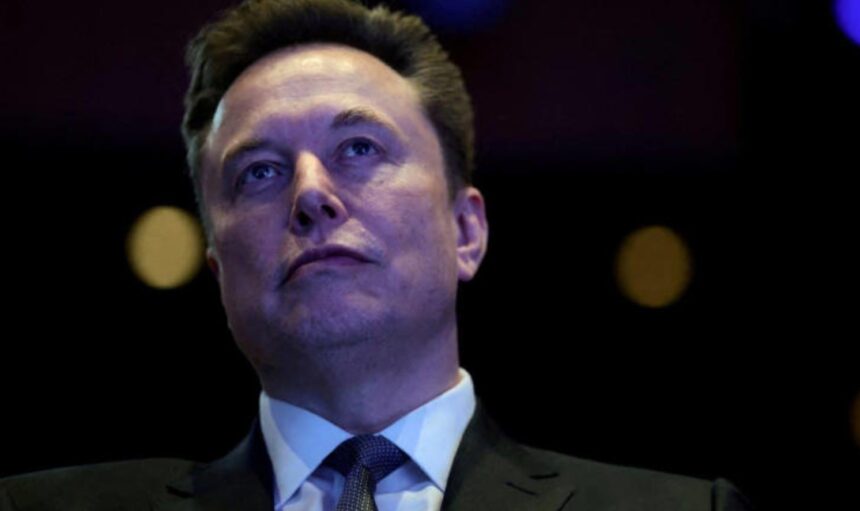
Journalist and political commentator S Gurumurthy has questioned Elon Musk’s intentions in India amid the debate surrounding Starlink’s entry into the country, arguing that the billionaire’s political interventions abroad raise concerns about allowing his company access to critical communications infrastructure.
In a post on X on Saturday, Gurumurthy accused Musk of engaging in politics in India and questioned whether his involvement in political affairs across the United States and Europe should influence how India evaluates his business interests.
“You, Mr Musk, are playing politics in India, which, as a foreigner, you are supposed to do. If you play politics, how can we trust you and allow you into our communication domain, which is critical to our national security,” Gurumurthy wrote.
He further argued that Musk’s political activities had blurred the distinction between his role as a businessman and his influence as a political figure.
See more of our coverage in your search results.
Add INDYASTORY on Google“You have a record of entering deep into Presidential politics in the US in 2024 and also in the EU and UK. We can’t trust you, who seems to me more a politician than a businessman,” he added.
Gurumurthy’s remarks come amid wider discussions about Starlink’s proposed presence in India and the regulatory and security considerations surrounding satellite-based internet services.
S Gurumurthy Responds to Sridhar Vembu’s Post on Elon Musk
Gurumurthy was responding to a post by Sridhar Vembu, scientist and former CEO of Zoho Corporation, who questioned the apparent contradiction between Musk’s criticism of India’s economic environment and the business conditions in the United States.
Vembu pointed out that India has some of the world’s lowest data prices and argued that the US market has policies that protect domestic electric vehicle manufacturers from Chinese competition.
He also defended the Indian government’s approach to competition and entrepreneurship, writing that Prime Minister Narendra Modi had worked to create a competitive economy in which ordinary Indians benefit.
See more of our coverage in your search results.
Add INDYASTORY on Google“His government does not tolerate monopolies. He has also actively promoted and encouraged a massive surge in startups, and that is the best signal of a highly competitive economy,” Vembu wrote.
The exchange highlights broader questions about market competition, foreign investment, regulatory oversight and the role of influential business leaders in political debates.
For India, the discussion surrounding Starlink involves not only commercial opportunities but also the conditions under which foreign satellite communications providers can operate within the country’s regulatory framework.
See more of our coverage in your search results.
Add INDYASTORY on GoogleElon Musk’s Political Involvement in the US
Gurumurthy cited Musk’s involvement in American politics as one reason for his concerns.
According to US Federal Election Commission filings cited in the original report, Musk contributed approximately $259 million to groups supporting Donald Trump’s 2024 presidential campaign. The donations made him one of the most significant financial backers of efforts supporting Trump’s return to the White House.
Musk’s political involvement also helped establish him as an influential figure in Republican politics and in debates surrounding the Trump administration’s policy priorities.
His participation in US politics has attracted both support and criticism, particularly over the influence that wealthy business leaders can exert on elections and government policy.
Gurumurthy’s argument is that Musk’s political activities abroad should be considered when assessing the risks associated with giving his companies access to strategically important sectors. Whether those activities create specific risks for India’s communications infrastructure is a separate question requiring regulatory and security assessment.
Musk’s Controversial Political Comments in the UK
Musk has also drawn criticism in the United Kingdom for his comments on British politics and public policy.
He has described Britain as a “tyrannical police state” and criticised then-prime minister Keir Starmer, using the phrase “two-tier Keir” while raising allegations of unequal treatment by the justice system.
Musk has also attacked the UK government’s farm inheritance tax proposals, describing the country as “going full Stalin”.
In addition, he called on King Charles III to dissolve Parliament and made severe allegations against Starmer in connection with the historical grooming-gangs scandal. Those statements were political accusations made by Musk and should not be treated as established findings of wrongdoing.
His interventions have prompted debate over the influence of social media platforms and prominent technology executives on domestic political discussions in other countries.
Elon Musk’s Support for Germany’s AfD Draws Backlash
Musk’s comments on German politics have also generated controversy.
Ahead of Germany’s federal election in 2025, Musk publicly endorsed the far-right Alternative for Germany (AfD), writing on X that “only the AfD can save Germany”.
He subsequently published an opinion article in the German newspaper Welt am Sonntag, arguing that describing the party as extremist was incorrect. His intervention attracted criticism because of the AfD’s hardline positions on immigration and its wider political significance in Germany.
Musk later hosted an X livestream with AfD co-leader Alice Weidel, during which he praised the party and reiterated his support for it. Weidel also made controversial historical claims during the discussion, including describing Adolf Hitler as a communist.
The episode intensified concerns among critics about the role of major technology figures in influencing electoral debates beyond their home countries.
Musk’s Remarks on Ireland and Immigration
Ireland has also featured in Musk’s political commentary.
Following an anti-immigration rally in Dublin, Musk posted that “the people of Ireland are standing up for themselves”. He also indicated that he would use X to support legal challenges to proposed hate-speech legislation.
The remarks added to a wider debate about immigration, freedom of expression and the influence of social media platforms on national political discourse.
Why the Starlink Debate Matters for India
The concerns raised by Gurumurthy centre on a fundamental policy question: how should India balance the benefits of foreign investment and advanced satellite connectivity against national security, regulatory compliance and the potential concentration of control over communications infrastructure?
Starlink, operated by Musk’s SpaceX, uses a satellite network to provide internet connectivity. Such services can potentially extend broadband access to areas where conventional terrestrial infrastructure is difficult or expensive to deploy.
At the same time, satellite communications providers must meet the relevant licensing, security and regulatory requirements in each market where they operate. Their entry into India therefore involves considerations beyond pricing and consumer access.
Gurumurthy’s criticism reflects a broader concern about the political influence of globally prominent technology executives. However, questions about Musk’s political activities should be distinguished from evidence concerning Starlink’s technical operations, security safeguards and compliance with Indian law.
Ultimately, the debate over Starlink’s presence in India will depend on the applicable regulatory framework, the government’s security assessments and the conditions imposed on any authorised service provider.