





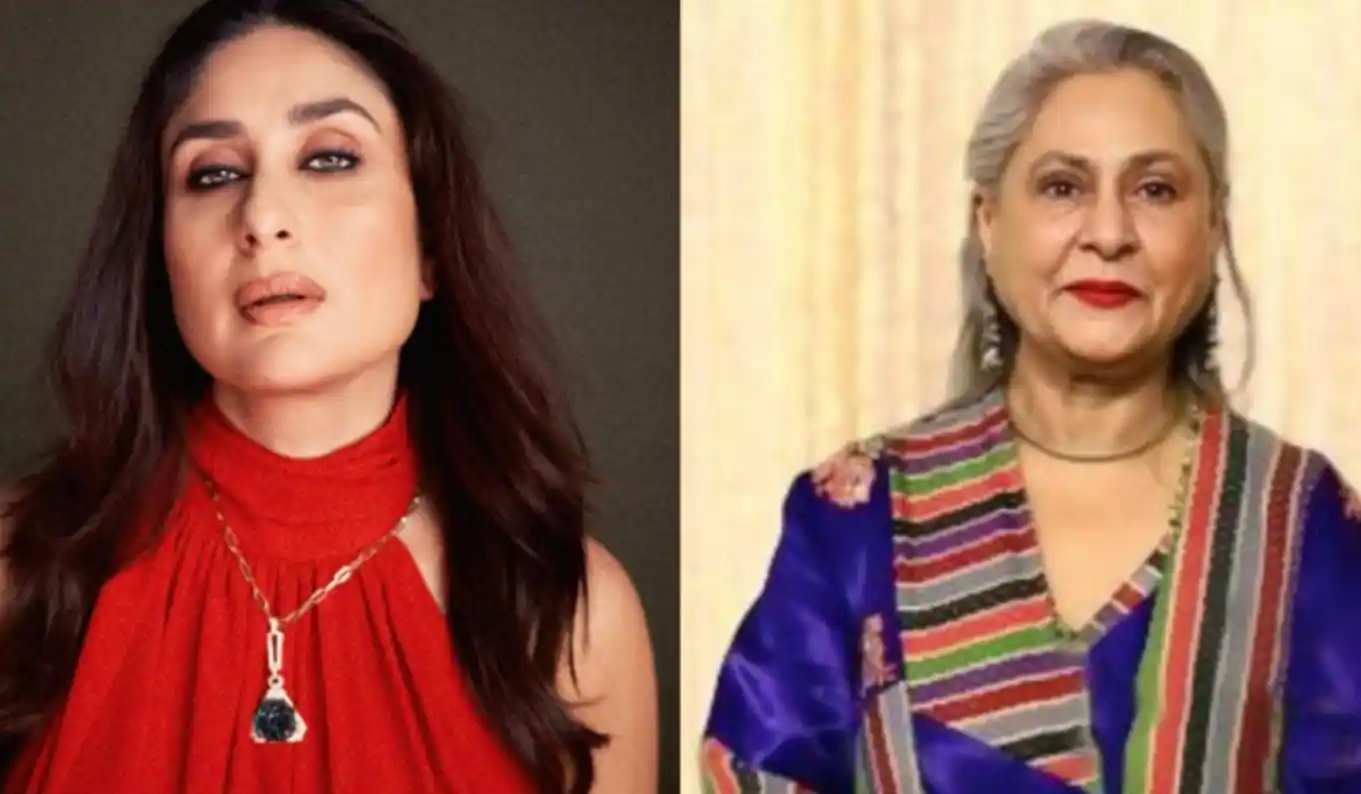
The controversy surrounding the Telugu film Peddi continues to intensify, with criticism growing over the portrayal of its female lead, played by Janhvi Kapoor. Amid the ongoing backlash, veteran actor Jaya Bachchan and Bollywood star Kareena Kapoor have shared their perspectives on the broader issue of objectification of women in cinema.
Jaya Bachchan on industry experiences
Speaking to Deccan Chronicle, Jaya Bachchan reflected on her personal experiences in the film industry, stating that she has largely maintained firm boundaries throughout her career.
She mentioned that she never allowed inappropriate behaviour to go unchecked and recalled having only one unpleasant experience involving objectification by a director, after which she chose not to work with him again.
Her remarks have been widely interpreted as a strong statement on maintaining dignity and self-respect in professional environments.
Kareena Kapoor on sensuality vs objectification
Kareena Kapoor also weighed in on the discussion, offering a perspective on how sensuality is portrayed in cinema.
She emphasized that sensuality on screen is not dependent on revealing clothing, citing iconic performances from films such as Kabhi Khushi Kabhie Gham, Chandni, and Aradhana as examples of emotionally expressive and impactful portrayals.
According to her, timeless performances by actors like Kajol, Sridevi, and Sharmila Tagore demonstrate that strong screen presence and sensuality are defined by expression and performance rather than visual exposure.
Peddi controversy explained
The debate intensified following criticism of Peddi, a pan-Indian Telugu film starring Janhvi Kapoor, where audiences objected to what they described as the oversexualisation of her character.
Social media reactions and viewer feedback quickly escalated into a wider discussion about how female characters are portrayed in mainstream cinema.
Director responds to criticism
In response to the backlash, director Buchi Babu Sana addressed the concerns on social media, stating that the intent of the film was never to disrespect or objectify any character.
He acknowledged the audience feedback and said it had been taken seriously, adding that the team remains committed to portraying women with dignity and strength in storytelling.
The director also emphasized that cinema should entertain and connect with audiences without causing discomfort or disrespect.
A wider industry conversation
The debate around Peddi has reignited ongoing conversations in the Indian film industry about representation, creative responsibility, and the portrayal of female characters on screen.
With voices from senior actors and filmmakers joining the discussion, the issue has expanded beyond a single film into a broader reflection on evolving cinematic standards.